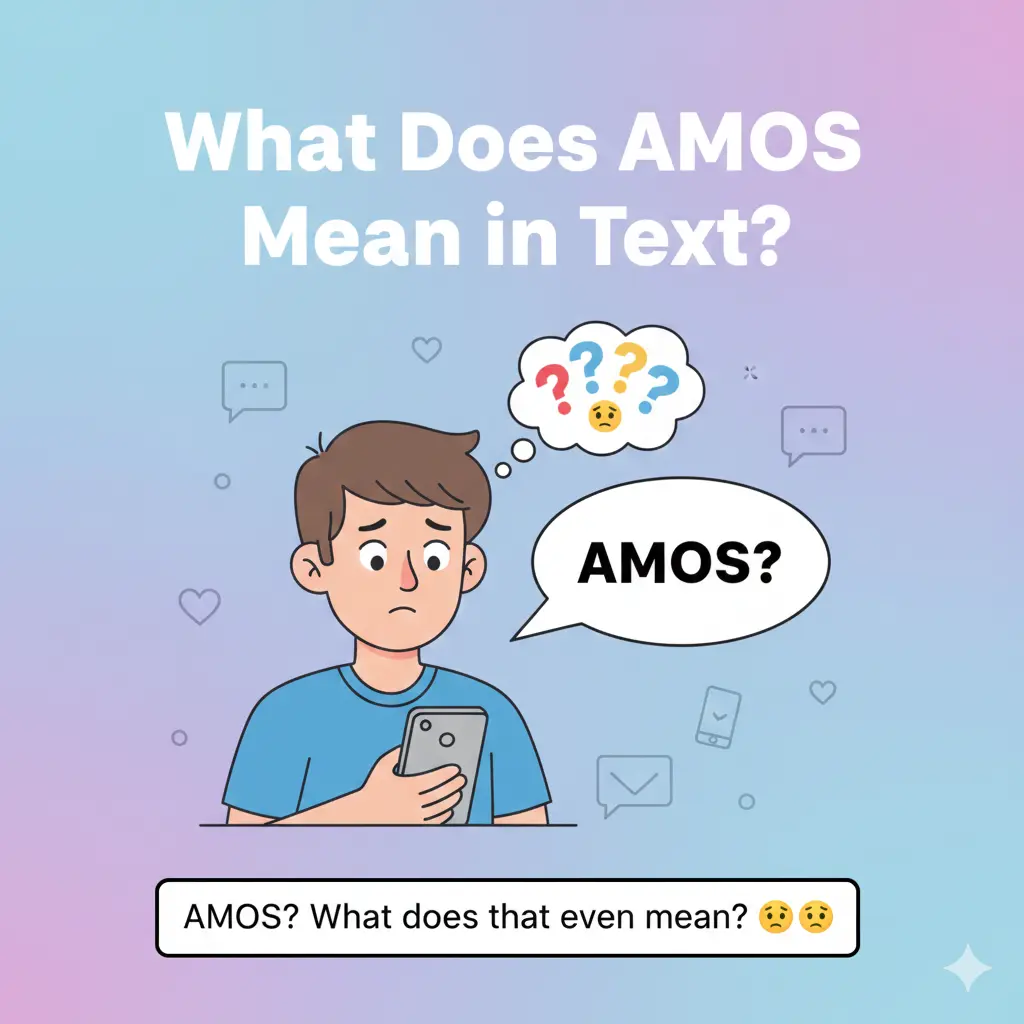
You’re scrolling through your DMs, half-asleep, when a message pops up: “AMOS 😉”.
You pause. Is that a typo? A name? Some new Gen-Z code you somehow missed?
Don’t worry—you’re not alone. Slang moves fast, especially in texting and social media, and AMOS is one of those short words that can feel confusing at first glance. The good news? It’s actually simple, friendly, and very common in casual chats.
In this guide, we’ll break down what does AMOS mean in text, where people use it, real examples, and when (or when not) to use it—so next time you see it, you’ll know exactly what’s going on.
Quick Answer:
In text messages, AMOS stands for “Add Me On Snapchat.” It’s commonly used when someone wants to connect or continue a conversation on Snapchat.
What Does AMOS Mean in Text?
AMOS most commonly means:
“Add Me On Snapchat”
It’s a short, convenient way to ask someone to connect on Snapchat without typing the full sentence.
Instead of saying:
“Hey, can you add me on Snapchat?”
People just say:
“AMOS”
Does AMOS have other meanings?
In texting and social media slang, AMOS almost always means “Add Me On Snapchat.”
Outside of slang, Amos can be a name—but in chats, context usually makes the meaning obvious.
Where Is AMOS Used?
AMOS shows up mostly on social and messaging platforms where people are trying to move the conversation to Snapchat.
You’ll commonly see AMOS on:
- Snapchat – The main reason the slang exists
- Instagram DMs
- TikTok comments or messages
- WhatsApp chats
- Dating apps or gaming chats
Who uses AMOS?
- Teens and young adults
- Social media users
- People flirting or making new friends
- Anyone who prefers Snapchat for chatting
It’s casual, modern, and very internet-friendly.
Examples of AMOS in Conversation
Here are some natural, real-world examples so you can see how AMOS fits into chats:
- Friend to friend:
“This app is boring, AMOS 😂” - Flirty:
“You seem cool. AMOS?” - Casual DM:
“I don’t check IG much—AMOS instead.” - Quick reply:
“Sure, AMOS 👻” - Gaming chat:
“We should talk more, AMOS.” - After a comment:
“Saw your post, AMOS!” - Confident invite:
“AMOS if you wanna snap.”
As you can see, it’s short, friendly, and straight to the point.
When to Use and When Not To Use AMOS
✅ When AMOS Works Well
Use AMOS when:
- You want to move a chat to Snapchat
- You’re talking casually or socially
- You’re flirting or making friends
- You don’t want to sound too formal
It’s perfect for relaxed, online conversations.
❌ When to Avoid AMOS
Avoid using AMOS when:
- Messaging teachers, bosses, or clients
- Writing emails or professional texts
- The other person may not know slang
- The context is formal or serious
In professional settings, spell it out—or better yet, avoid Snapchat references entirely.
Similar Slang Words or Alternatives
If you’ve seen AMOS, chances are you’ve seen these too:
- Add me – Simple and clear
- HMU – Hit Me Up
- DM me – Direct message me
- Add me on snap – Full version, less slangy
- Snap? – Very casual and flirty
They all serve the same purpose: continuing the conversation somewhere else.
FAQS:
What does AMOS mean from a girl?
It usually means she wants you to add her on Snapchat. Depending on context, it can be friendly or flirty.
Is AMOS slang rude?
No. AMOS is neutral and polite. It’s just casual.
Can I use AMOS in professional chats?
Not recommended. It’s too informal for work or school communication.
Does AMOS have a flirty meaning?
It can. When used with emojis or compliments, it often signals interest.
Is AMOS still popular in 2026?
Yes. As long as Snapchat stays popular, AMOS continues to be widely used.
Conclusion
So, what does AMOS mean in text?
In simple terms, it means “Add Me On Snapchat.”
It’s a casual, friendly slang term used to move conversations to Snapchat—especially in social, flirty, or relaxed chats. While it’s great for DMs and comments, it’s best avoided in professional settings.
Quick tip: If you wouldn’t say it to your teacher or boss, AMOS probably belongs in your casual chats only.
Now next time someone says “AMOS”, you’ll know exactly what to do.

Anderson is a skilled content writer focused on explaining modern text slang and digital communication trends. He creates clear, friendly content that helps readers understand online language quickly and confidently.