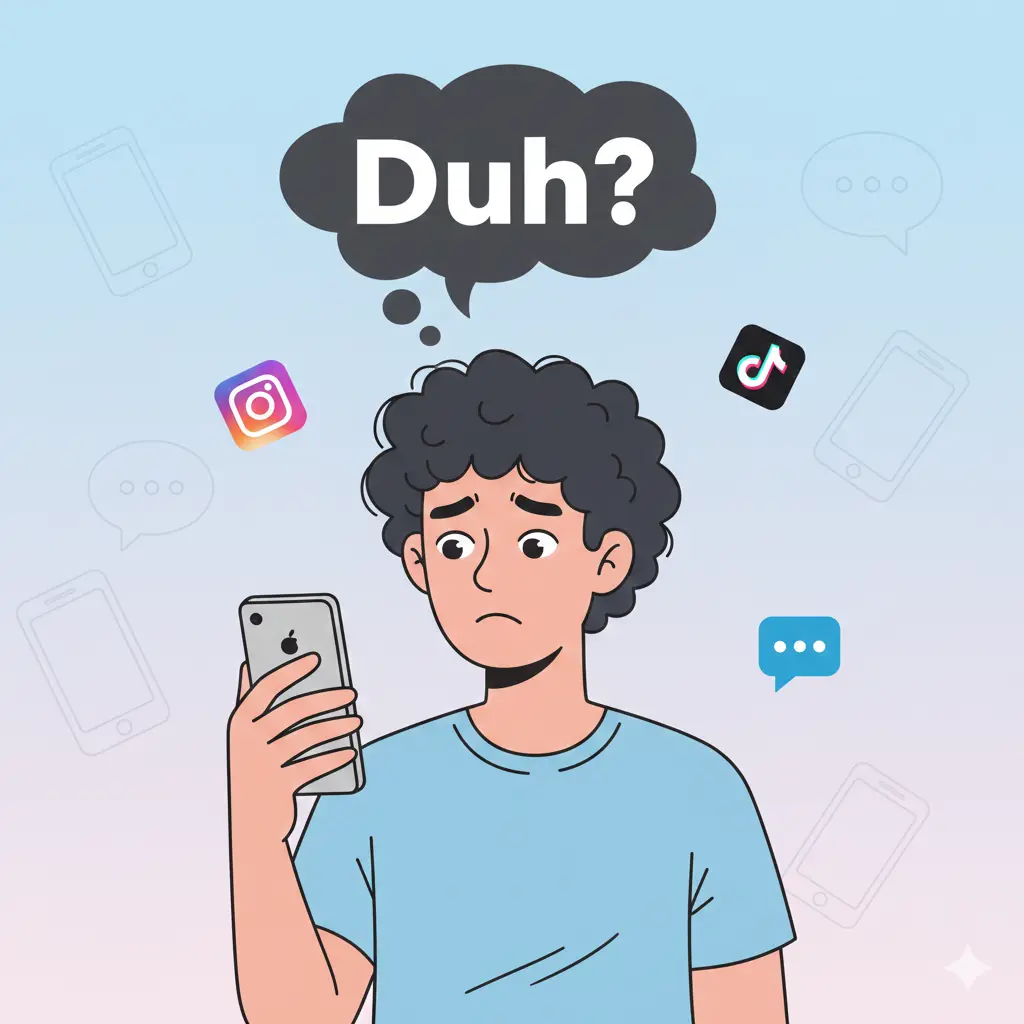
Have you ever been scrolling through Instagram or texting a friend and suddenly saw someone type “duh” and thought, Wait, what does that mean?
Don’t worry—you’re not alone. Slang terms pop up all the time, and it’s easy to get confused.
In this guide, we’ll break down “duh”, explain how to use it, and show you real examples from chats and social media so you can join the conversation with confidence.
By the end, you’ll know exactly what it means and when to drop it in your texts.
Quick Answer:
In texting, “duh” is used to show that something is obvious or already known. It’s often playful or sarcastic, but depending on tone and context, it can sometimes sound rude.
What Does Duh Mean in Text?
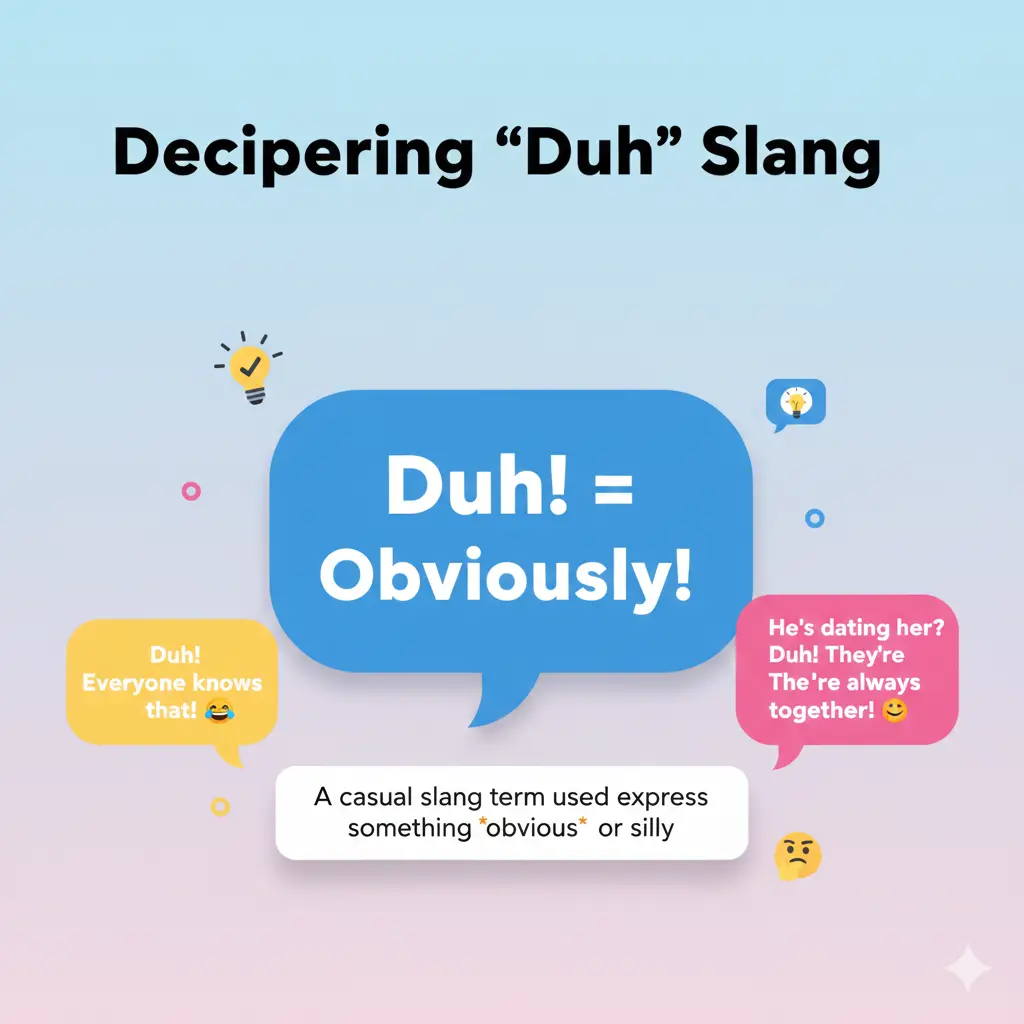
In text messaging, “duh” is a casual slang term used to express something obvious, silly, or self-evident. Think of it as a playful way to say, “Of course!” or “Obviously!” when responding to someone who asks a question with an obvious answer.
It’s not an abbreviation—it’s simply a shortened, playful exclamation. Depending on the tone, “duh” can come off as teasing, sarcastic, or lighthearted. For example:
- Playful: “You forgot your backpack?” – “Duh!”
- Sarcastic: “Is the sky blue?” – “Duh…”
The meaning rarely changes, but the tone can vary depending on context and punctuation.
Where Is Duh Used?
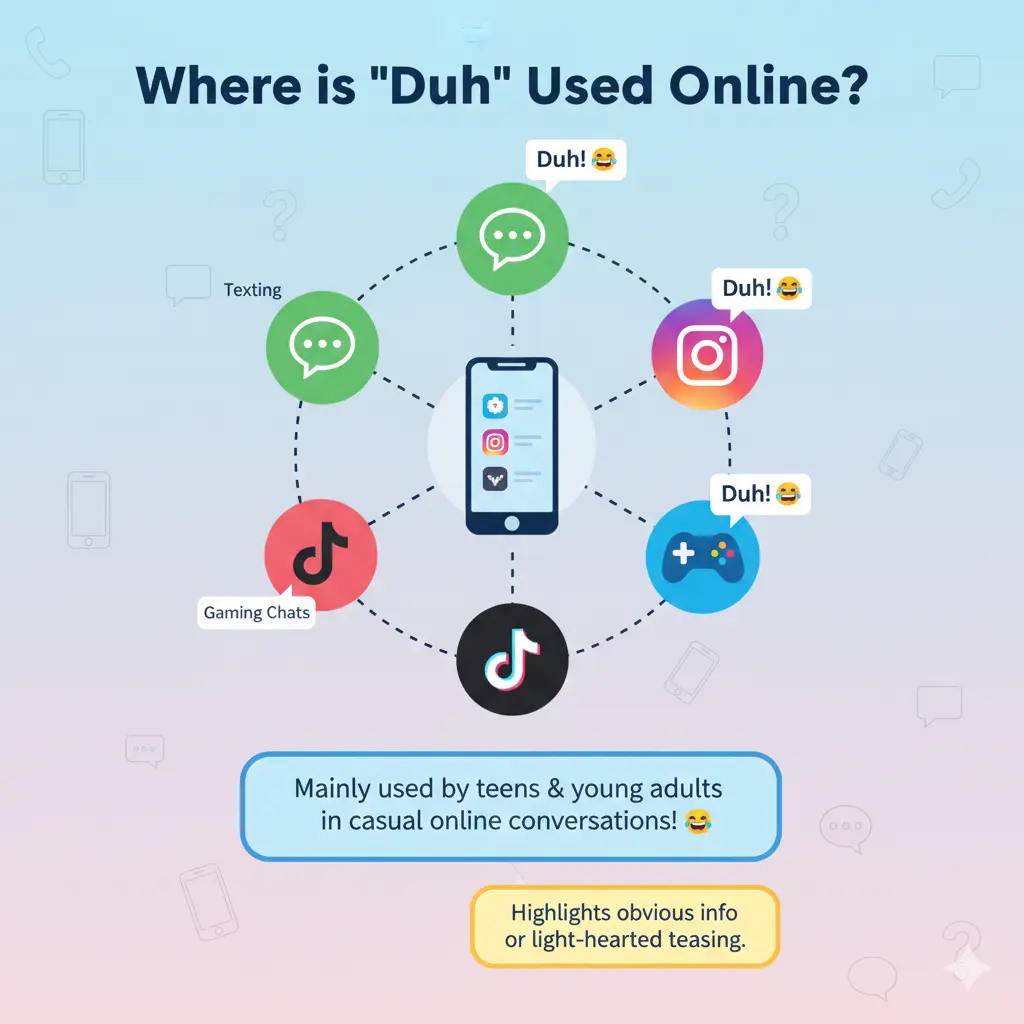
“Duh” is popular across multiple platforms and is especially common in casual digital conversations:
- Texting and iMessage: Used between friends or siblings in playful banter.
- Social Media: TikTok, Instagram comments, and Twitter often feature “duh” in memes or casual responses.
- Gaming Chats: Among gamers, it’s sometimes used jokingly to point out obvious mistakes or answers.
It’s mostly used by teens, young adults, and casual internet users. You’re unlikely to see it in professional emails or formal communications, though it’s widely understood across age groups online.
Examples of Duh in Conversation
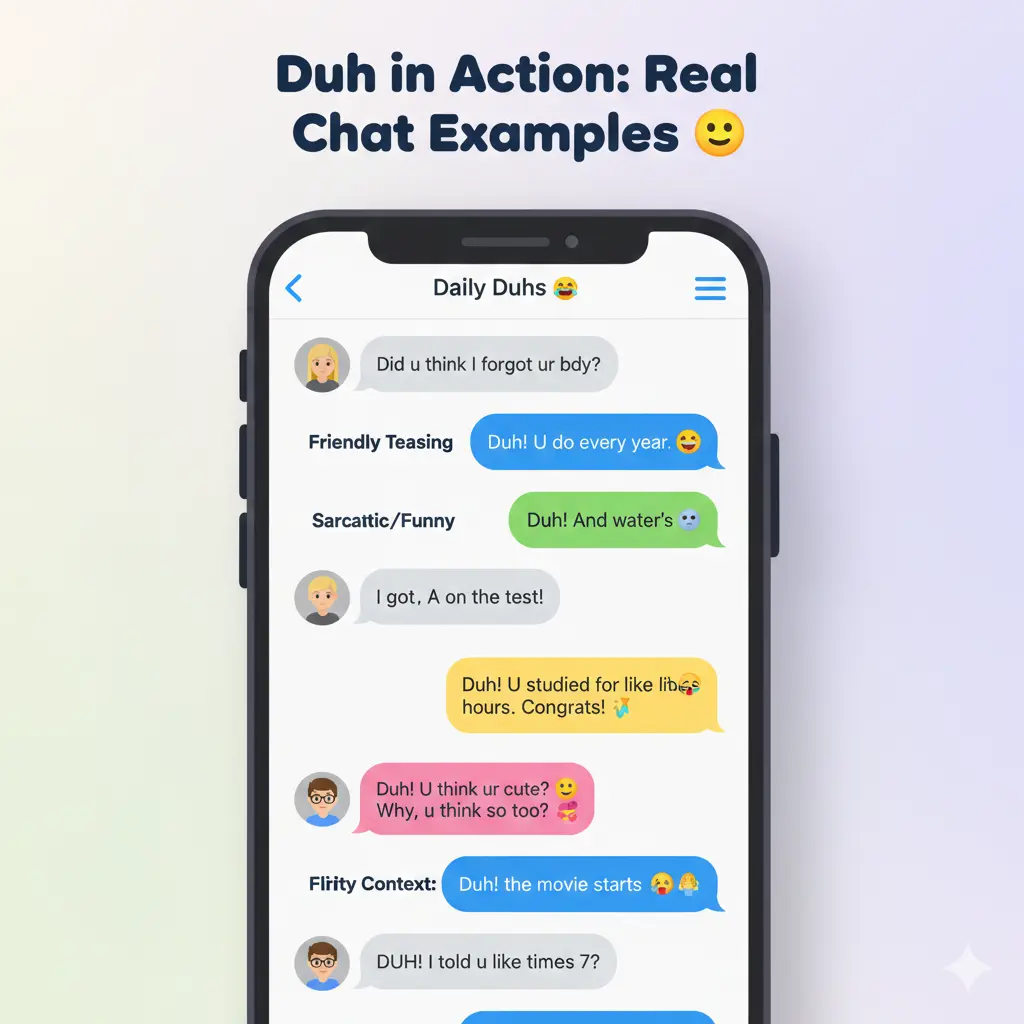
Here are some realistic chat-style examples of how “duh” is used:
- Friend 1: “Do we need tickets to the movie?”
Friend 2: “Duh 😏” - Sibling 1: “Did you eat the last cookie?”
Sibling 2: “Duh, of course!” - Colleague (casual group chat): “Is it raining outside?”
You: “Duh… bring an umbrella!” - Flirty chat:
Person 1: “You like me, right?”
Person 2: “Duh 😘” - Funny meme context:
Post comment: “Is this meme hilarious?”
You: “Duh 😂” - Group project chat:
Teammate: “Should we submit the report?”
You: “Duh, it’s due today!” - Gamer chat:
Player 1: “Should we attack the base?”
Player 2: “Duh, let’s go!”
When to Use and When Not To Use Duh
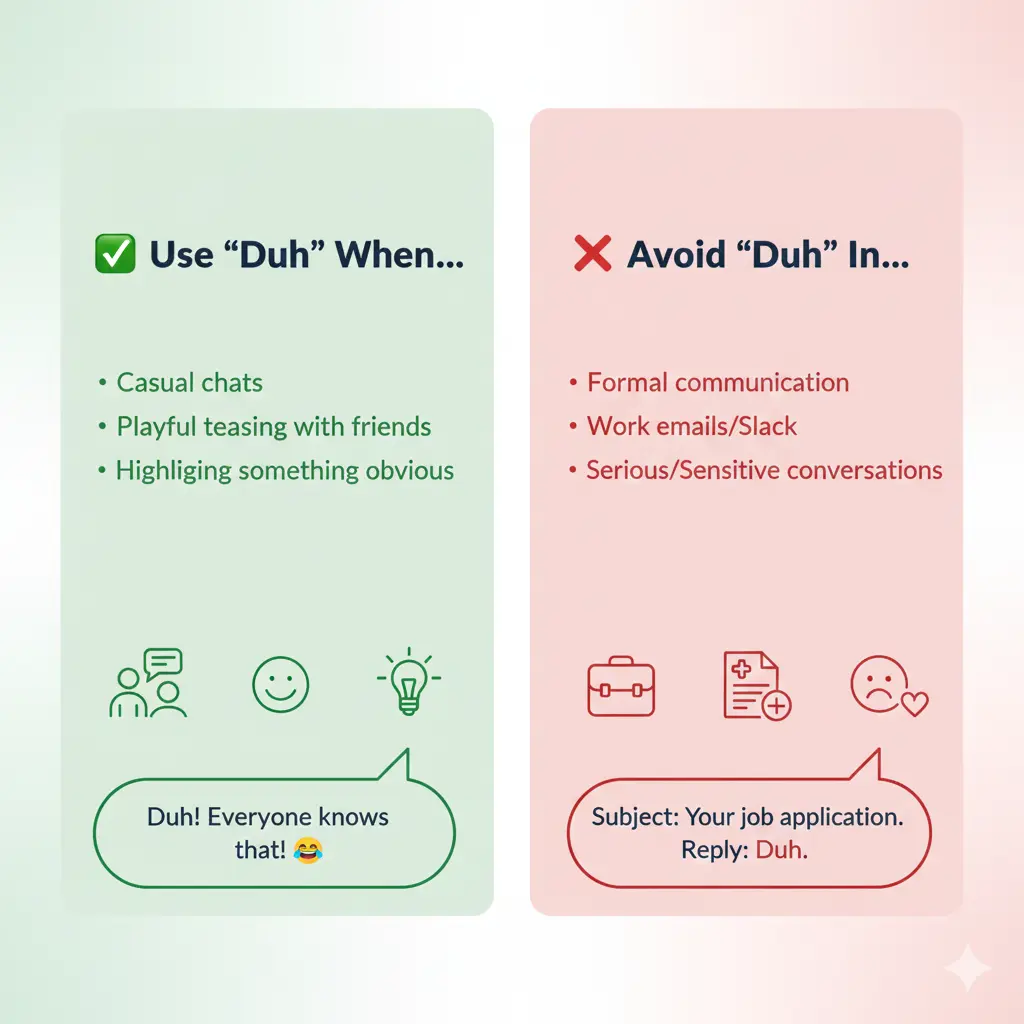
Use “duh” when:
- You’re talking to friends, family, or people you’re comfortable joking with.
- The statement or question is obvious and you want to respond playfully.
- You want to add a casual, slightly sarcastic tone to your message.
Avoid using “duh” when:
- Communicating in professional or formal settings (emails, work chat, school submissions).
- The recipient may not understand sarcasm or playful teasing.
- The tone could be interpreted as rude or dismissive in sensitive conversations.
Remember: punctuation can change the tone. “Duh!” feels playful, “duh…” feels sarcastic, and “duh” alone can be neutral.
Similar Slang Words or Alternatives
If you like “duh”, here are a few similar slang terms you might use:
- Obvs – Short for “obviously,” casual and fun.
- LOL – Laugh out loud; can convey humor or light sarcasm.
- SMH – Shaking my head; shows disbelief or frustration.
- No duh – Stronger version of “duh,” sometimes sarcastic.
- Facepalm – Expressing “I can’t believe this” in a funny way.
FAQS:
1. What does “duh” mean from a girl?
It usually has the same playful or sarcastic tone—it’s friendly and lighthearted.
2. Is “duh” slang rude?
Not inherently rude, but it can sound dismissive if the tone isn’t clear.
3. Can I use “duh” in professional chats?
It’s best to avoid it in work or formal messages; stick to neutral language instead.
4. Does “duh” have any flirty meaning?
Yes! When paired with emojis like 😘 or 😏, it can be teasing or flirty.
5. Is “duh” still popular in 2026?
Absolutely! It’s simple, quick, and widely recognized across social media and texting platforms.
Conclusion
In short, “duh” is a playful, casual way to say “obviously” in text messages and online chats. It’s perfect for teasing friends, expressing light sarcasm, or adding humor to conversations. Just remember to keep it casual, read the room, and you’ll never confuse anyone with this classic slang again.

Anderson is a skilled content writer focused on explaining modern text slang and digital communication trends. He creates clear, friendly content that helps readers understand online language quickly and confidently.