You’ve probably seen someone type “erm…” in a chat and paused for a second wondering what they really meant. Maybe you were texting a friend, asked a simple question, and they replied with “erm idk 😭”.
Suddenly your brain went into detective mode: Was that hesitation? Confusion? Awkwardness? Don’t worry—you’re not the only one who has stopped mid-scroll trying to decode it.
In today’s online world, short expressions like “erm” carry more tone and personality than we realize. This guide breaks down exactly what “erm” means in text, how people use it, where it shows up most, and how you can use it naturally without sounding weird.
Quick Answer:
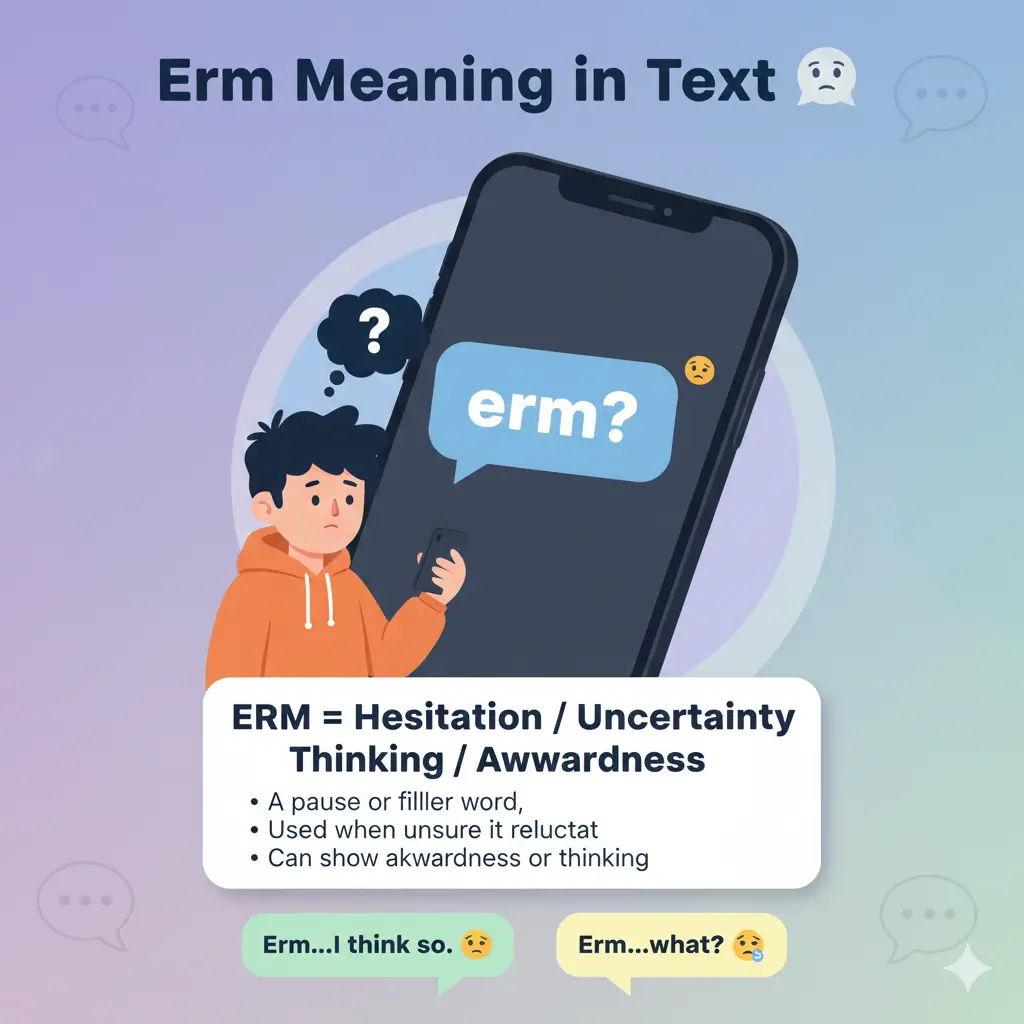
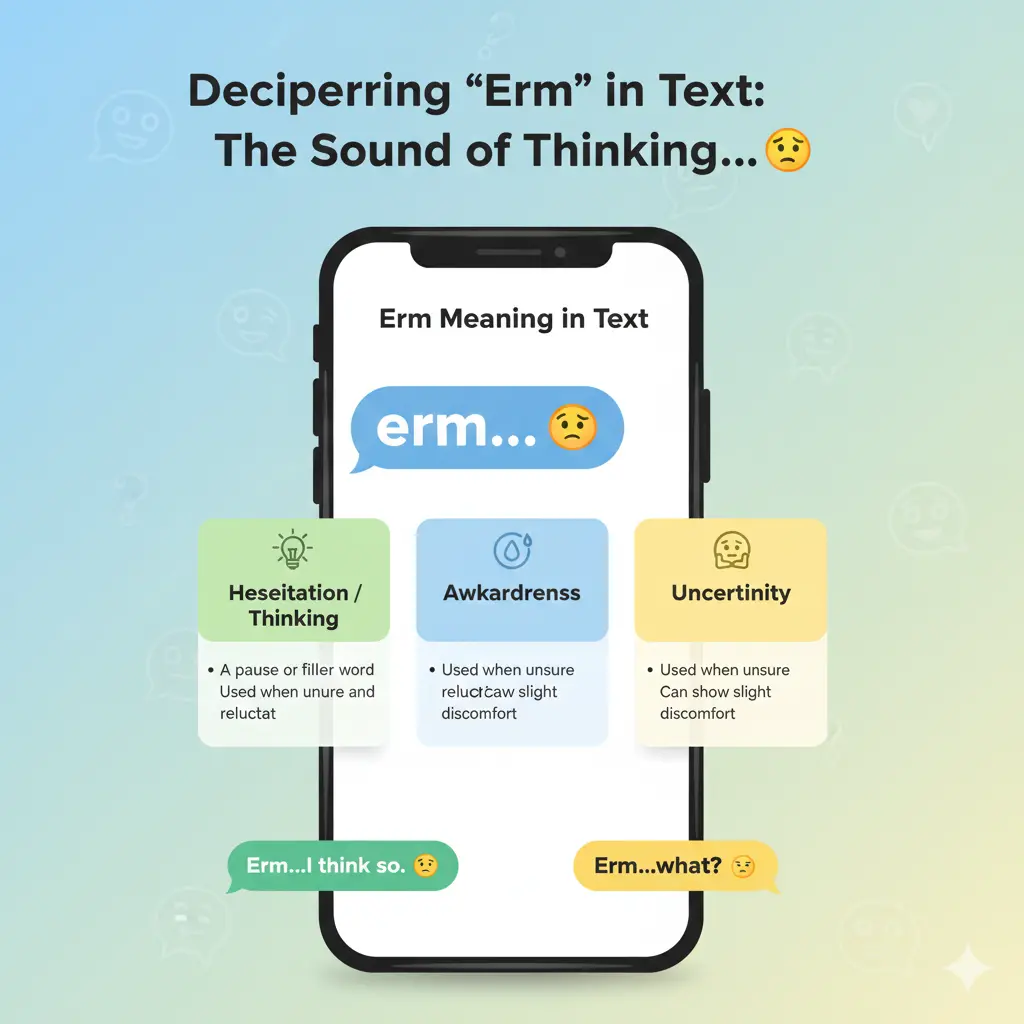
In texting, “erm” is used to show hesitation, uncertainty, or awkwardness. It’s similar to saying “uh” or “um” when someone is thinking or unsure how to respond.
What Does “Erm” Mean in Text?
In text, “erm” is a written-out version of a natural hesitation sound—similar to saying “um”, “uhh”, or “hmm” in real life. People use “erm” when they’re:
- Uncertain or unsure
- Hesitating before answering
- Feeling awkward about the topic
- Buying time to think
- Politely disagreeing or correcting someone
It doesn’t have a full form because it’s not an abbreviation—it’s simply the sound of hesitation represented in text.
⭐ Multiple meanings depending on tone:
- Soft hesitation: “Erm… I think that’s tomorrow.”
- Awkward or embarrassed: “Erm yeah that was my fault 😅”
- Disbelief or judging: “Ermm WHAT??”
- Stalling: “Erm… hold on.”
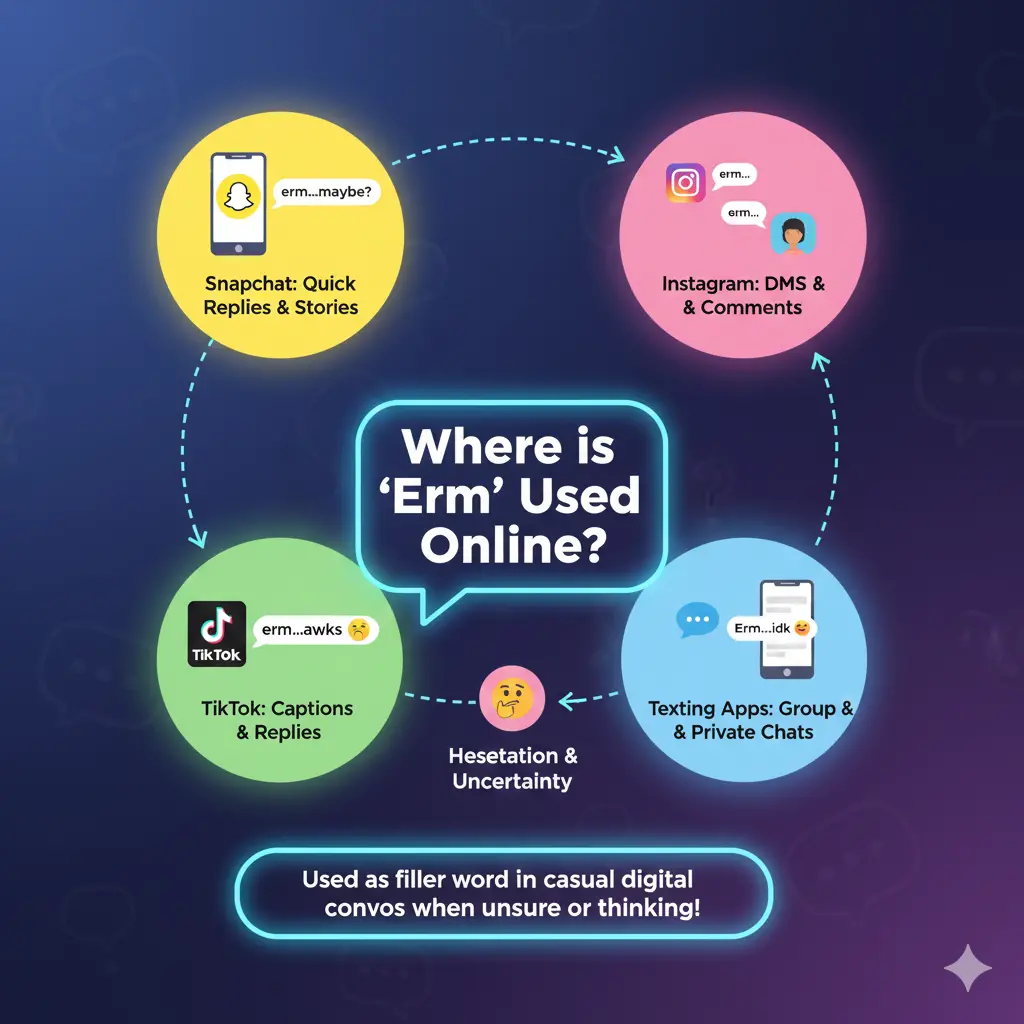
Where Is “Erm” Used?
You’ll mostly find “erm” in informal, casual online spaces. It’s more common in:
Platforms:
- Snapchat — when someone is unsure how to reply to a streak message
- Instagram DMs — especially in awkward moments
- TikTok comments — used humorously or sarcastically
- Twitter/X — often added for dramatic or comedic timing
- Text messages — the most common place
Who uses it?
- Teens and young adults use it the most.
- Gamers use it in voice-like text moments.
- Meme culture uses “erm” as a funny hesitation for dramatic effect.
- General users type it in casual conversations when unsure or trying to be polite.
It’s rarely used in professional settings.
Examples of “Erm” in Conversation
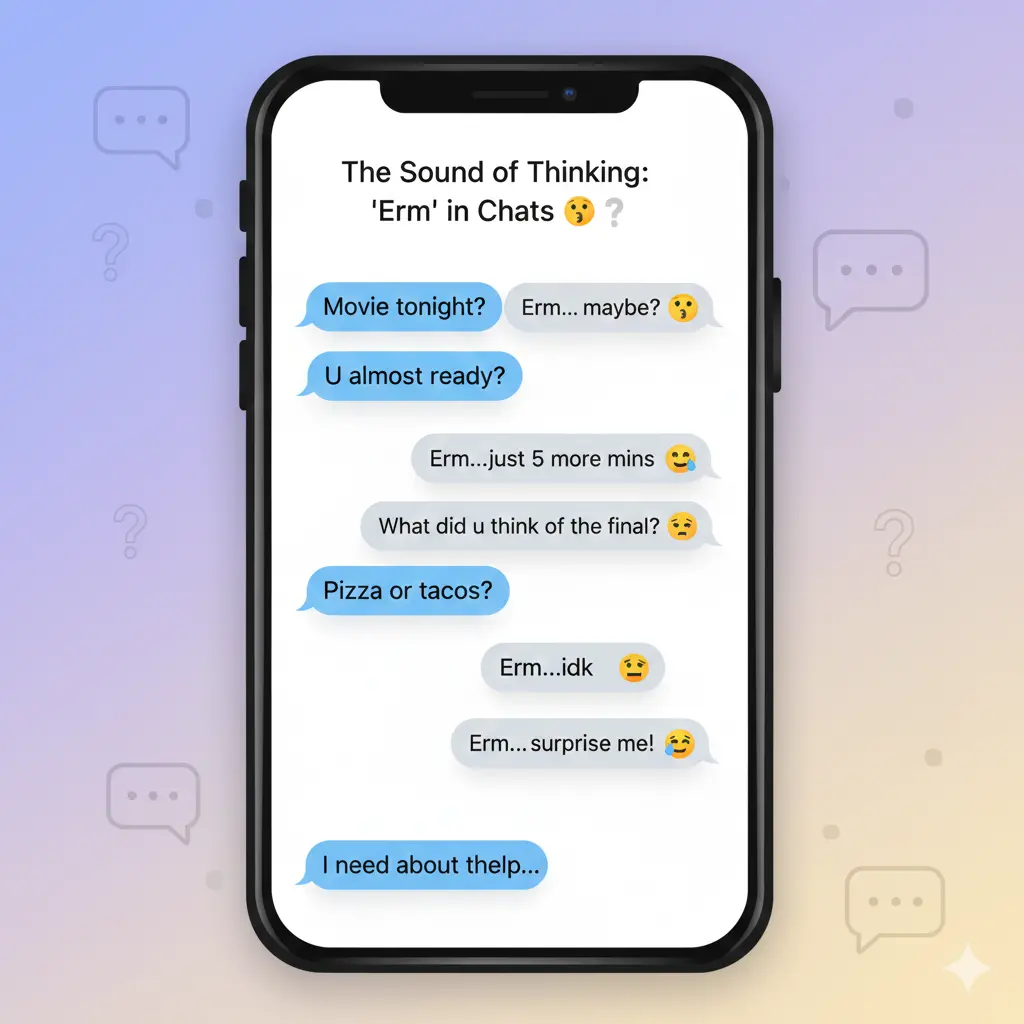
Here are 7 realistic chat-style examples:
- Friend: What time are we meeting?
You: Erm… I think around 8? - Crush: Do you miss me? 👀
You: Ermm maybe 😳 - Group Chat: Who forgot to send the files?
You: Erm… that might’ve been me 😅 - Friend: Bro tell me you didn’t text your ex again.
You: Erm… about that… - Coworker: Did you finish the report?
You: Erm not yet, still working on it. - Sibling: Why is my charger broken??
You: Ermmm I have no idea 👀 - Friend: So do you like him or not?
You: Erm… it’s complicated.
When to Use and When Not To Use “Erm”
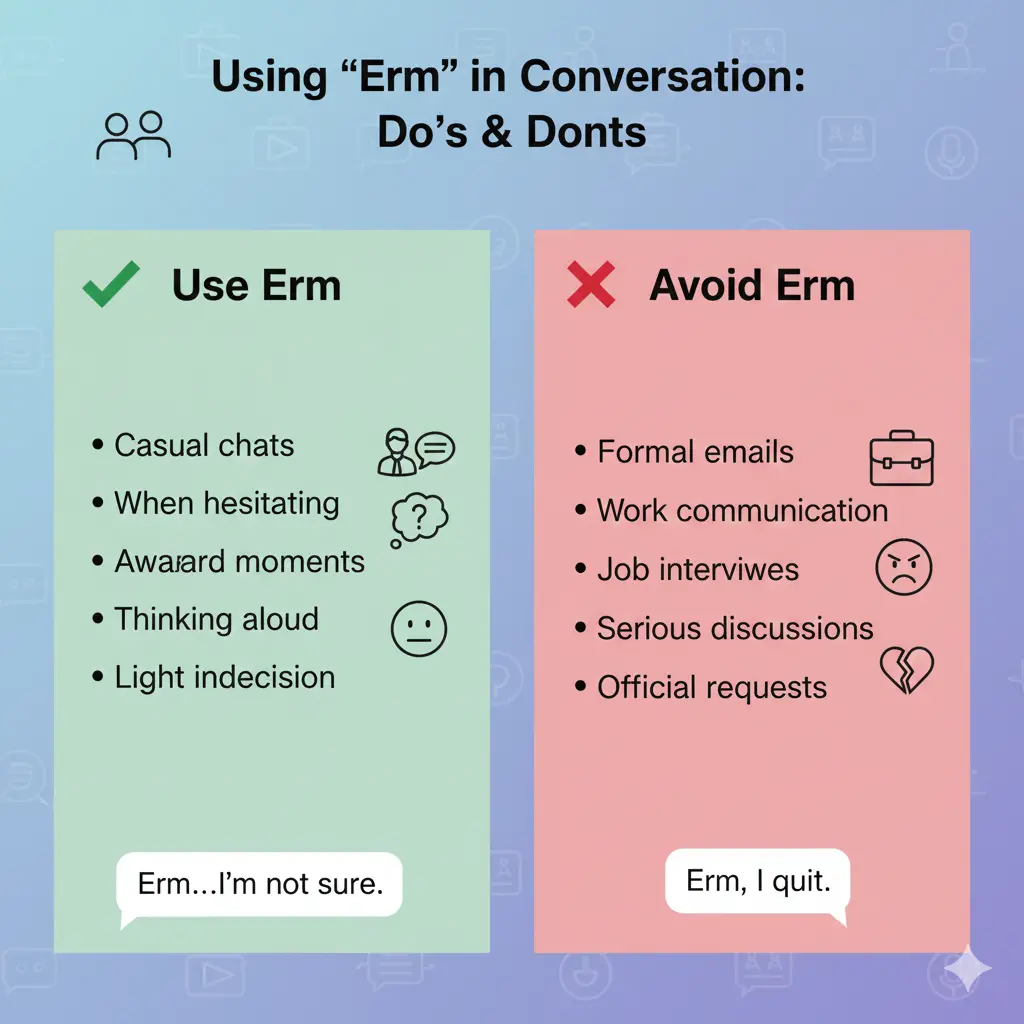
✅ When to Use It:
- When you genuinely feel unsure or hesitant
- When answering an awkward question
- When you want to sound soft or polite
- When you’re buying time to think
- When joking or using a sarcastic tone
“Erm” helps communicate tone that might otherwise be missed in text.
❌ When Not to Use It:
- Professional messages: It looks unconfident and informal
- Serious conversations: It can sound dismissive
- Important announcements or instructions: Avoid hesitation words
- Arguments: It may come off as passive-aggressive
If you’re talking to a boss, teacher, or client, replace “erm” with clearer phrases like “I’m not sure,” “Let me check,” or “I need a moment.”
Similar Slang Words or Alternatives
Here are related expressions with similar vibes:
1. “Um”
A basic hesitation sound; the closest equivalent to “erm.”
2. “Uhh” / “Ummm”
Used when someone is thinking or unsure.
3. “Hmm”
A thoughtful or curious hesitation—less awkward, more reflective.
4. “Lol idk”
A casual way to show uncertainty with humor.
5. “Well…”
A softer, more neutral way to begin a hesitant sentence.
FAQS:
1. What does “erm” mean from a girl?
When a girl uses “erm,” it usually means she’s unsure, shy, awkward, or trying to reply politely. Sometimes it’s flirty hesitation depending on the context.
2. Is “erm” rude?
Not usually. It can sound awkward or a bit sarcastic if written with multiple letters (“ermmm”), but it’s not inherently rude.
3. Can I use “erm” in professional chats?
It’s better not to. “Erm” sounds informal and uncertain—use clear language instead.
4. Does “erm” have a flirty meaning?
Yes, sometimes. In a flirty chat, “ermmm” can signal shy hesitation or playful embarrassment.
5. Is “erm” still popular in 2026?
Absolutely. It stays relevant because it reflects real spoken hesitation, which people naturally use in every generation.
Conclusion
“Erm” might look like a tiny, random word, but it adds nuance and personality to digital conversations. Whether someone is unsure, embarrassed, joking, or stalling for time, “erm” helps express the tone that plain text can’t show. Now that you know what “erm” means in text and how to use it naturally, you can confidently use it—just stick to casual settings and avoid it in professional chats.

Emma Collins is a digital content writer who specializes in internet slang, social media trends, and clear, user-focused explainers. She writes engaging, optimized content that helps readers understand modern online language with ease and confidence.