You’re texting someone, the conversation is going great… and suddenly she replies with just one letter: “K.”
No emoji. No extra words. Just K.
If you’ve ever stared at that tiny message trying to decode whether she’s mad, bored, or simply busy, you’re not alone. This one-letter reply can feel confusing, especially when tone doesn’t come through in text. That’s why so many people search for what “K” really means in text from a girl—friendly, neutral, or annoyed?
This guide breaks it all down with simple explanations, examples, and clarity so you never overthink a “K” again.
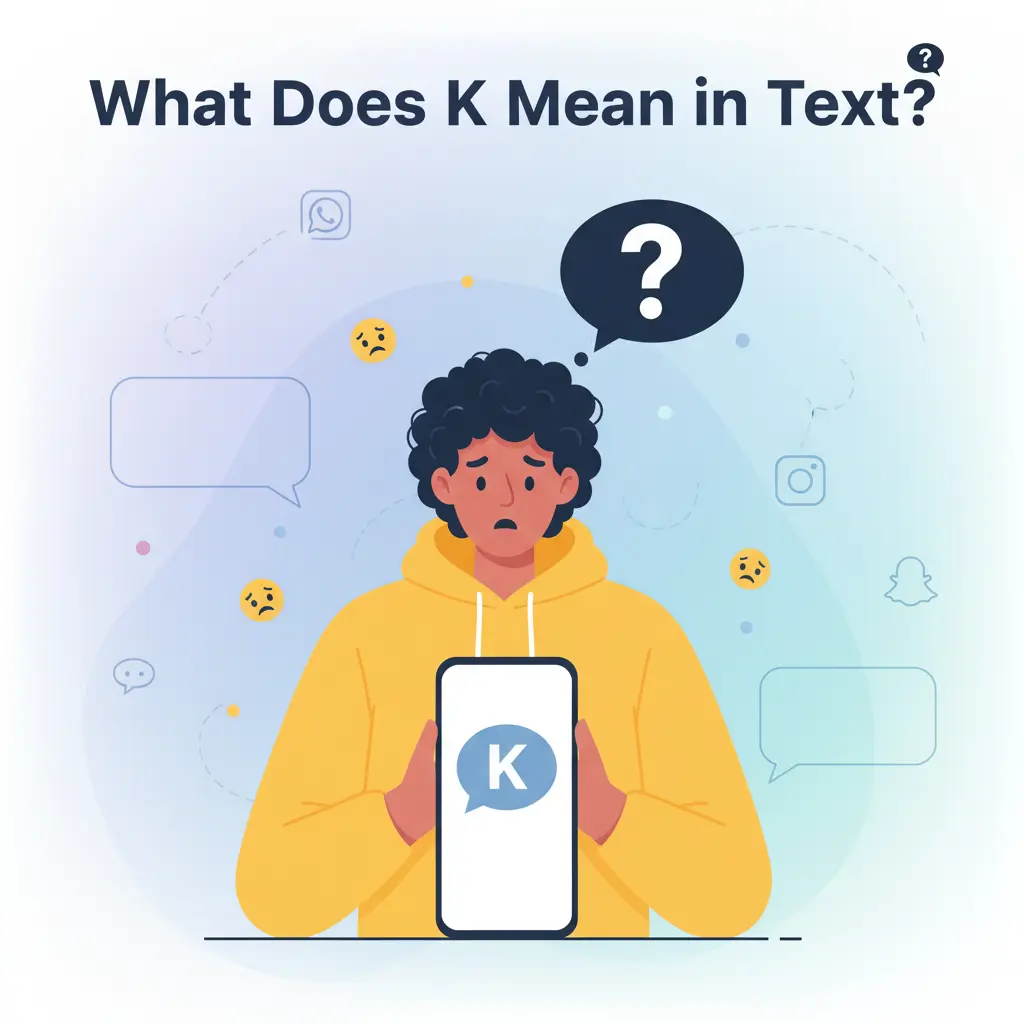
What Does “K” Mean in Text?
In texting, “K” simply means “okay.”
It’s the shortest possible version of agreement or acknowledgment.
But here’s the twist:
“K” often sounds colder or more blunt than “Ok,” “Okay,” or “Okk.”
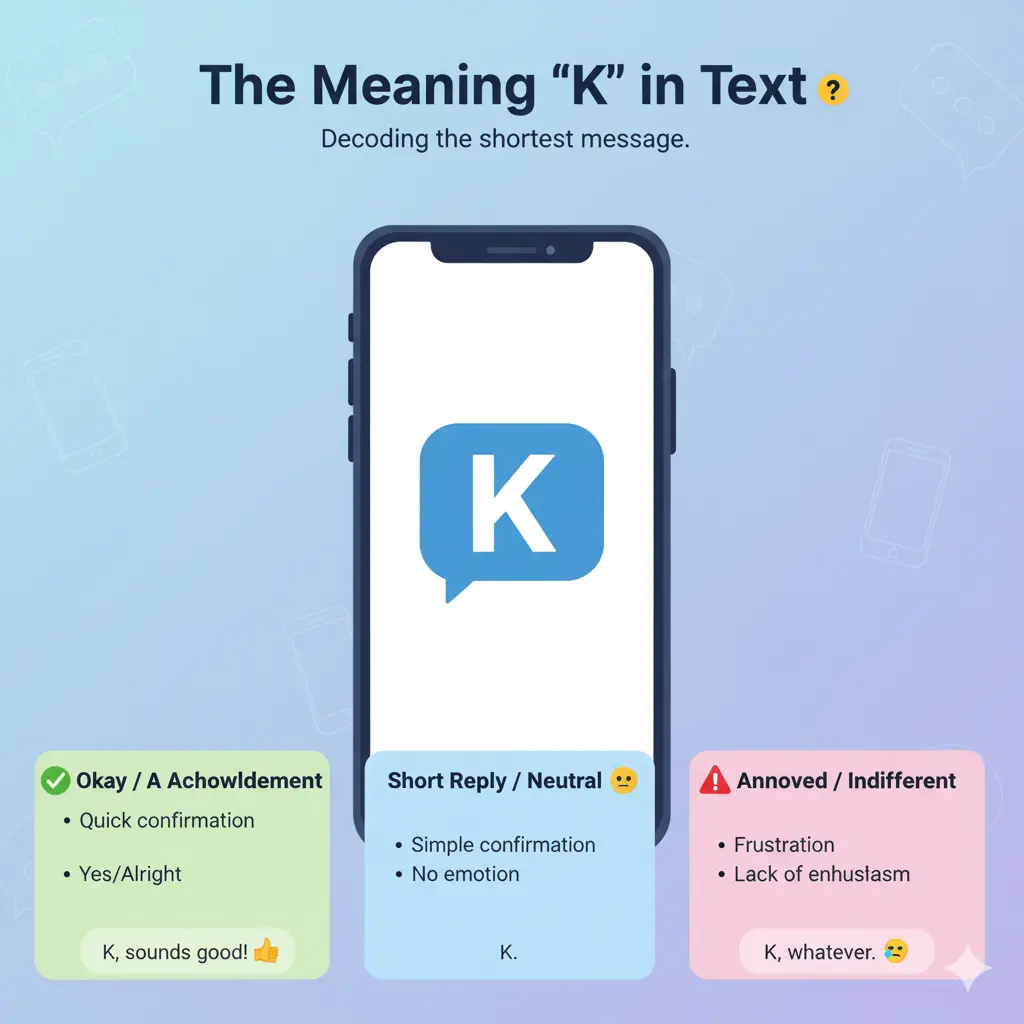
So while the literal meaning is harmless, the tone can change based on context:
- Neutral K → She’s busy, answering quickly.
- Short or dry K → She may be annoyed or uninterested.
- Playful/flirty K → Paired with emojis like 😏😊
So yes, “K” has multiple tones, even though the meaning is the same.
Where Is “K” Used?
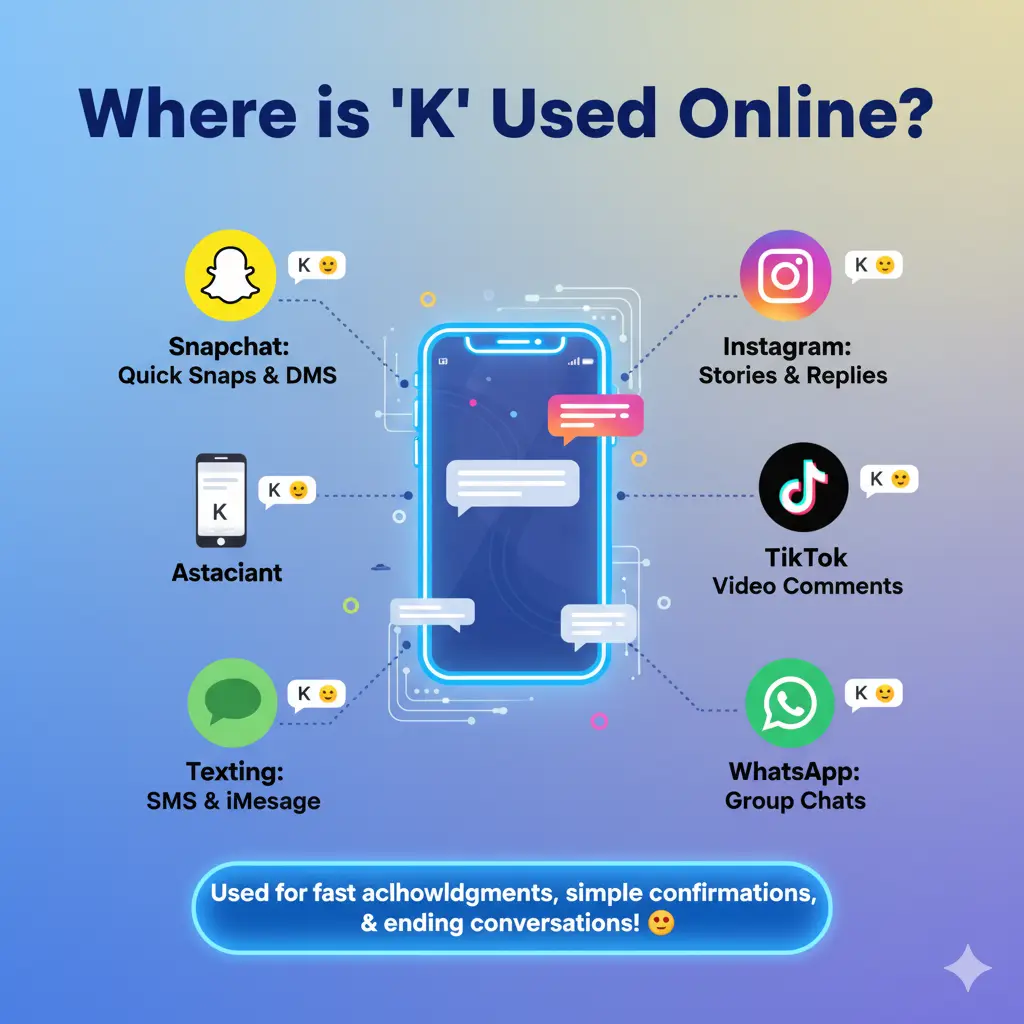
People use K mostly in fast, casual chats, especially on:
- Text messages (SMS)
- Snapchat
- Instagram DMs
- TikTok messages
- Facebook Messenger
It’s most common among teens and young adults, because they prefer quick and minimal responses.
Gamers and general users also use it, but girls particularly use “K” when:
- They want the conversation to end
- They’re keeping replies short
- They’re replying with a neutral acknowledgment
Basically, it fits anywhere casual texting happens.
Examples of “K” in Conversation
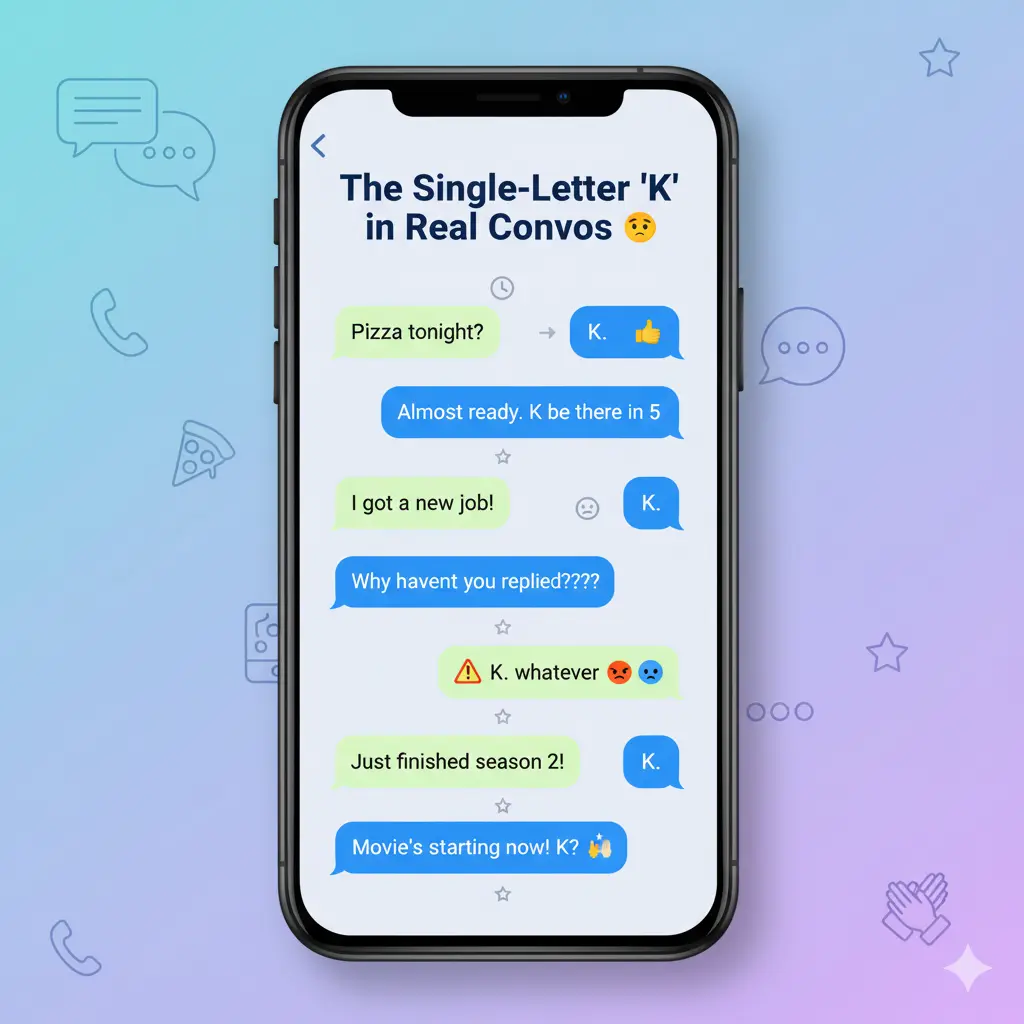
Here are realistic scenarios showing how a girl may use “K”:
1. Casual / Busy
- You: I’ll text you later, I’m driving rn.
- Her: K
2. Slightly Annoyed
- You: I forgot to call you back again 😬
- Her: K.
3. Neutral Confirmation
- You: I ordered the food for tonight.
- Her: K cool.
4. Flirty / Playful
- You: Don’t miss me too much 😏
- Her: K 😌
5. Uninterested
- You: Wanna talk?
- Her: K…
6. Ending the Conversation
- You: I’ll update you later.
- Her: K
7. Friendly
- You: I reached home safe.
- Her: K 👍
Notice how emojis or punctuation change the tone completely.
When to Use and When NOT to Use “K”
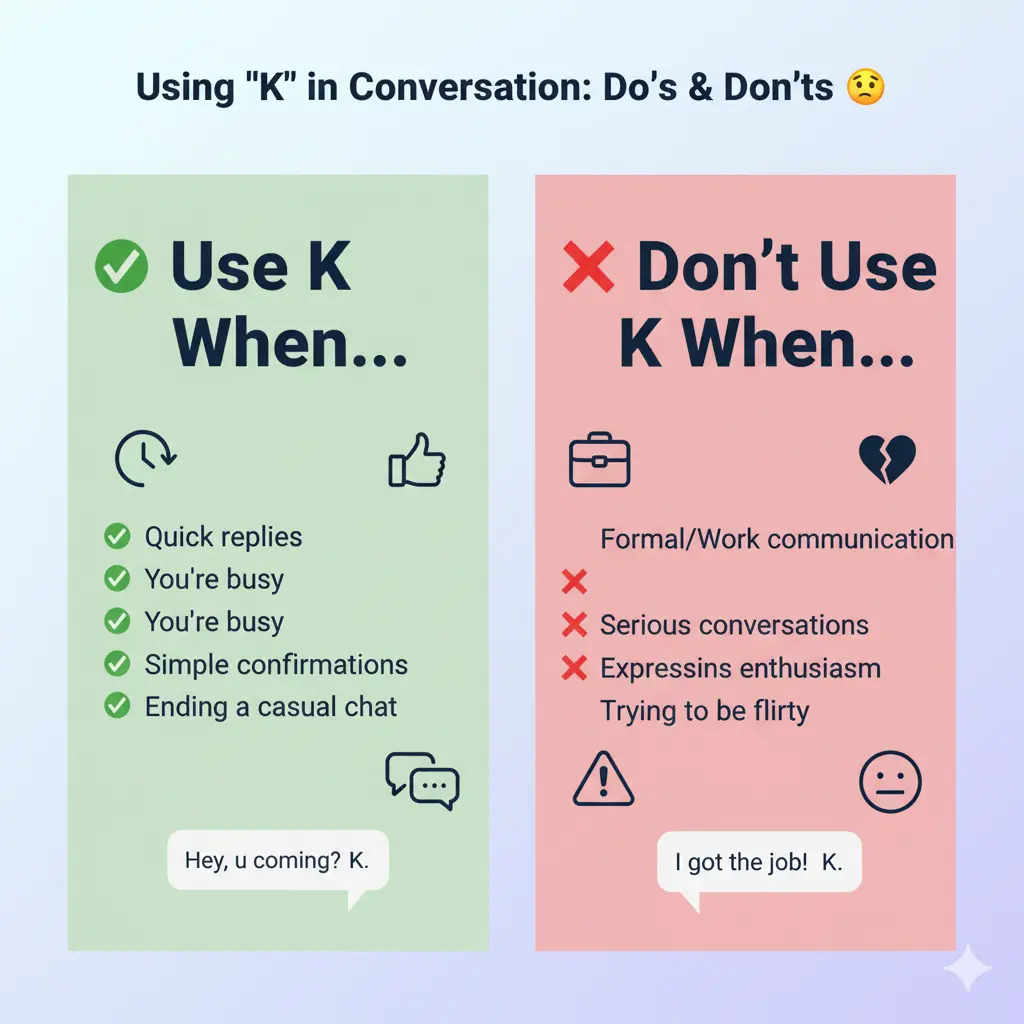
✅ When to Use “K”
Use it when:
- You need a quick acknowledgment
- The conversation is informal
- You’re busy and don’t want to type much
- You’re responding to simple info (like “I’m here”, “On my way”)
❌ When NOT to Use “K”
Avoid it when:
- You’re texting someone sensitive to tone
- It’s a professional chat
- You’re replying to something emotional or serious
- Someone is expecting a detailed response
- You don’t want to sound rude, angry, or uninterested
In school or work conversations, “K” may seem too blunt or unprofessional.
Similar Slang Words or Alternatives
Here are some related texting terms that give similar vibes:
- Ok / Okay – Neutral and friendly.
- Okk / Okkk – Softer, warmer, more positive tone.
- Bet – Means “okay” or “it’s settled.”
- Sure – Simple, polite agreement.
- Ight – Slang for “alright.”
These alternatives help you control the tone better than a plain “K.”
FAQs
1. What does “K” mean from a girl?
It usually means “okay,” but the tone can be neutral, annoyed, or uninterested depending on context.
2. Is “K” rude?
It can feel rude or cold if used alone—especially with a period (K.).
3. Can I use “K” in professional chats?
No. It’s too casual and can seem disrespectful.
4. Does “K” have any flirty meaning?
“Yes”—if she adds emojis like 😉😊 or uses it playfully.
5. Is “K” still popular in 2025?
Yes! It’s still widely used because it’s short, fast, and easy.
Conclusion
“K” may look tiny, but it carries a lot of tone. From a girl, it usually just means “okay,” but depending on context, it can signal she’s busy, neutral, annoyed, or even playful. Paying attention to emojis, punctuation, and the flow of conversation helps you read the real meaning behind that one-letter reply. Use “K” casually, avoid it in serious or formal chats, and always choose a warmer version when you want the conversation to stay friendly.

Anderson is a skilled content writer focused on explaining modern text slang and digital communication trends. He creates clear, friendly content that helps readers understand online language quickly and confidently.