K Meaning in Text From a Guy 💬 can leave you puzzled. You send a thoughtful message, and all you get back is a simple “K”. What does it really mean? Is he annoyed, busy, or just being casual?
Understanding this tiny response is more important than it seems because context, tone, and timing change its meaning entirely.
In this guide, we’ll break down the K meaning in text from a guy, explain when it’s friendly, indifferent, or dismissive, provide real chat examples, and give tips on how to respond confidently without overthinking every reply.
What Does K Mean in Text From a Guy?
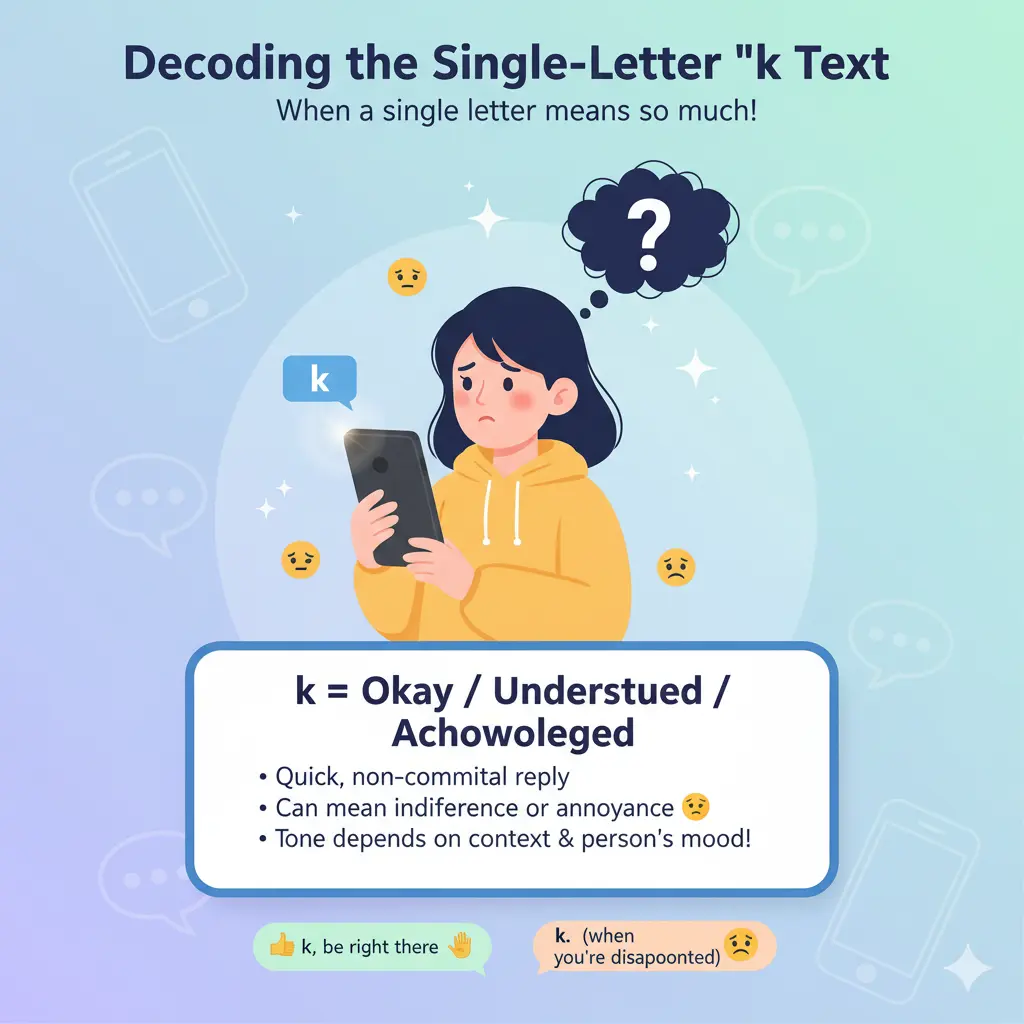
When a guy texts “k,” it usually means “okay” — but in a short, minimal, low-effort way.
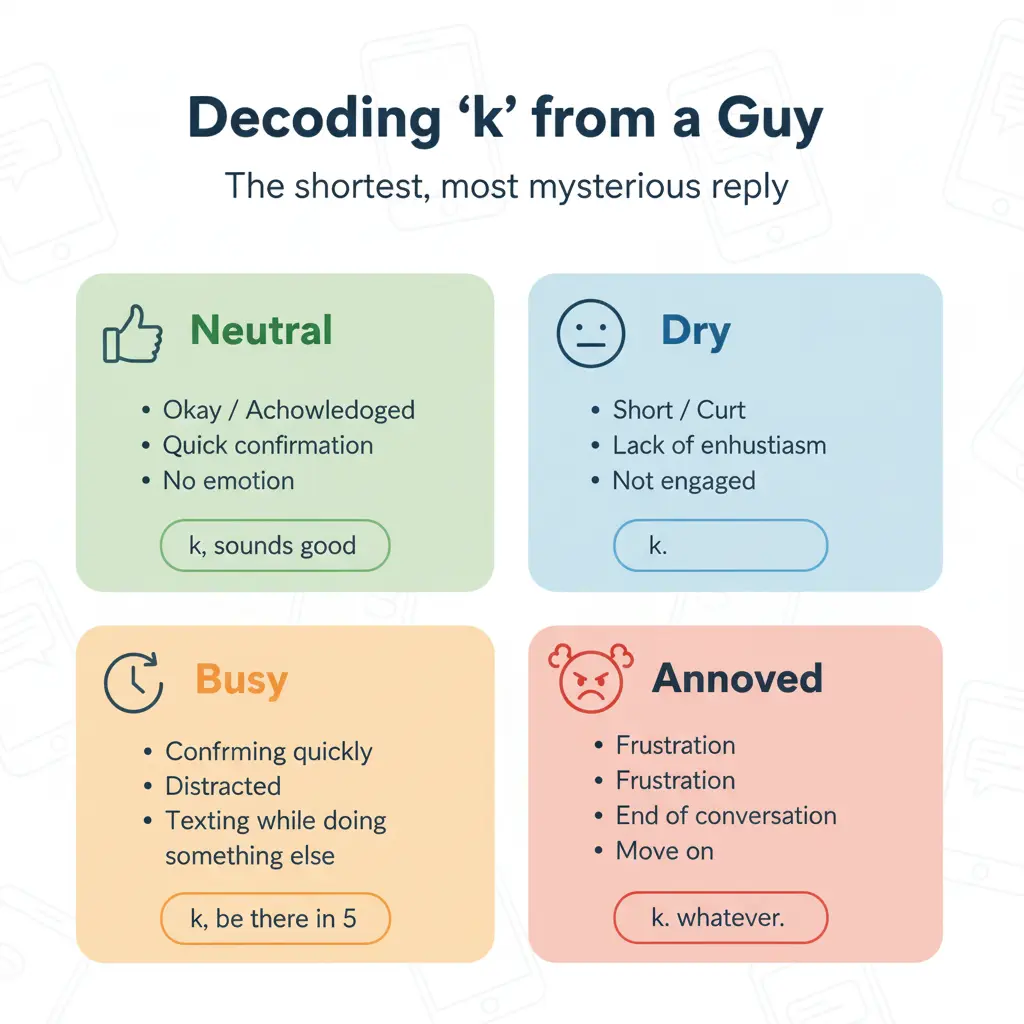
Here’s what it can mean depending on context:
✅ 1. Neutral acknowledgment
He saw your message and simply wants to confirm he understood. No extra words needed.
😐 2. Dry or uninterested
“K” can feel cold, short, or emotionless — often used when he doesn’t want to continue the conversation.
🥱 3. Busy or distracted
He might reply “k” when he’s working, gaming, driving, or doesn’t have time for a long reply.
😒 4. Annoyed or done with the topic
Sometimes guys use “k” when they’re irritated or trying to shut the conversation down politely.
❤️ 5. Not flirty at all
If he liked you romantically, he would usually use emojis, longer replies, or enthusiasm — not “k.”
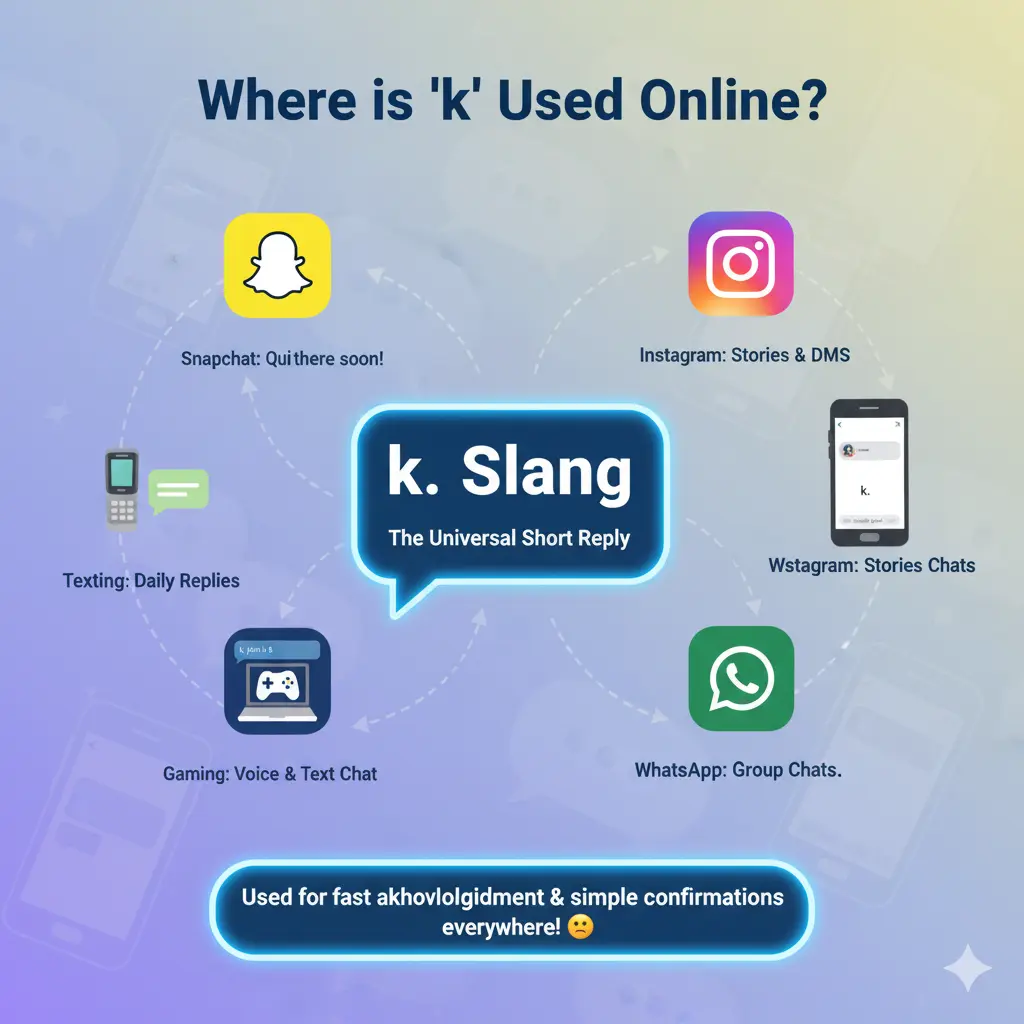
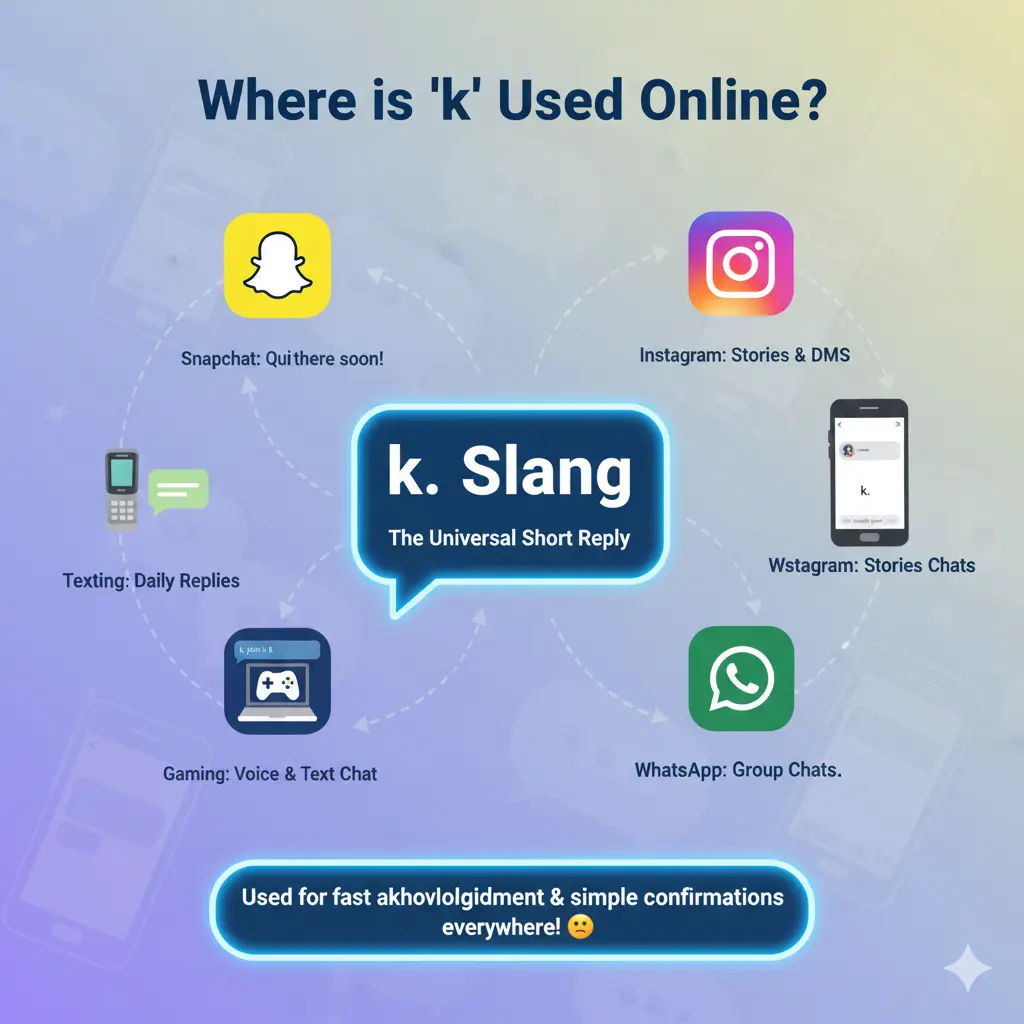
Where Is “K” Used?
Guys use “k” across almost all messaging platforms because it’s fast and universal. Here’s where you’ll see it most:
📱 Texting / SMS
The most common place. It’s quick, casual, and requires no emoji keyboard.
💬 WhatsApp & Messenger
Used for short confirmations or when he doesn’t want to type more.
👻 Snapchat
Often used when replying to snaps with low effort.
💕 Instagram DMs
Less common here because IG is more visual, but still used for quick replies.
🎮 Gaming chats (Discord, PS, Xbox)
Gamers use short responses like “k,” “kk,” and “ok” when they’re mid-game.
🎓 Teens & young adults
“K” is especially common among younger guys because it’s fast and emotion-free.
Examples of “K” in Conversation
Here are realistic chat-style examples that show how guys use “k” differently:
Friendly
You: I’ll be there in 10.
Him: k
Busy
You: Did you get my notes?
Him: k, later will check
Dry / Uninterested
You: So what are you doing tonight?
Him: k
Annoyed
You: I told you I couldn’t come today.
Him: k.
Flirty conversation going cold
You: That was fun last night 😄
Him: k
After a disagreement
You: I didn’t like how you talked to me earlier.
Him: k
Short acknowledgment
You: Reached home.
Him: k
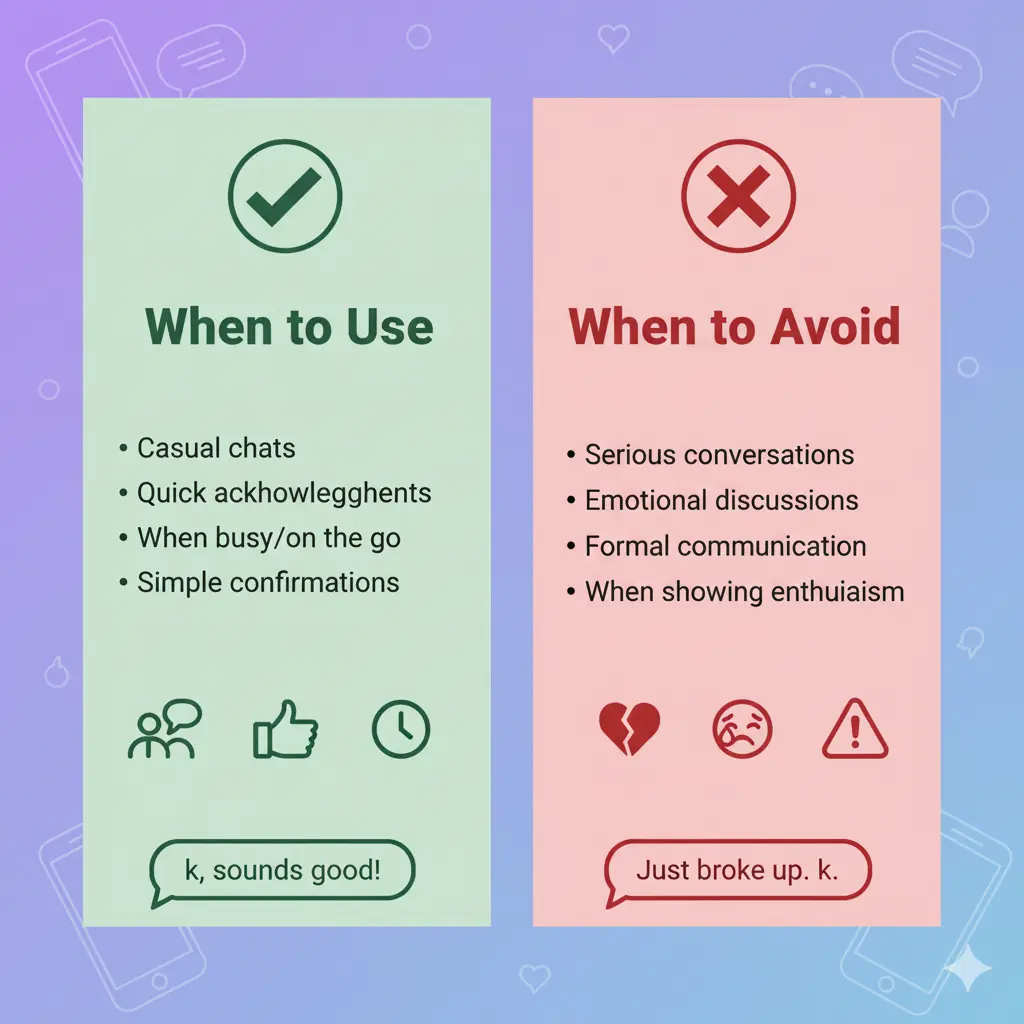
When to Use and When NOT to Use “K”
⭐ When it’s okay to use “k”
- When you want to give a quick confirmation
- When you’re too busy to type
- When it’s a simple yes/no situation
- When the conversation doesn’t need emotion
❌ When NOT to use “k”
- In professional or work messages
- When texting a crush (it looks cold!)
- During emotional or serious conversations
- When someone is already upset
- When the other person expects effort or warmth
“K” can easily come off as rude or uninterested, even if you don’t mean it that way. Use “ok,” “okay,” or “got it!” for a softer tone.
Similar Slang Words or Alternatives
1. “OK”
Neutral, more polite than “k.”
2. “Okayy” / “Okkk”
Friendly and cute — used in flirty or casual chats.
3. “KK” / “Kk”
Means “okay, got it.” Not rude. Often used by gamers.
4. “Bet”
Slang for “okay, cool, no problem.”
5. “Aight”
Casual “alright,” common among teens.
FAQs
What does “k” mean in text from a girl vs. a guy?
From a guy, it’s often dry or neutral.
From a girl, it can mean annoyed, cold, or dismissive.
Is “k” rude?
It can be. Many people feel “k” is a short, emotionless, or irritated reply.
Does “k” have a flirty meaning?
No — it’s the opposite. If he likes you, he usually won’t use “k.”
Can I use “k” in professional chats?
Never. It looks careless and unprofessional.
Is “k” still popular in 2025?
Yes — it’s still one of the most common quick replies used by teens and young adults.
Conclusion
When a guy texts “k,” he usually means “okay,” but the tone behind it can range from neutral to annoyed. It’s short, simple, and sometimes a little too blunt. By checking the context, timing, and vibe of the conversation, you can easily tell what he really means.
If you want to keep conversations warm, use longer and friendlier alternatives like “ok,” “okay cool,” or “got it!” — because one tiny letter can say a lot

Emma Collins is a digital content writer who specializes in internet slang, social media trends, and clear, user-focused explainers. She writes engaging, optimized content that helps readers understand modern online language with ease and confidence.