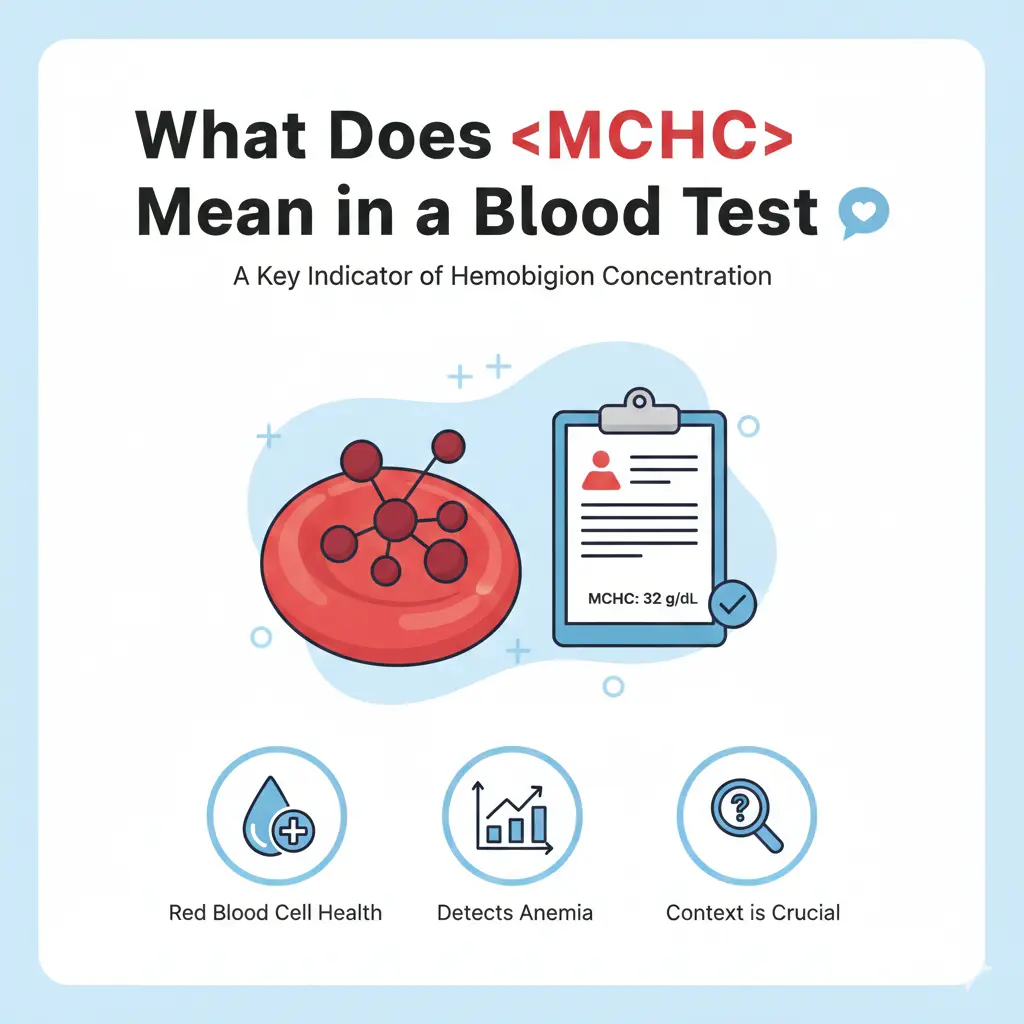
If you’ve ever received your lab results and wondered, “What does MCHC mean in a blood test?”, you’re not alone. MCHC, or Mean Corpuscular Hemoglobin Concentration, measures the average concentration of hemoglobin in your red blood cells.
Knowing what MCHC means in a blood test can help you understand your overall blood health and whether your red blood cells are carrying enough oxygen to your body.
Doctors often check MCHC levels to detect conditions like anemia or other blood disorders. Learning what does MCHC mean in a blood test can also help you track changes over time.
By understanding what MCHC means in a blood test, you’ll be better prepared to discuss your results with your healthcare provider and make informed decisions about your health. Knowing what does MCHC mean in a blood test is the first step to taking charge of your well-being.
Quick Answer:
MCHC stands for Mean Corpuscular Hemoglobin Concentration. It measures how concentrated hemoglobin is in your red blood cells, helping doctors check for anemia or other blood disorders. Normal range is usually 32–36 g/dL. Low or high values may indicate a deficiency, dehydration, or blood condition, but small fluctuations aren’t usually a concern.
What Does MCHC Mean in a Blood Test?
MCHC stands for Mean Corpuscular Hemoglobin Concentration.
In simple terms, it measures how concentrated hemoglobin is inside your red blood cells.
Hemoglobin is the protein that carries oxygen from your lungs to the rest of your body. MCHC tells doctors how “packed” your red blood cells are with hemoglobin, not how many red blood cells you have.
In everyday language:
- MCHC checks how rich your red blood cells are in hemoglobin
- It helps identify types of anemia or blood disorders
- It’s usually part of a Complete Blood Count (CBC) test
There’s only one medical meaning of MCHC—it’s not slang, texting shorthand, or social media lingo.
Where Is MCHC Used?
MCHC is used strictly in medical and healthcare settings, not in casual chats or social media.
You’ll most commonly see MCHC in:
- 🏥 Blood test reports
- 🧪 Complete Blood Count (CBC) panels
- 👨⚕️ Doctor or hospital lab results
- 📋 Medical apps or patient portals
Who usually encounters it?
- People getting routine checkups
- Patients being tested for fatigue, weakness, or anemia
- Pregnant individuals
- Anyone with chronic illness or nutritional deficiencies
So if you’re wondering whether teens or gamers use “MCHC” in texts—the answer is nope. This one lives fully in the medical world.
Normal MCHC Range (Quick Breakdown)
Although ranges may vary slightly by lab, a normal MCHC level is usually:
32–36 grams per deciliter (g/dL)
Here’s what different results can suggest:
- Low MCHC → Your red blood cells may not have enough hemoglobin
- High MCHC → Hemoglobin may be overly concentrated in red blood cells
- Normal MCHC → Oxygen-carrying capacity is likely fine
Important: MCHC is never analyzed alone. Doctors compare it with other CBC values like MCV, MCH, and hemoglobin.
Examples of MCHC in Context
Since MCHC isn’t used in chats, here are realistic medical-style examples you might see or hear:
- “Your MCHC is slightly low, which may explain your fatigue.”
- “MCHC levels are within the normal range—nothing to worry about.”
- “Low MCHC could indicate iron deficiency anemia.”
- “We’ll repeat the CBC to monitor changes in MCHC.”
- “High MCHC can sometimes be linked to hereditary conditions.”
- “Your MCHC improved after iron supplementation.”
These are the kinds of contexts where MCHC appears—clinical, professional, and informational.
When to Worry and When Not to Worry About MCHC
Let’s clear this up, because this is where most anxiety comes from.
👍 When MCHC is usually not a concern
- It’s only slightly above or below normal
- You have no symptoms
- Other CBC values are normal
- Your doctor isn’t concerned
Minor fluctuations happen due to:
- Temporary illness
- Dehydration
- Lab variation
🚨 When MCHC needs attention
- Consistently low or high levels
- Symptoms like fatigue, dizziness, pale skin
- Known anemia or blood disorders
- Abnormal results in other CBC values
In short: don’t panic from one number alone. Doctors look at patterns, not isolated values.
Similar Blood Test Terms Related to MCHC
If you’re reviewing your CBC report, you’ll likely see these alongside MCHC:
- Hemoglobin (Hb) – Total oxygen-carrying protein
- Hematocrit (Hct) – Percentage of red blood cells in blood
- MCV – Size of red blood cells
- MCH – Amount of hemoglobin per red blood cell
- RBC Count – Number of red blood cells
Together, these values help doctors understand your overall blood health.
FAQS:
What does MCHC mean from a doctor?
It means your doctor is evaluating how well your red blood cells carry hemoglobin, often to check for anemia or nutritional issues.
Is MCHC slang or rude?
No. MCHC is not slang at all. It’s a medical abbreviation and has nothing to do with texting or tone.
Can I use MCHC in professional chats?
Only in medical or healthcare-related conversations. It would sound confusing or out of place in normal work chats.
Does MCHC have any flirty or casual meaning?
None whatsoever. It’s strictly clinical.
Is MCHC still relevant in 2026?
Yes—MCHC remains a standard and important blood test marker used worldwide.
Conclusion
So, what does MCHC mean in a blood test? Simply put, it measures how concentrated hemoglobin is inside your red blood cells, helping doctors assess oxygen delivery and detect conditions like anemia.
It’s not slang, not casual, and definitely not something you’ll see in DMs—but it is something worth understanding when reviewing your health reports. The key takeaway? Don’t read MCHC in isolation. Always look at the full picture and talk to your doctor if you’re unsure.
Knowledge turns confusion into confidence—and now, MCHC shouldn’t feel mysterious anymore.

Emma Collins is a digital content writer who specializes in internet slang, social media trends, and clear, user-focused explainers. She writes engaging, optimized content that helps readers understand modern online language with ease and confidence.