Ever been chatting with someone and suddenly they disappear for hours—only to show up again with a message like, “Sorry, I was MIA 😅”?
If you paused and wondered what that meant, you’re not alone. I remember seeing “MIA” in a group chat after a friend skipped an entire weekend of messages, and everyone seemed to know the meaning except me.
So, like most of us, I googled it. Turns out, MIA is one of the most common texting abbreviations—and its meaning instantly makes sense once you know it.
In this guide, you’ll learn what MIA means in text, where people use it, how to use it naturally, and when you shouldn’t. Let’s break it down.
What Does MIA Mean in Text?
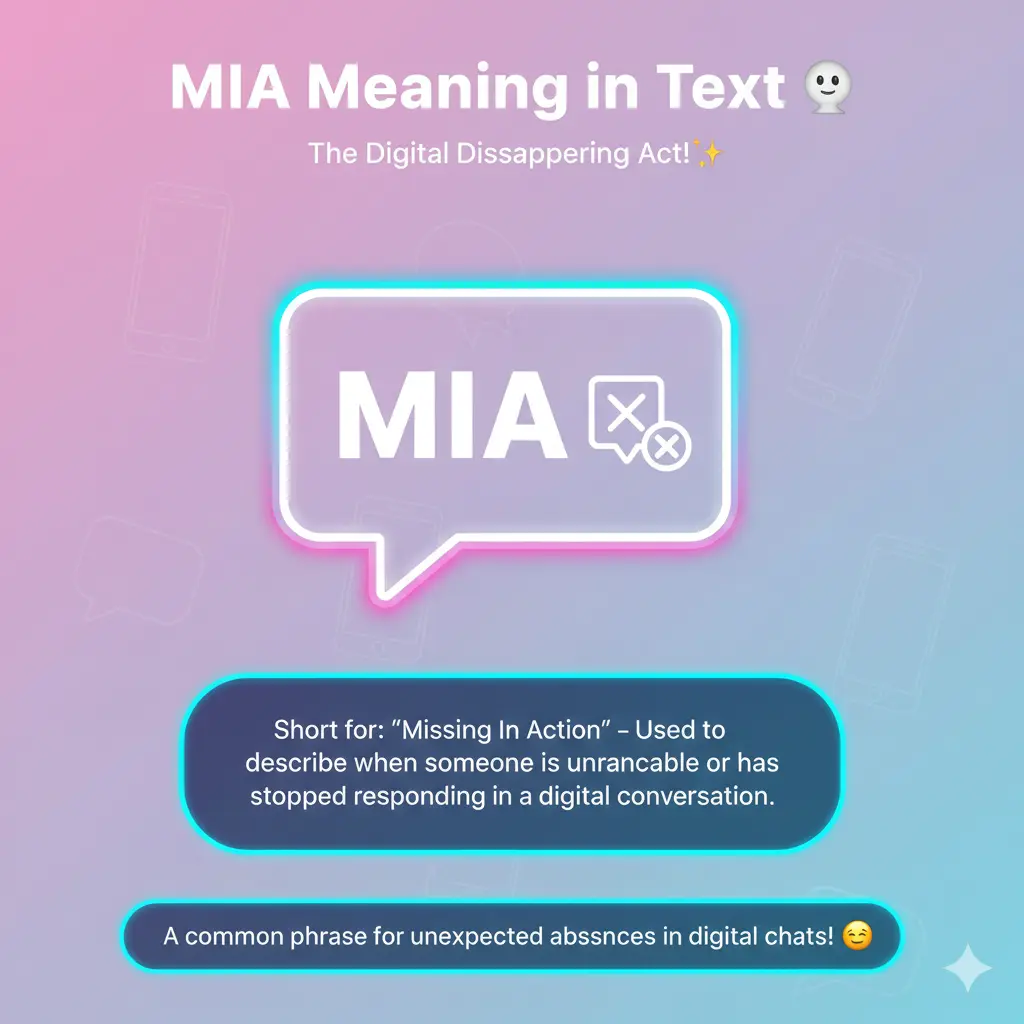
In texting, MIA stands for “Missing In Action.”
It’s used to describe someone who disappears, doesn’t reply, or becomes unavailable without notice.
Originally, “Missing in Action” is a military term, but in modern online slang, it’s become a casual way to say:
- You were gone for a while
- You didn’t respond to messages
- Someone went quiet or vanished online
- A friend hasn’t shown up or been active
Other meanings of MIA
While the most common meaning is “Missing In Action,” it can also mean:
- MIA (Name): Some people use “Mia” simply as a name, but this is usually clear from context.
- MIA in gaming: A teammate who’s disappeared or hasn’t communicated during gameplay.
In everyday texting, though, MIA almost always means someone was inactive or unavailable.

Where Is MIA Used?
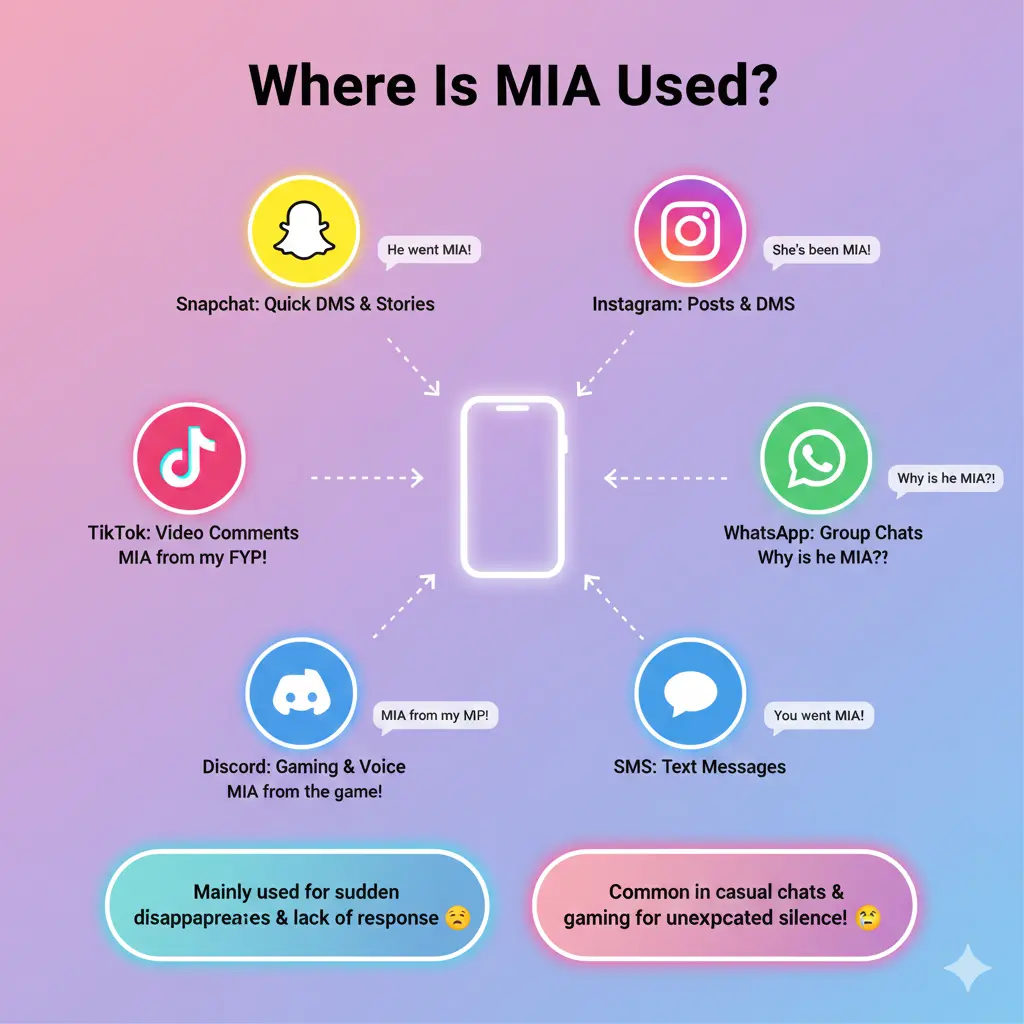
“MIA” is widely used across almost all social platforms and texting spaces. You’ll most commonly see it on:
- Snapchat – When someone loses streaks or disappears
- Instagram DMs – Especially in group chats
- TikTok comments – “My motivation has been MIA lately 😭”
- WhatsApp – Friends calling out someone who hasn’t replied
- Discord & Gaming Chats – For inactive players
- iMessage / Android Texting – Everyday casual use
It’s most popular among:
- Teens and young adults
- Gamers
- Group chat users
- People who communicate informally online
“MIA” is considered casual slang and is generally not used in professional settings.
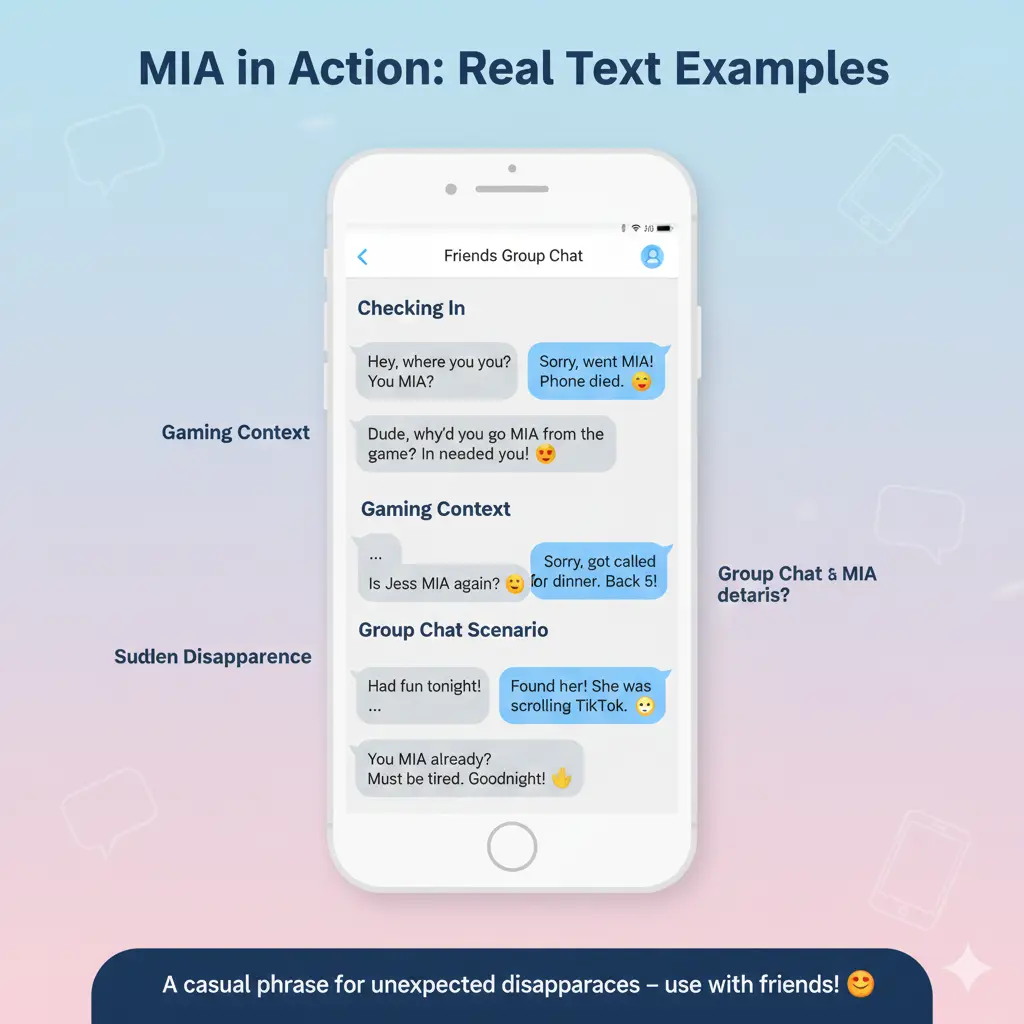
Examples of MIA in Conversation
Here are natural chat-style examples showing how “MIA” is used:
- Friend Chat
- A: “Bro where were you??”
- B: “Sorry I went MIA. Fell asleep 😭”
- Flirty
- A: “You went MIA all day 👀”
- B: “Haha sorry, had a busy schedule. Miss me? 😉”
- Funny
- A: “My motivation has been MIA since Monday 😩”
- Group Chat
- A: “We’re planning tonight’s dinner. Sarah is MIA again 😂”
- Gaming
- A: “Our healer went MIA mid-game 💀 no wonder we lost.”
- Apologetic
- “Hey guys, sorry I was MIA. Long day at work.”
- Casual
- “I’ll be MIA for a bit, need to finish assignments.”
These examples cover friendly, flirty, and humorous tones—just like real conversations.
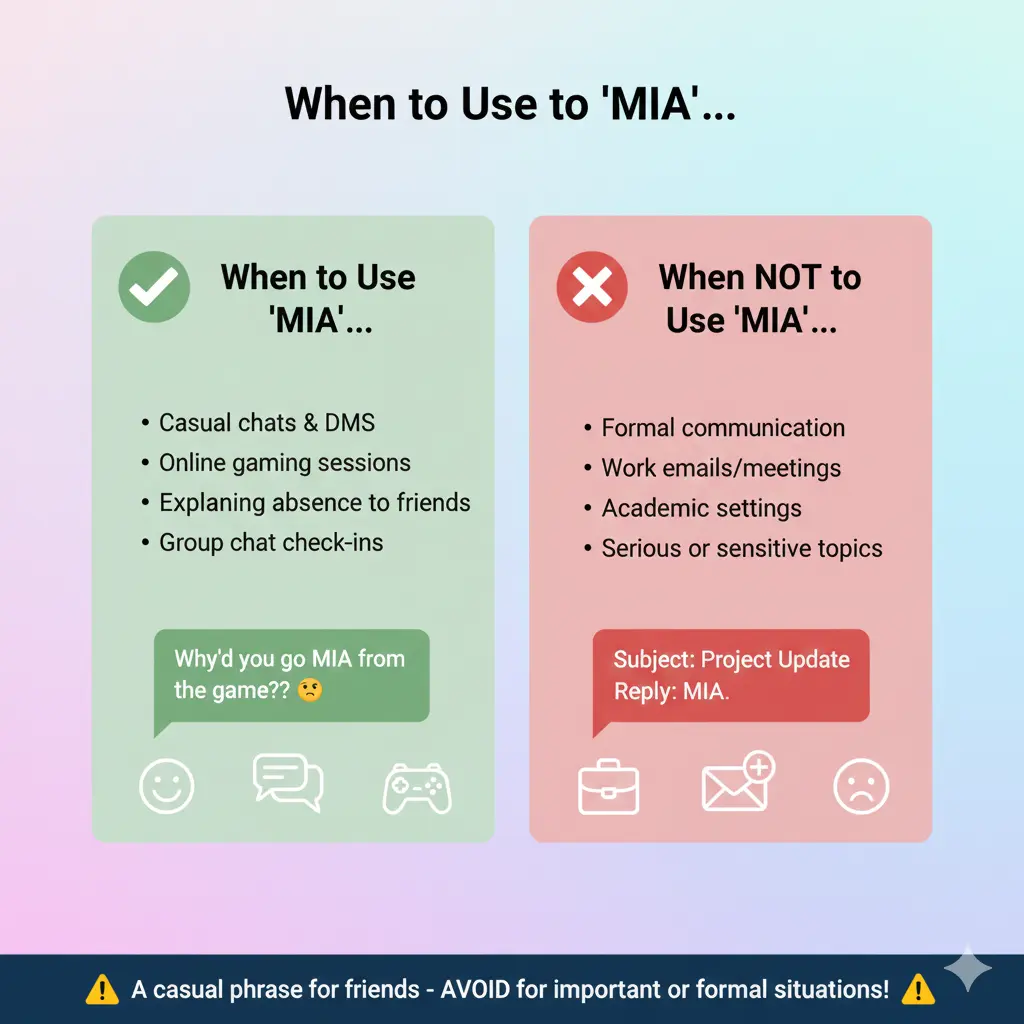
When to Use and When Not to Use MIA
✅ When You SHOULD Use MIA
Use “MIA” when:
- You didn’t reply for a while
- Someone else disappeared or went offline
- You want to explain your absence casually
- You’re chatting with friends, close contacts, or social media followers
- You’re talking about someone being inactive (online or in real life)
It works best in casual, humorous, or informal conversations.
❌ When You SHOULD NOT Use MIA
Avoid “MIA” when:
- Messaging teachers, bosses, clients, or colleagues
- Writing formal emails or school assignments
- Giving serious or sensitive explanations
- Talking about emergencies or real-life missing people (it can seem insensitive)
Because “MIA” is informal slang, it can sound unprofessional in work-related or formal situations.
Similar Slang Words or Alternatives
Here are some related texting terms with similar meanings:
1. AFK
Away From Keyboard – Common in gaming; means you’re temporarily gone.
2. BRB
Be Right Back – You’ll return in a few minutes.
3. GTG
Got To Go – You’re leaving the conversation.
4. OMW
On My Way – Used when you’re heading somewhere but not responding for a moment.
5. LMK
Let Me Know – Often used when waiting for updates from someone who might go silent.
These alternatives may work depending on how long you’ll be gone or why.
FAQs
1. What does MIA mean from a girl?
When a girl says she was “MIA,” it simply means she wasn’t active or didn’t reply for a while.
It usually isn’t rude—just an explanation for being unavailable.
If she says “You went MIA…”, it could mean she noticed your absence (sometimes slightly flirty).
2. Is MIA slang rude?
Not usually.
It’s casual and neutral, often used humorously.
It only becomes rude if used in a sensitive or serious context.
3. Can I use MIA in professional chats?
It’s better not to.
Use phrases like:
- “I was unavailable.”
- “Sorry for the delayed response.”
- “I stepped away for a moment.”
“MIA” is too informal for business communication.
4. Does MIA have a flirty meaning?
Sometimes, yes.
If someone says:
- “You were MIA 👀”
- “Don’t go MIA on me 😌”
…it can show interest because they’re noticing your absence.
Context matters.
5. Is MIA still popular in 2025?
Absolutely.
“MIA” is one of those timeless abbreviations that keeps trending because disappearing from chats is universal—and relatable.
Conclusion
“MIA” is a simple but widely used abbreviation meaning “Missing In Action.” Whether someone hasn’t replied, disappeared from social media, or went quiet in a group chat, “MIA” captures that moment perfectly. It’s casual, friendly, and easy to use—just keep it out of professional conversations. Now that you know what it means and how to use it, you can confidently drop it into your chats without confusion.