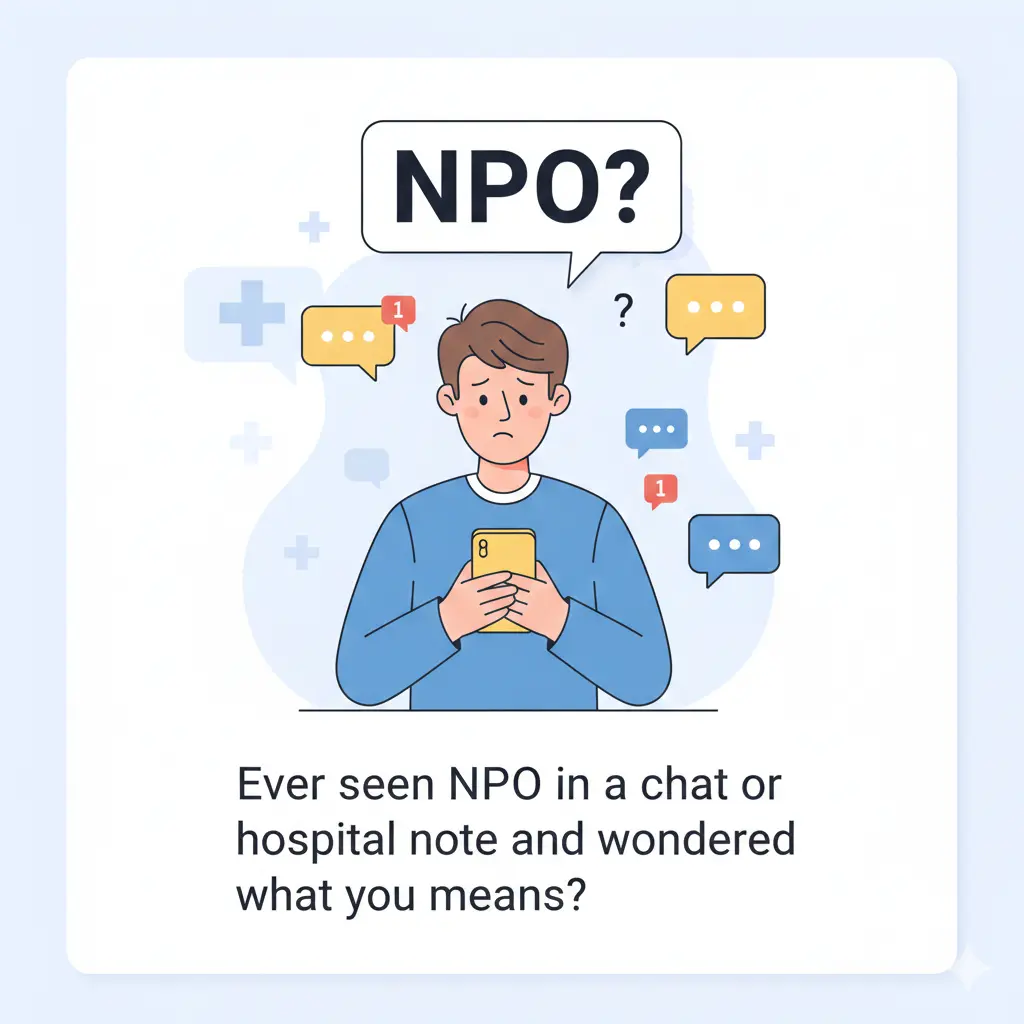
Have you ever been scrolling through a medical forum or a patient portal and suddenly stumbled upon the term “NPO”? You paused for a second, wondering, “Wait… is this a medical condition, a treatment, or some secret hospital code?” You’re not alone.
Many people see NPO in charts, prescriptions, or online conversations and have no clue what it really means.
In this post, we’re breaking down exactly what NPO means in medical terms, why doctors use it, and even how it sometimes pops up in casual discussions online.
By the end, you’ll know how to read, understand, and even use NPO correctly—without feeling confused or out of the loop.
Quick Answer:
NPO stands for “nil per os” (Latin for “nothing by mouth”). It’s a medical instruction telling a patient not to eat or drink anything, usually before surgery, tests, or certain procedures.
What Does NPO Mean in Text?
In medical language, NPO stands for “nil per os,” which is Latin for “nothing by mouth.” Essentially, it’s a directive used by doctors and nurses to tell a patient not to eat or drink anything for a certain period of time.
Why use Latin? Medical professionals love it because it’s concise, universal, and avoids language barriers. Instead of writing a whole sentence like “Don’t eat or drink,” NPO quickly communicates the same instruction in charts, prescriptions, or hospital notes.
Sometimes, people might see NPO in texts or forums, and they might wonder if it’s slang. Technically, it isn’t “text slang” in the casual sense—it’s professional shorthand—but because it sometimes appears in patient-to-patient conversations online, people do ask about it in casual chats.
Variations you might see:
- NPO after midnight – meaning don’t eat or drink after 12 a.m. before a procedure.
- NPO status – the patient is currently not allowed to consume food or liquids.
- Occasionally, NPO may appear jokingly in memes or hospital TikToks as a shorthand for “no food allowed.”
Where Is NPO Used?
NPO is most commonly seen in hospitals, clinics, and surgical settings. Doctors, nurses, and dietitians use it to prevent complications like aspiration (food entering the lungs) before surgery or certain tests.
Common contexts:
- Pre-surgery instructions (e.g., “Patient must be NPO 8 hours before operation”)
- Medical charts and electronic health records
- Patient care notes in hospitals or nursing homes
- Online medical forums where patients share experiences
In casual settings:
- While not typical everyday slang, you might see NPO used jokingly in memes or TikTok videos about fasting or dieting.
- Teens or college students with friends in medical fields might drop it in chats as a playful way of saying “no eating right now.”
Examples of NPO in Conversation
Here are some realistic ways NPO might appear in chats, forums, or social posts:
- Friendly/Informative:
- Patient: “I’m so hungry!”
- Friend: “Ugh, I know… but you’re NPO until your surgery.”
- Funny Meme-Style:
- Text post: “Me at 11:59 PM: eating chips. Me at 12:00 AM: officially NPO 😭”
- Professional/Patient Portal:
- Doctor: “You’ll be NPO after midnight. Bring only your ID and insurance card to the hospital.”
- Casual Chat with Medical Student:
- Friend: “Why are you so grumpy today?”
- You: “NPO since 8 AM… I’m basically hangry 😅”
- Flirty/Lighthearted:
- Text: “You’re not allowed to eat my snacks… unless you’re NPO like me 😏”
- Emergency Context:
- Nurse: “Patient is NPO for upcoming procedure. Make sure nothing by mouth for 6 hours.”
When to Use and When Not to Use NPO
When it fits:
- Medical discussions or patient care contexts
- Online forums where users talk about surgeries, fasting, or hospital stays
- Lighthearted jokes with friends who understand the reference
When to avoid:
- School assignments or essays (it’s too informal without explanation)
- Professional business emails or non-medical work chats
- Situations where people might think you’re using random abbreviations—clarity is key
Remember, NPO is primarily a professional medical term. Using it casually works only when your audience understands it; otherwise, it can be confusing.
Similar Slang Words or Alternatives
If you’re looking for similar abbreviations, here are a few related terms:
- PO (Per Os) – “By mouth” (opposite of NPO)
- NAD – “No abnormality detected,” common in medical notes
- PRN – “As needed,” often used for medication
- BID/TID/QID – Prescriptions shorthand for “twice a day,” “three times a day,” “four times a day”
These terms are less about texting slang and more about medical shorthand, but they sometimes appear in patient discussions online.
FAQS:
What does NPO mean from a girl?
If someone casually texts “I’m NPO,” it usually just means they can’t eat or drink anything at the moment—nothing flirty implied unless context suggests joking.
Is NPO slang rude?
Not at all! It’s purely professional or neutral. Using it jokingly in a casual chat might be funny, but it’s never offensive.
Can I use NPO in professional chats?
Yes, if your chat is with medical colleagues or within a hospital context. Avoid it in general business or corporate emails—it could confuse people.
Does NPO have any flirty meaning?
Rarely, but some people playfully use it to suggest “no snacks, no fun” in a humorous, flirty way.
Is NPO still popular in 2026?
Absolutely. NPO remains standard in medical practice worldwide and occasionally pops up in memes or online hospital discussions.
Conclusion
So next time you see NPO on a chart, in a message, or even on social media, you’ll know it means “nothing by mouth.” It’s professional shorthand used to make hospital instructions clear and concise.
Quick tip for online chats: Use NPO lightly in casual texts only if your friends understand the reference. Otherwise, stick to plain language like “no eating” to avoid confusion. Knowing this term helps you navigate medical content confidently—and maybe even impress a friend with your savvy hospital vocab.

Emma Collins is a digital content writer who specializes in internet slang, social media trends, and clear, user-focused explainers. She writes engaging, optimized content that helps readers understand modern online language with ease and confidence.