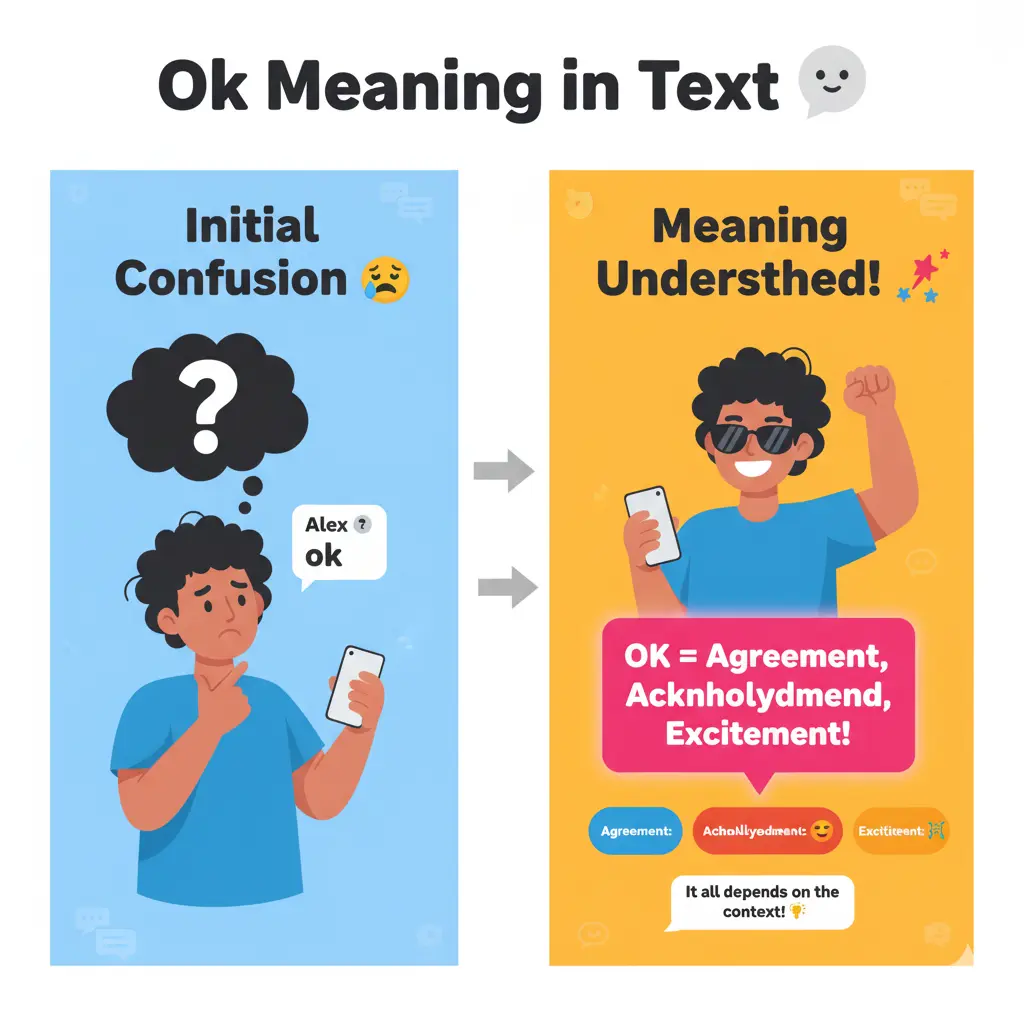
Have you ever received a message that simply said “ok” and paused for a second, wondering, “Wait… what does this actually mean?” You’re not alone.
With texting and social media, words that seem simple can carry different meanings depending on context, tone, or who’s sending them. “Ok” is one of the most common examples — it’s short, easy to type, and seems straightforward, but it can express agreement, indifference, frustration, or even sarcasm.
In this post, we’ll break down the ok meaning in text, show you when and where to use it, and give real-life examples so you can text confidently.
What Does Ok Mean in Text?
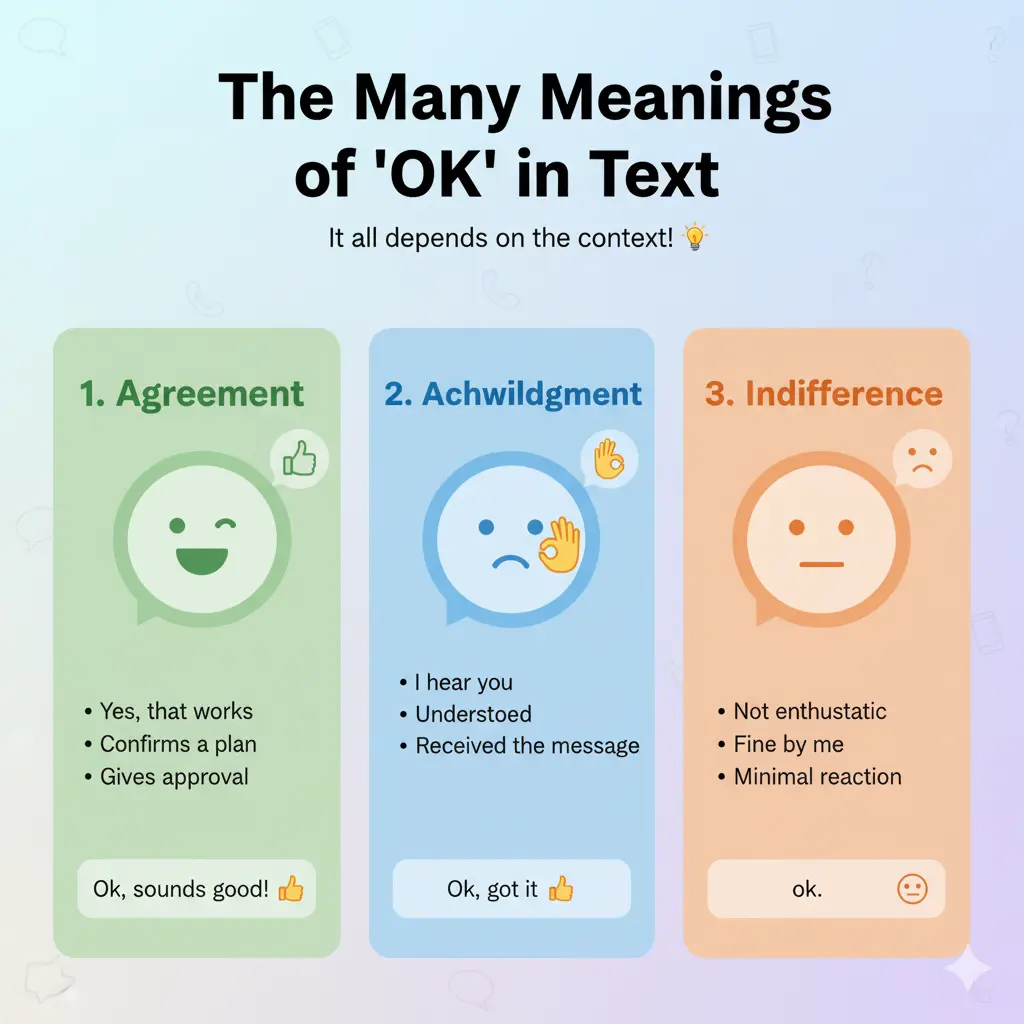
At its core, “ok” is a way to show agreement, acceptance, or acknowledgment. It’s one of the oldest and simplest pieces of digital communication, but context matters a lot. For example:
- Agreement: “Ok, I’ll meet you at 5 PM.”
- Acknowledgment: “Ok, got it.”
- Indifference or minimal response: Sometimes a plain “ok” can signal that the sender isn’t very engaged or is neutral.
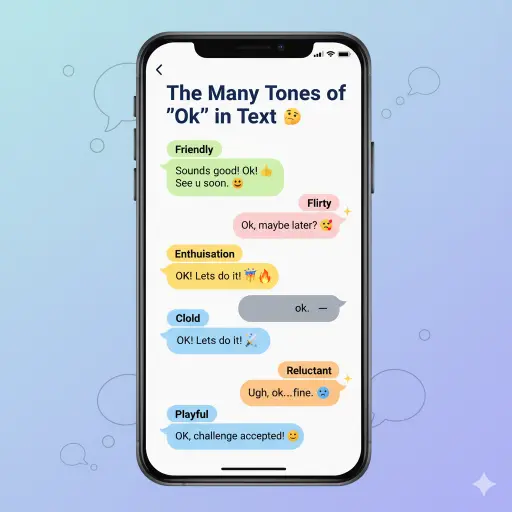
Interestingly, “ok” can also carry tone-based meaning. A cheerful “ok!” with an exclamation mark usually shows excitement or enthusiasm, while a single “ok.” with a period can feel cold, annoyed, or dismissive. In texting, these subtle differences can completely change the message’s vibe.
Variations of ok:
- OK: Capitalized for emphasis.
- Okk / Okey / Okee: Friendly, casual variants.
- 👌 emoji: Often used to reinforce agreement.
Where Is Ok Used?
You can see “ok” almost anywhere online. It’s universal and appears in nearly all digital platforms:
- Text messages: The most common place for “ok” in daily conversations with friends, family, or colleagues.
- WhatsApp & Messenger: Quick replies in casual chats.
- Instagram & TikTok comments: Used to acknowledge posts or respond to updates.
- Snapchat: Especially in streak or story replies.
- Email & Professional Chats: Sometimes acceptable in informal internal communications, though overuse may seem curt.
While “ok” is widely understood, it’s especially popular among teens, young adults, and social media users because it’s short, easy, and fits the fast-paced nature of texting.

Examples of Ok in Conversation
Here are some realistic chat-style examples of “ok” in use:
1. Friendly / Neutral:
A: Can you pick up coffee on your way?
B: Ok.
2. Enthusiastic / Positive:
A: We got front row tickets to the concert!
B: Ok!!! That’s amazing 🎉
3. Flirty / Casual:
A: I’ll see you later 😉
B: Ok 😏
4. Slightly Cold / Annoyed:
A: I can’t make it tonight.
B: Ok.
5. Confirming Understanding:
A: Don’t forget to send the report before 3 PM.
B: Ok, I’ll do it.
6. Playful / Texting with Friends:
A: Bet you can’t finish that burger.
B: Ok, watch me 😎
7. Quick Acknowledgment:
A: I sent the document.
B: Ok, got it.
When to Use and When Not To Use Ok
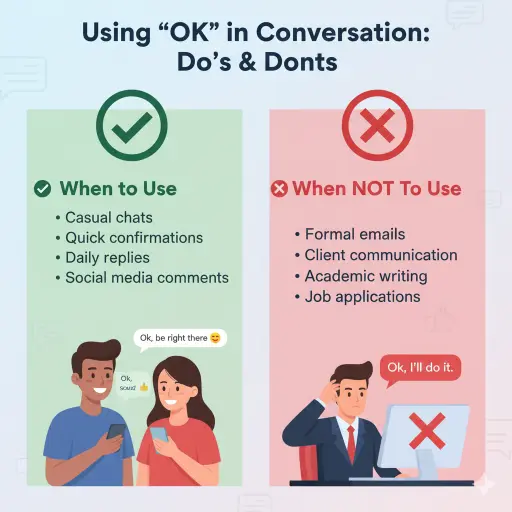
✅ When to Use “Ok”
- When you agree with a statement or accept a plan.
- As a quick acknowledgment in conversations.
- To keep messages concise in fast-paced texting.
- When responding to casual or informal messages on social media or messaging apps.
❌ When Not To Use “Ok”
- Avoid using a plain “ok.” in formal emails — it can appear curt or unprofessional.
- Don’t rely on “ok” for important instructions or confirmations; clarity is better.
- Be cautious when using a single “ok” in sensitive conversations, as it might feel dismissive.
Tip: Adjust your punctuation and emojis to match the tone. For example, “Ok!” is enthusiastic, while “ok.” can be neutral or slightly annoyed.
Similar Slang Words or Alternatives
Here are some related phrases you can use instead of “ok”, depending on tone:
- Yep / Yup: Friendly and casual agreement.
- Sure: Polite acknowledgment.
- Got it: Confirms understanding.
- Alright / Alrighty: Slightly casual, positive agreement.
- Cool: Friendly and modern acknowledgment, often casual.
These alternatives can help you vary your texting style and make your messages feel more expressive.
FAQs
1. What does “ok” mean from a girl?
It depends on context. A cheerful “ok!” usually shows excitement or agreement, while a single “ok.” might suggest indifference or mild annoyance.
2. Is “ok” slang rude?
Not inherently. But in texting, a plain “ok.” without punctuation can sometimes feel curt or dismissive.
3. Can I use “ok” in professional chats?
Yes, but only in informal internal communication. In emails or formal messages, it’s better to write full phrases like “Understood” or “Got it.”
4. Does “ok” have any flirty meaning?
It can. Combined with emojis or playful punctuation, “ok 😉” can be a lighthearted or flirty acknowledgment.
5. Is “ok” still popular in 2025?
Absolutely! It remains one of the most widely used, universal texting terms because it’s short, versatile, and easy to type.
Conclusion
So, what’s the ok meaning in text? It’s a short, simple way to show agreement, acknowledgment, or understanding, but context and punctuation can completely change its tone. Using “ok” correctly helps your messages feel clear, concise, and friendly. Next time you text a friend, colleague, or crush, you’ll know exactly how to use “ok” — and how to read it too!