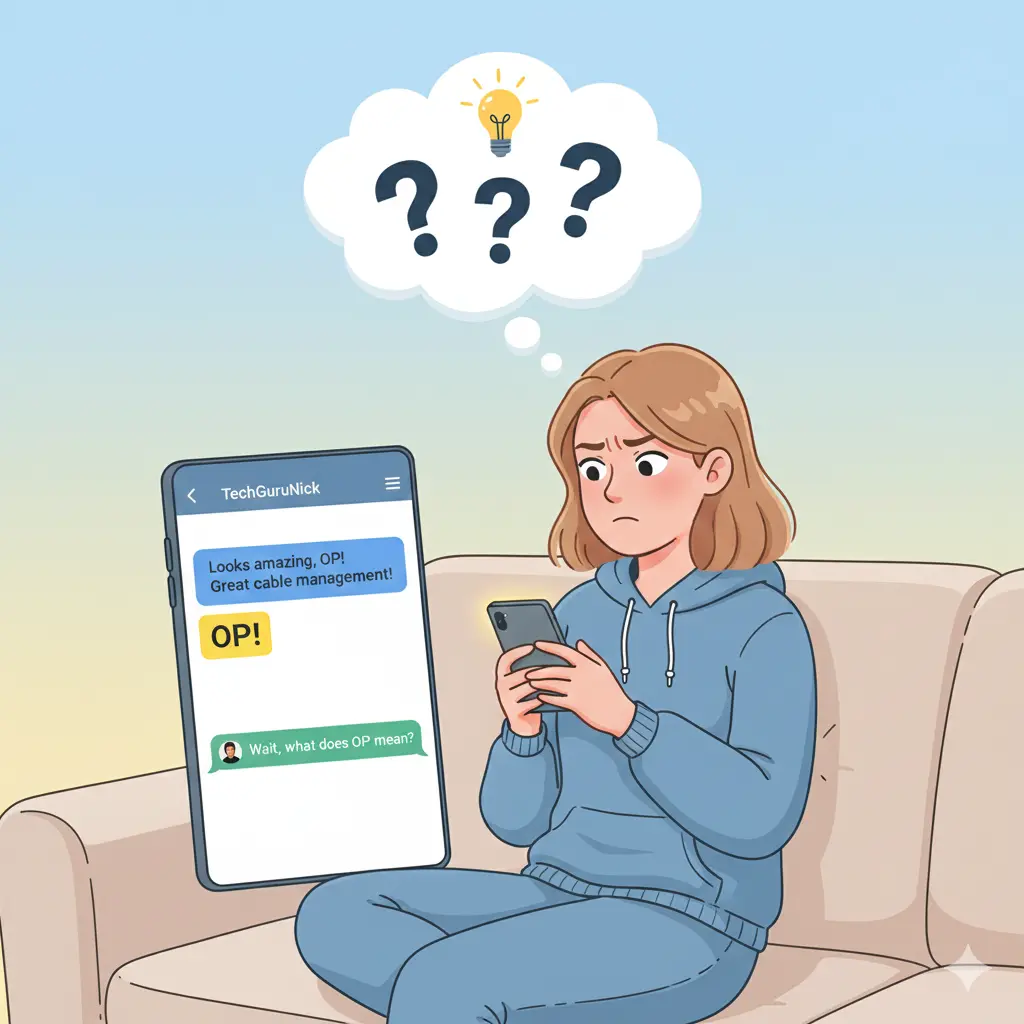
OP meaning in text first confused me while I was scrolling through a comment section and saw people repeatedly saying things like “OP is right” and “ask OP.” I remember pausing and thinking, Who is OP here? Instead of guessing, I decided to understand it properly. That’s when I learned that OP usually stands for “Original Poster,” the person who created the post or started the conversation.
Once I understood the OP meaning in text, everything started making sense. I could finally follow discussions without feeling lost, and now I even use OP confidently when chatting or replying online. Knowing this small piece of internet slang made online conversations feel much clearer and more natural.
What Does OP Mean in Text?
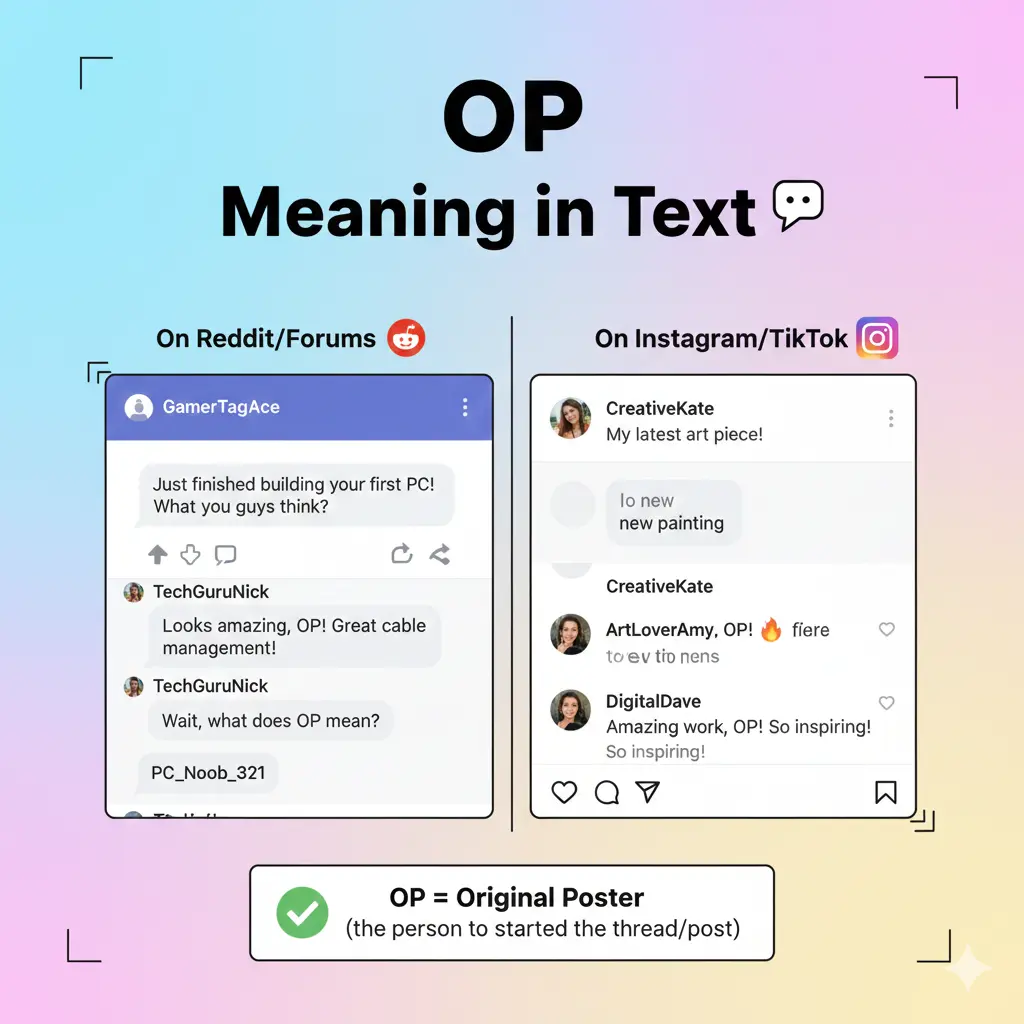
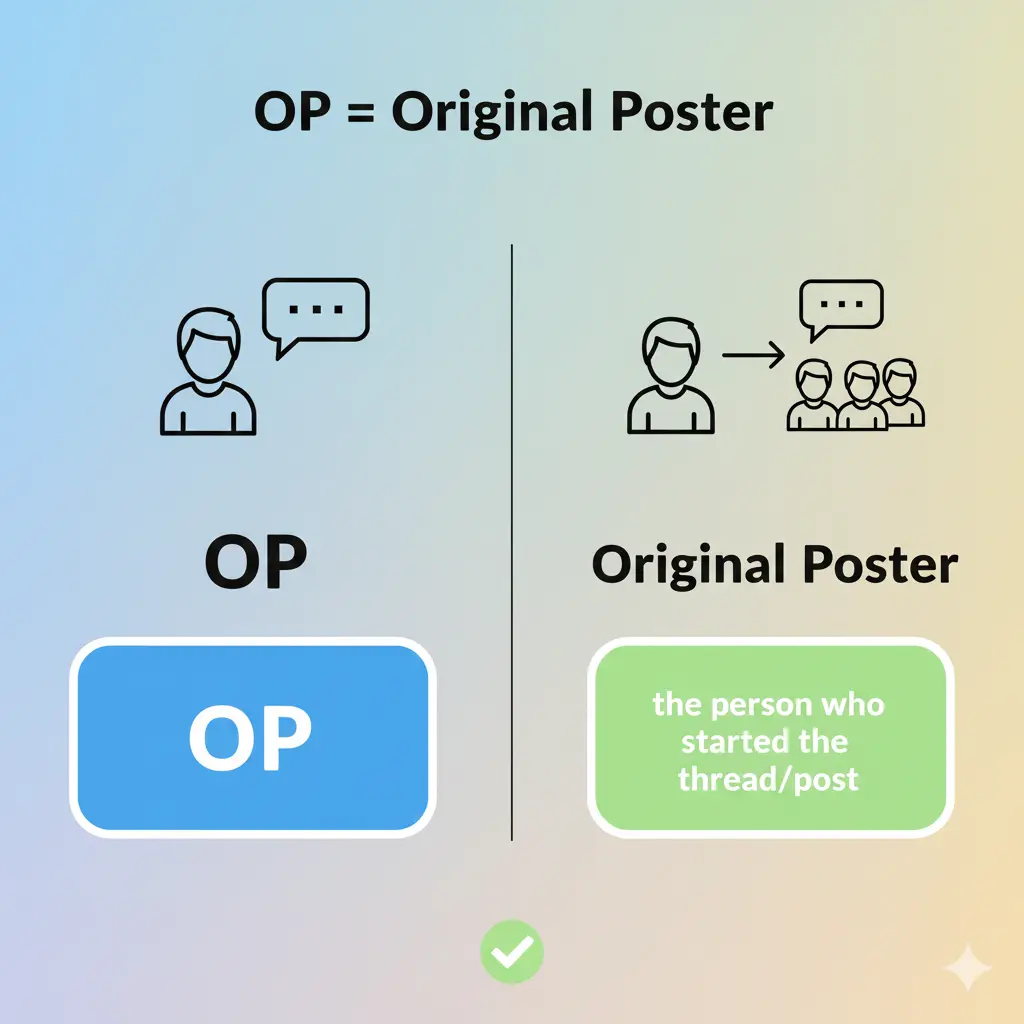
OP most commonly stands for “Original Poster.”
In simple words, OP refers to the person who started a conversation, post, or thread. If someone writes a post on Reddit, starts a discussion on Facebook, or uploads a story that people are replying to, that person is called the OP.
For example:
- If you post a question and people reply to it, you are the OP.
- If someone comments, “OP explained this really well,” they’re talking about the original person who posted.
Does OP Have Other Meanings?
Yes—context matters. While Original Poster is the most common meaning, OP can also mean:
- Overpowered (mostly in gaming)
- Original Post (referring to the post itself, not the person)
- Opposition (less common in casual text)
However, when you see OP meaning in text on social media or comment sections, Original Poster is almost always what people mean.
Where Is OP Used?
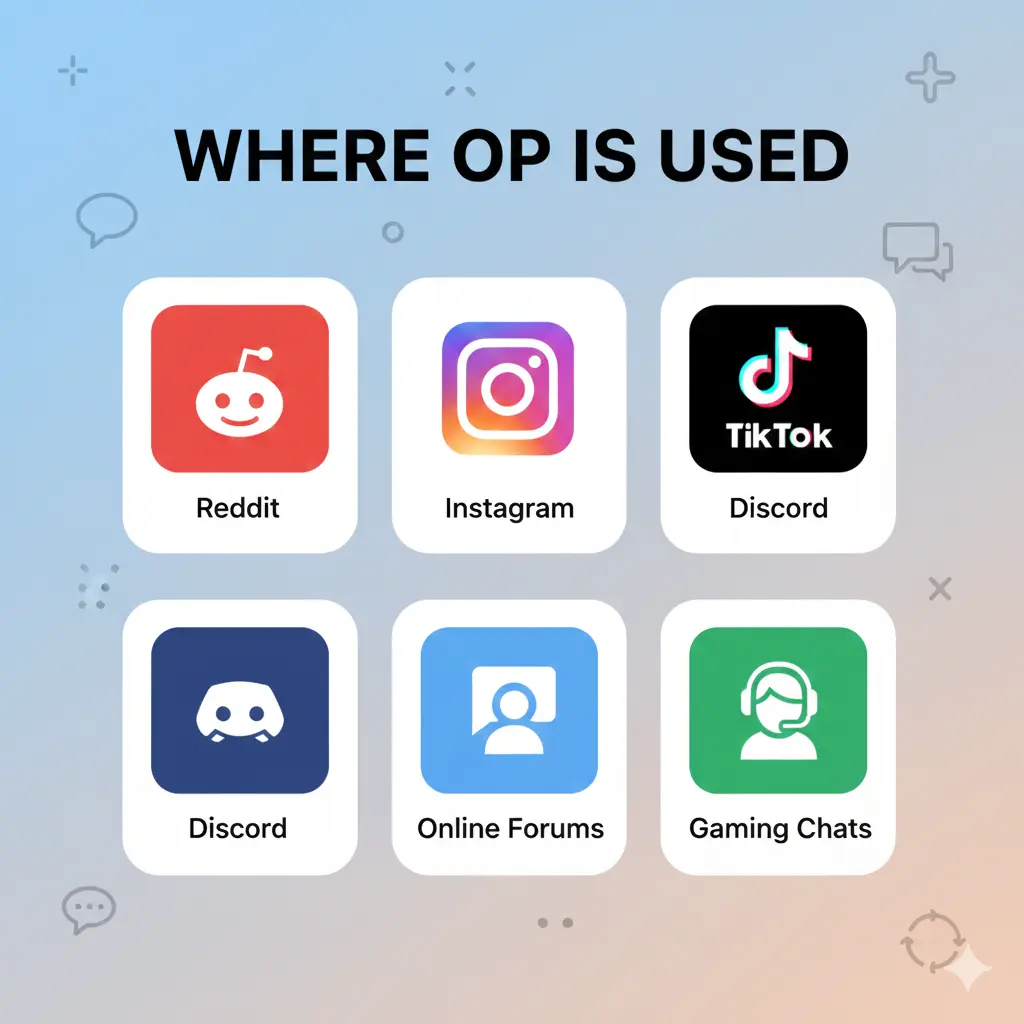
OP is mainly used in online and digital conversations, especially where posts and comments exist.
You’ll often see OP used on:
- Reddit (very common)
- Instagram comments
- Facebook groups
- TikTok comment sections
- Twitter/X replies
- Online forums
- Discord servers
It’s especially popular among:
- Internet users
- Teens and young adults
- Gamers
- People active in online communities
In regular one-on-one texting, OP is less common, but it still shows up when someone is talking about a post or message indirectly.
Examples of OP in Conversation
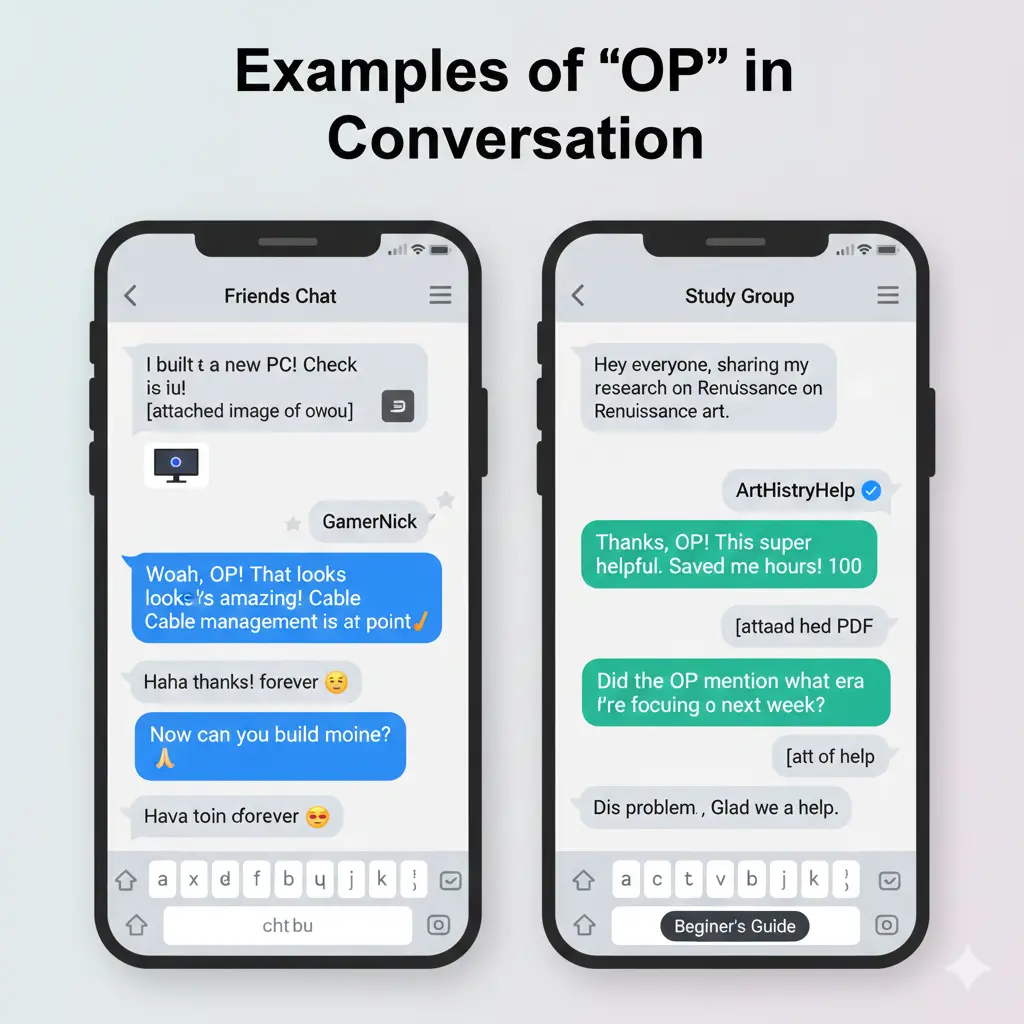
Here are some realistic, chat-style examples to show how OP is used naturally:
- Reddit comment:
“OP makes a good point about work-life balance.” - Instagram comment:
“Can someone explain what OP meant in the caption?” - Group chat:
“Wait, who’s OP in this conversation?” - TikTok reply:
“I agree with OP, this trend is getting old.” - Gaming forum:
“OP should update the post with the latest patch notes.” - Casual chat:
“The OP already answered that question above.” - Friendly tone:
“OP, thanks for sharing your experience!”
As you can see, OP is neutral and descriptive—it’s not emotional or rude on its own.
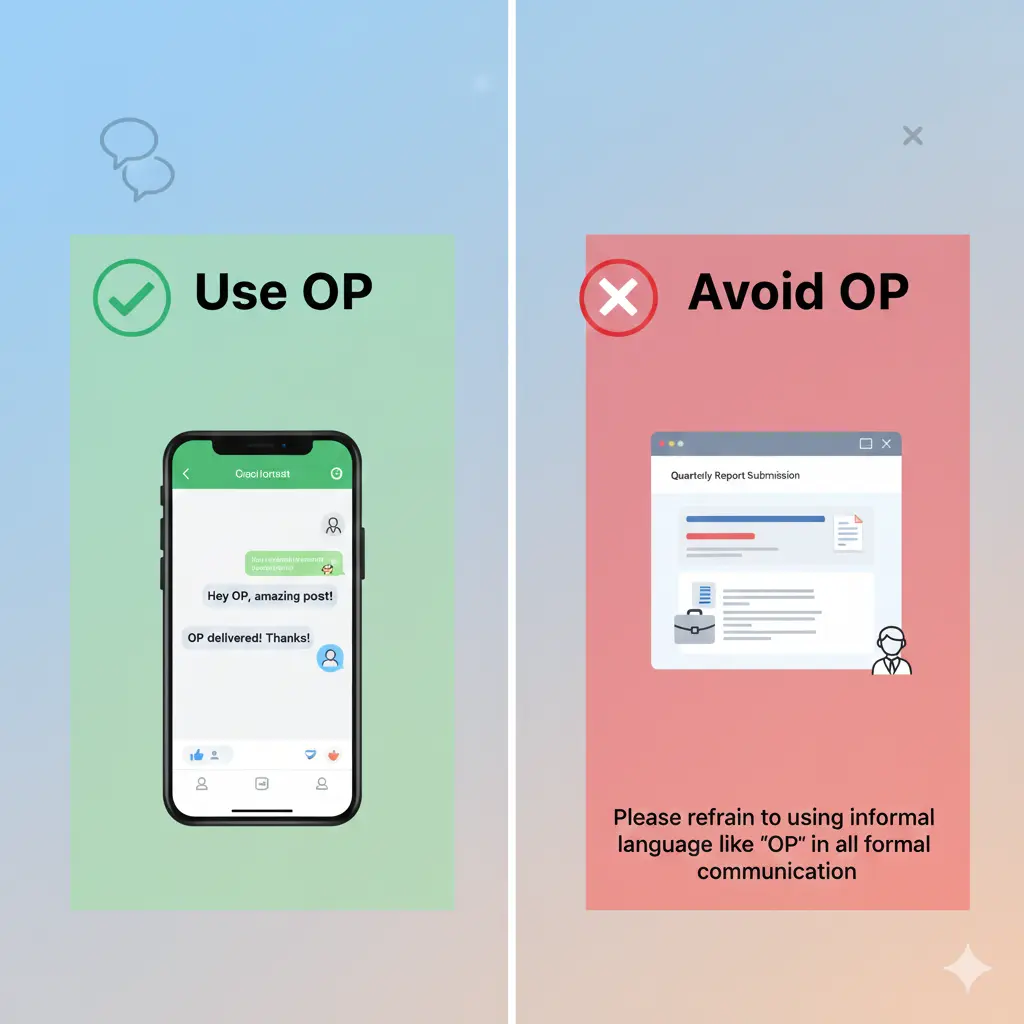
When to Use and When Not To Use OP
✅ When It’s Okay to Use OP
Use OP when:
- You’re commenting on a post or thread
- You’re referring to the person who started the discussion
- You’re chatting casually online
- You’re on forums, social media, or gaming platforms
It’s especially useful when you don’t know the person’s name or username.
❌ When You Should Avoid Using OP
Avoid using OP when:
- Writing professional emails
- Talking to someone unfamiliar with internet slang
- Speaking face-to-face (it sounds awkward out loud)
- Writing formal school or work assignments
In professional settings, it’s better to say:
- “The author”
- “The person who posted”
- “The original message”
So yes—OP is casual, not formal.
Is OP Friendly, Casual, or Flirty?
Let’s clear this up:
- Tone: Neutral to casual
- Friendly? Yes
- Flirty? No
- Professional? No
OP itself does not have a flirty or emotional meaning. It’s simply a label. Any friendliness or attitude comes from the rest of the sentence, not the word OP.
For example:
- “OP is hilarious 😂” → friendly
- “OP is wrong” → critical
- “OP is cute” → the sentence is flirty, not the word OP
Similar Slang Words or Alternatives
Here are some related or similar terms you might see online:
- OC (Original Content): Content made by the original creator
- Thread starter: Another way to say OP
- Author: Formal alternative
- Poster: Simple replacement
- Creator: Used on platforms like TikTok or YouTube
Each has a slightly different tone, but OP is the most common in casual online spaces.
FAQs About OP Meaning in Text
What does OP mean from a girl?
It means the same thing: Original Poster. Gender doesn’t change the meaning at all.
Is OP slang rude?
No, OP is not rude. It’s a neutral term. It only sounds rude if the sentence itself is rude.
Can I use OP in professional chats?
It’s best not to. OP is informal internet slang and may confuse people in professional settings.
Does OP have a flirty meaning?
No. OP is not flirty on its own. Any flirtiness comes from the surrounding message.
Is OP still popular in 2025?
Yes! OP is still widely used in 2025, especially on Reddit, TikTok, and online forums.
OP Meaning in Gaming Text
In gaming, OP can also mean “Overpowered.”
For example:
- “That weapon is OP.”
- “This character is way too OP.”
In this case, OP has nothing to do with posting—it means something is too strong or unbalanced in the game. Always check the context to know which meaning fits.
Why Understanding OP Matters
Internet slang evolves fast, and OP is one of those terms that shows up everywhere without explanation. Knowing op meaning in text helps you:
- Understand comments better
- Join online discussions confidently
- Avoid awkward misunderstandings
- Sound more internet-savvy
Once you learn it, you’ll notice it constantly—and probably start using it yourself without thinking.
Conclusion
To sum it up, OP meaning in text usually refers to the Original Poster—the person who started a post or discussion. It’s a casual, widely used internet term that helps people talk about posts without repeating names or usernames. While it’s perfect for social media, forums, and gaming chats, it’s not meant for professional or formal communication. As long as you understand the context, OP is easy, harmless, and super useful. Now the next time you see “OP said this,” you’ll know exactly what’s going on—and you won’t feel lost in the comments anymore.

Emma Collins is a digital content writer who specializes in internet slang, social media trends, and clear, user-focused explainers. She writes engaging, optimized content that helps readers understand modern online language with ease and confidence.