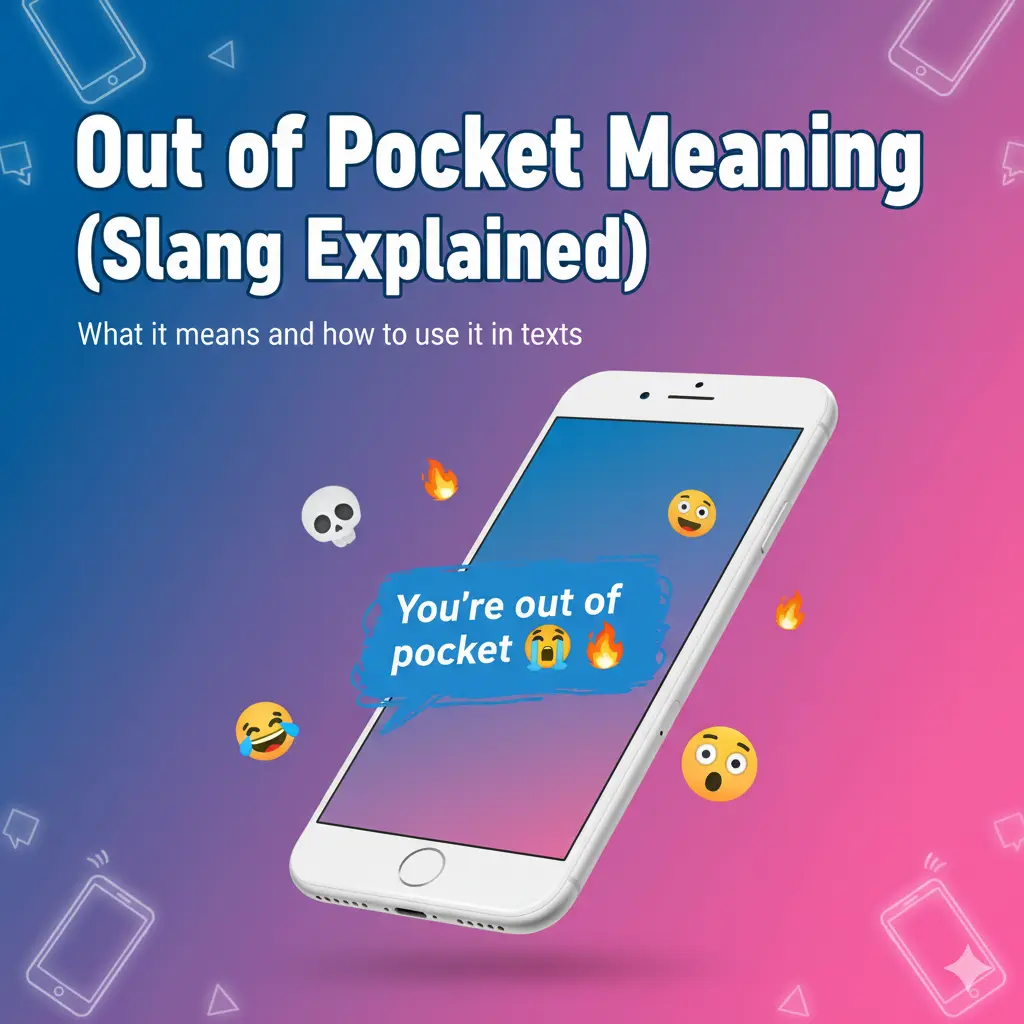
If you’ve ever wondered the out of pocket meaning slang, you’re not alone 💸. At first, I thought someone was talking about money, but online, this phrase has taken on a totally different vibe.
People now use it in texts, tweets, or TikTok comments to call out wild, unexpected, or straight-up inappropriate behavior.
In this guide, we’ll break down the out of pocket meaning slang, show real examples, and help you understand exactly how to use it in chats and social media.
I remember the first time someone said, “That comment was out of pocket,” and I instantly thought they were talking about money 💸.
Turns out, I was way off. If you’ve seen out of pocket used in texts, tweets, or TikTok comments and felt confused, you’re not alone.
This slang phrase has taken on a totally different meaning online, and people now use it to react to wild, unexpected, or straight-up inappropriate behavior.
What Does “Out of Pocket” Mean in Text?
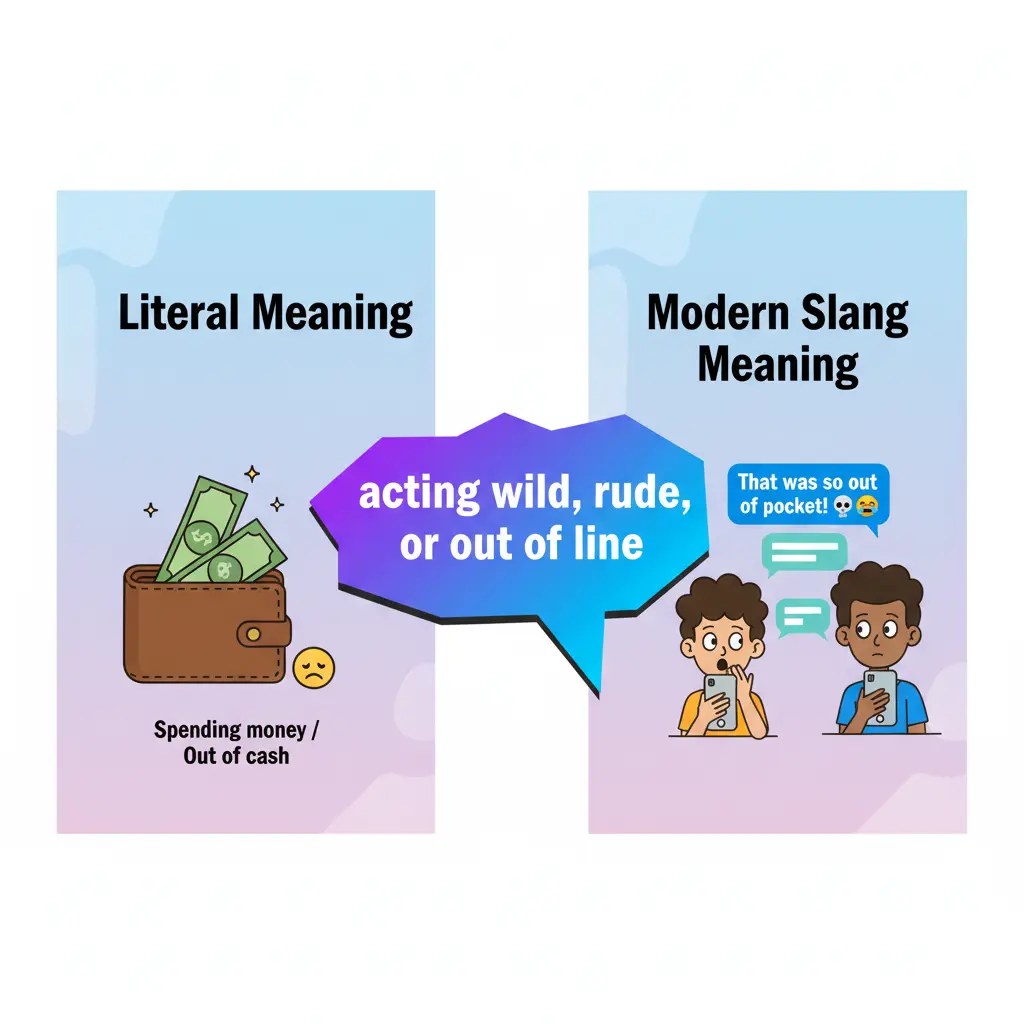
In everyday slang, “out of pocket” means someone is acting crazy, rude, disrespectful, or out of line. It’s used when someone says or does something unexpected — usually in a funny or shocking way.
For example, if your friend roasts someone too hard in a group chat, you might say,
👉 “Bro, that was out of pocket 💀”
Originally, the phrase “out of pocket” had a totally different meaning — it referred to spending your own money (like “I paid out of pocket”). But in modern slang, it’s evolved into something else entirely: calling out wild, bold, or even offensive behavior.
Depending on the tone, “out of pocket” can sound funny, annoyed, or even shocked. It’s part of Gen Z’s way of reacting when someone “crosses the line” — either jokingly or seriously.
Where Is “Out of Pocket” Used?
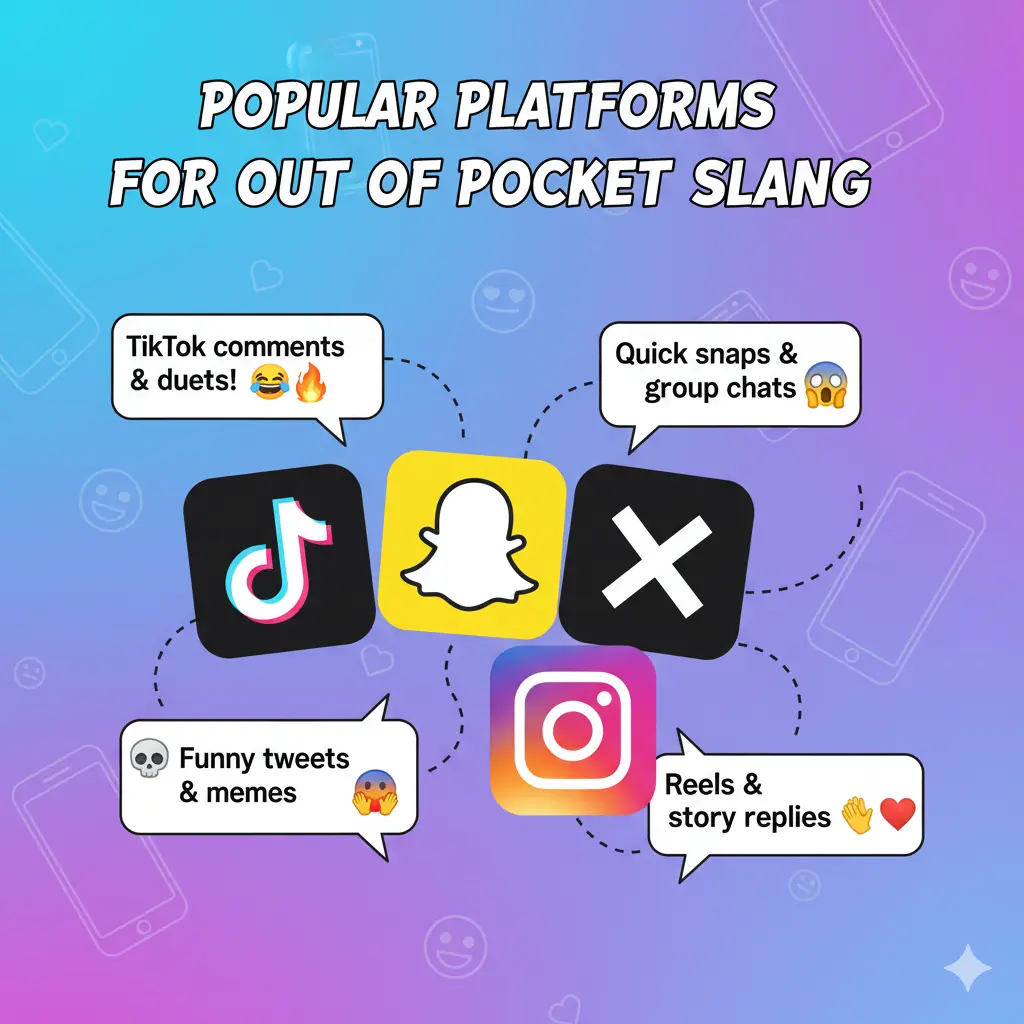
The slang “out of pocket” is super popular on TikTok, Twitter (X), Instagram, Snapchat, and group chats. You’ll see it a lot in reaction videos, memes, and comment sections where people describe outrageous behavior.
It’s especially common among:
- Gen Z and Millennials
- Gamers and meme creators
- Group chat culture on Snapchat and Discord
Example:
- On TikTok, you might see a video of someone pranking their teacher, and the top comment says: “Nah this is out of pocket 😭”
- On Twitter, someone might reply to a savage tweet with: “You’re out of pocket for saying that 😭🔥”
In short — whenever someone does something a little too bold, too funny, or just plain wrong, you can bet “out of pocket” will appear in the comments.
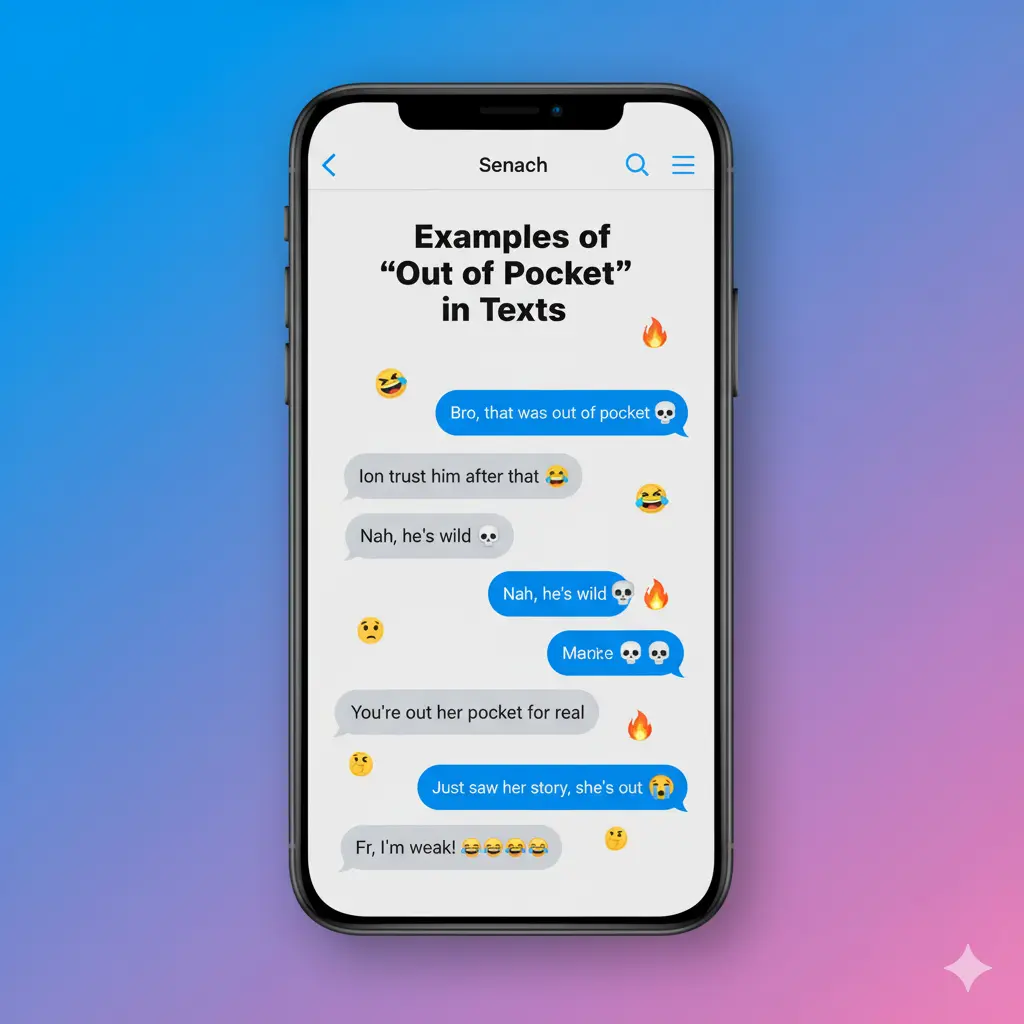
Examples of “Out of Pocket” in Conversation
Here are a few realistic examples of how people use “out of pocket” in text, memes, and DMs 👇
- Jake: Bro did you just roast your boss like that?
Sam: Yeah 😂
Jake: You’re out of pocket for real 😭 - Lily: He told his mom she was “mid.”
Ava: Omg that’s so out of pocket 💀 - Ryan: I just texted my ex “miss you” by accident 😭
Tom: You’re out of pocket, bro. - Taylor: I told my teacher his outfit was giving dad vibes 😂
Jordan: That’s out of pocket but hilarious. - Chris: She called her best friend out on TikTok 😬
Alex: Nah, she’s wild — out of pocket behavior fr. - Jess: Why would he say that in a work chat?
Mia: Idk, that was way out of pocket 😭 - Dylan: Bro sent a meme to the wrong group chat 💀
Noah: Yeah, he’s definitely out of pocket today.
As you can see, it’s mostly used in casual, friendly, and funny contexts — never formal or professional ones.
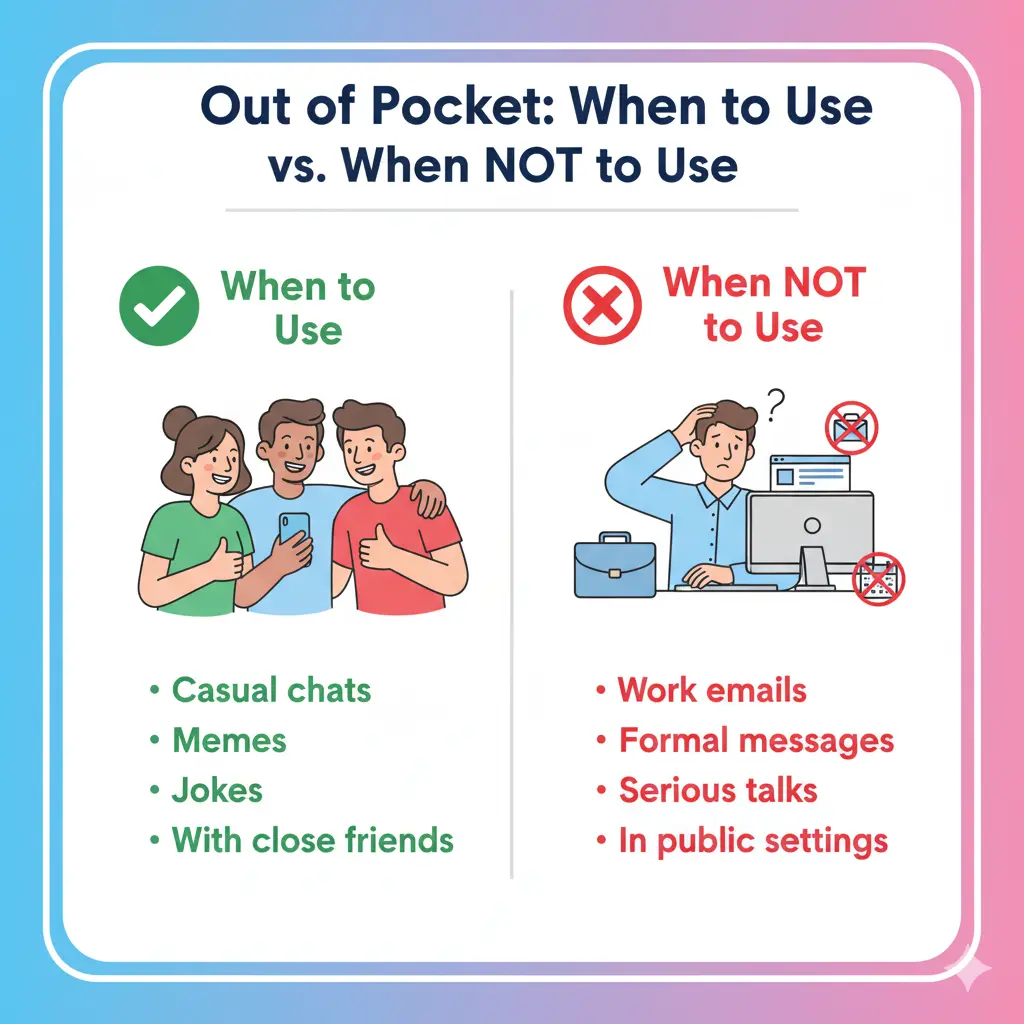
When to Use and When Not To Use “Out of Pocket”
✅ When to Use:
- In casual chats with friends or on social media.
- When describing someone’s wild or unexpected behavior.
- When reacting to a funny, savage, or chaotic moment.
❌ When NOT to Use:
- In professional settings (emails, school reports, or work messages).
- When talking to older people who might not get the slang — they could think you mean “out of money.”
- In serious conversations — it might come off as disrespectful.
The key is tone. Saying “you’re out of pocket” in a funny or shocked way is totally normal among friends. But saying it in a serious or formal chat might confuse or offend people.
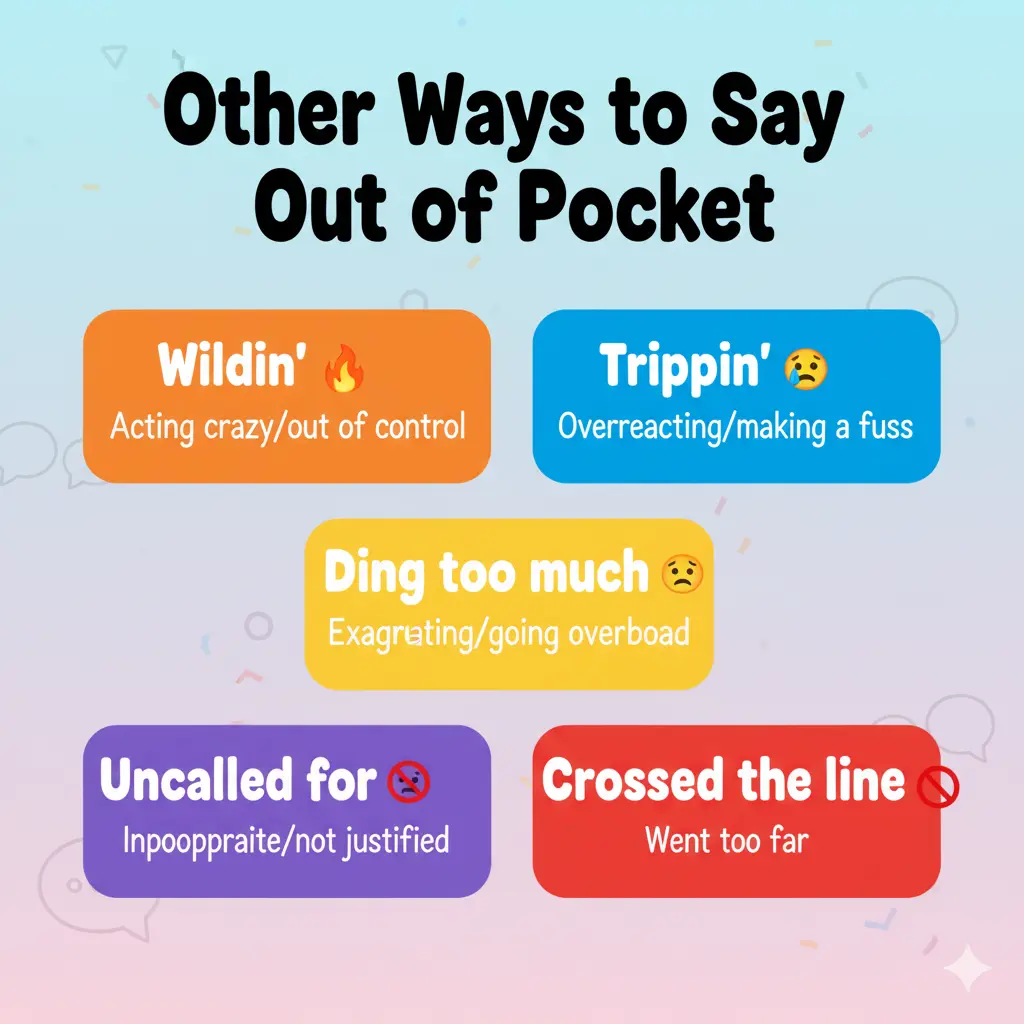
Similar Slang Words or Alternatives
Here are a few slang terms that mean something similar to “out of pocket” — perfect for mixing up your online vibe:
- Wildin’ – Acting crazy or out of control.
Example: “He’s wildin’ for saying that.” - Trippin’ – Overreacting or being dramatic.
Example: “You’re trippin’ if you think that’s okay.” - Doing too much – When someone goes overboard.
Example: “She’s doing too much in the comments.” - Uncalled for – A calmer version of “out of pocket.”
Example: “That joke was uncalled for, bro.” - Crossed the line – When someone’s behavior goes too far.
Example: “He really crossed the line with that one.”
These phrases are all variations of calling someone out for behavior that’s over-the-top, rude, or unexpectedly funny.
FAQs
What does “out of pocket” mean from a girl?
If a girl says someone is “out of pocket,” she usually means they’re acting wild, rude, or saying something shocking — but not necessarily in a bad way. It can be playful or teasing depending on the tone.
Is “out of pocket” slang rude?
Not really — it’s usually said in a joking way. But it can sound rude if used in serious or sensitive situations.
Can I use “out of pocket” in professional chats?
Nope! Avoid it in work emails or formal messages. It’s too casual and might confuse people who think you mean “out of money.”
Does “out of pocket” have any flirty meaning?
Sometimes! If someone says “You’re out of pocket for that” after a flirty joke, they might mean “You’re bold!” — in a teasing, playful way.
Is “out of pocket” still popular in 2025?
Yes! It’s still one of the most used slang terms on TikTok and X (Twitter). It’s often paired with emojis like 💀😭🔥 or used in meme captions.
Conclusion
So, what does “out of pocket” mean in slang? It’s all about calling out wild, bold, or disrespectful behavior — usually in a funny or dramatic way. It’s one of those phrases that fits perfectly into meme culture and online banter.
Next time someone says something shocking in a chat or posts a savage TikTok, just drop:
👉 “That’s out of pocket 💀”
You’ll sound totally in tune with the internet lingo — no dictionary needed

Emma Collins is a digital content writer who specializes in internet slang, social media trends, and clear, user-focused explainers. She writes engaging, optimized content that helps readers understand modern online language with ease and confidence.