Have you ever been scrolling through your messages or online chats and suddenly saw someone type “PM me” and paused, wondering what on earth it meant?
Maybe you thought it was some secret code, or a new social media trend you’d missed. Don’t worry—you’re not alone.
In the fast-moving world of texting, slang and abbreviations pop up every day, and even the simplest ones can leave us scratching our heads.
Let’s break down what PM really means in text, how people use it, and how to use it yourself like a pro.
Quick Answer:
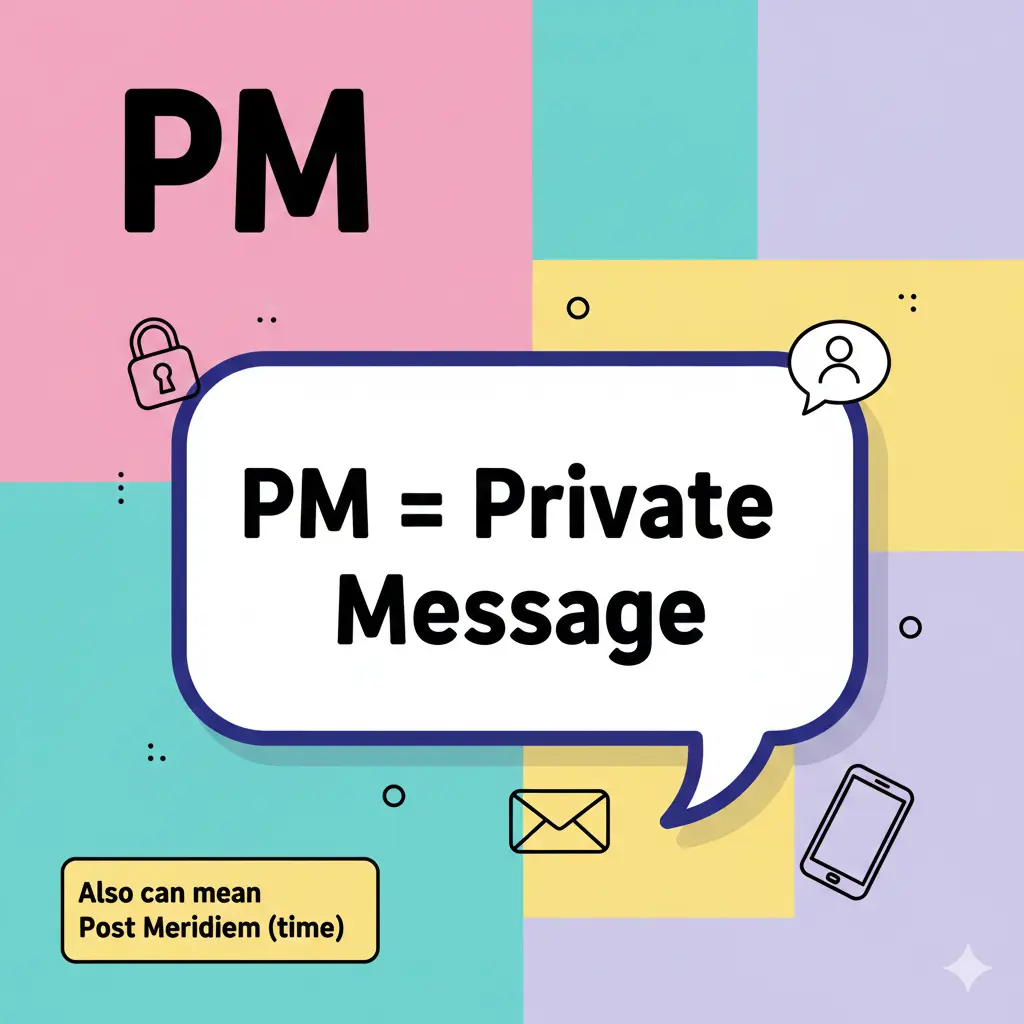
PM in text usually means “Private Message” — it’s used when someone wants to send a message directly to another person instead of posting publicly. Sometimes, depending on context, it can also mean “Post Meridiem” (afternoon/evening time), but in texting and online chats, it almost always refers to private messaging. ✅
What Does PM Mean in Text?
In texting and online conversations, PM stands for “Private Message”. It’s used to ask someone to send a message that’s not public—basically, a one-on-one conversation rather than a group chat or public comment.
Sometimes, PM can also refer to “Post Meridiem”, which is the standard way to denote time in the afternoon or evening (like 3 PM). But in most social media and chat contexts, PM almost always means “private message”.
It’s simple, but super handy when you want to move a conversation away from a public forum and chat privately.
Where Is PM Used?
You’ll see PM on many platforms where public and private messaging exists:
- Facebook – people may comment “PM me for details” on a post.
- Instagram – often in DMs or in comments on posts.
- Reddit – users might ask to PM for private info.
- Twitter/X – used when shifting from public replies to private messages.
- Gaming platforms – like Discord or in-game chat, where private messaging is common.
It’s especially popular among teens, young adults, and gamers, but anyone using social media or forums might use it. The key is that it’s casual and usually signals you want a one-on-one conversation.
Examples of PM in Conversation
Here are some realistic ways PM shows up in messages:
- Friendly:
- Alex: “Hey, did you get the notes from class?”
- Jamie: “Yeah! I’ll PM you the PDF.”
- Flirty:
- Sam: “That joke was hilarious 😏”
- Taylor: “Thanks! PM me if you want the full story 😜”
- Funny:
- Casey: “I have the ultimate meme collection.”
- Jordan: “No way! PM me the best ones!”
- Professional-ish:
- Manager: “Can you send the report?”
- Employee: “Sure, I’ll PM you the link.”
- Quick info:
- Friend: “Do you have the party details?”
- You: “PM me, I’ll give you the address.”
When to Use and When Not To Use PM
Use PM when:
- You want privacy instead of posting publicly.
- You’re sharing sensitive info (like addresses or personal contacts).
- You’re moving a casual or friendly chat away from a group.
Avoid PM when:
- You’re texting in formal or professional contexts that require official emails.
- The recipient might not know what “PM” means—especially older contacts.
- You want the message to stay visible for everyone.
Basically, it’s casual and safe for social chats, but not ideal for serious work emails or school submissions.
Similar Slang Words or Alternatives
If you like using PM, here are some related terms you might also see:
- DM (Direct Message): Essentially the same as PM, used mostly on Instagram and Twitter/X.
- IM (Instant Message): Common on chat apps like WhatsApp or Messenger.
- Chat: Simple, general term for a private conversation.
- Text: Refers specifically to SMS or phone messages.
- Ping: Informal way to ask someone to message or contact you.
FAQS:
Q1: What does PM mean from a girl?
A1: It’s the same as usual—she’s asking you to send a private message rather than posting publicly.
Q2: Is PM slang rude?
A2: Not at all. It’s casual and polite, simply a request for privacy.
Q3: Can I use PM in professional chats?
A3: Only in informal professional contexts. For official communications, email or direct messaging on official apps is better.
Q4: Does PM have any flirty meaning?
A4: Sometimes! People may use it flirtily, but the base meaning is always “private message.”
Q5: Is PM still popular in 2026?
A5: Yes! It’s widely understood across social media, forums, and gaming platforms.
Conclusion
In short, PM means “Private Message” and is your go-to abbreviation when you want to shift a conversation from public to private. It’s friendly, casual, and perfect for social chats, DMs, and gaming conversations. Next time you see someone type PM me, you’ll know exactly what they mean—and you can respond confidently without missing a beat!

Anderson is a skilled content writer focused on explaining modern text slang and digital communication trends. He creates clear, friendly content that helps readers understand online language quickly and confidently.