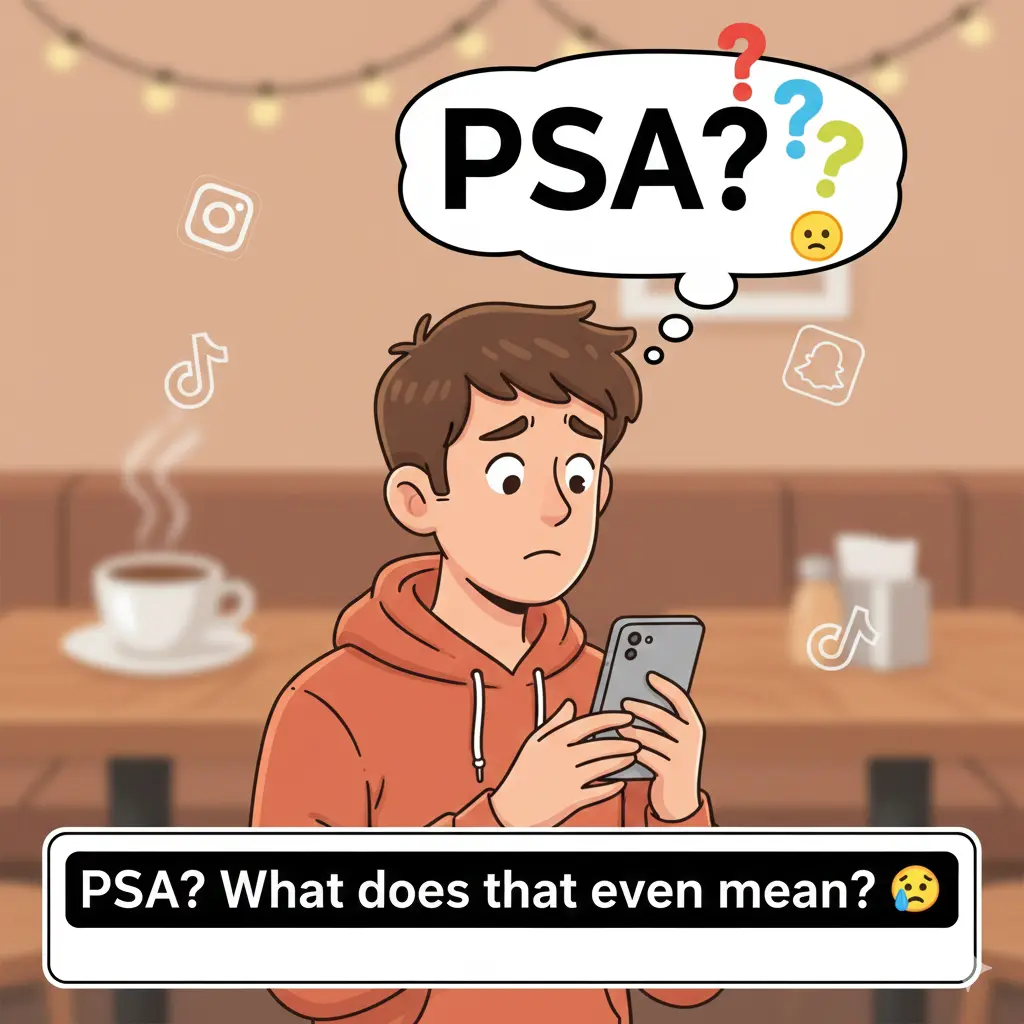
You’re scrolling through Instagram, and suddenly you see a friend post: “PSA: Don’t forget to submit your assignment!” 🤔 You pause, staring at your screen, wondering—what exactly does “PSA” mean in text?
You’ve probably encountered it on Snapchat, TikTok, or group chats, but never really knew what your friends were trying to tell you. Don’t worry—you’re not alone.
Slang terms like this pop up everywhere online, and understanding them can make your chats smoother and your social media life a little less confusing. Let’s break it down together.
Quick Answer:
In texting, PSA stands for “Public Service Announcement.” People use it to share important information, advice, or warnings with friends, groups, or social media followers in a casual or online setting.
What Does PSA Mean in Text?
In text, PSA stands for Public Service Announcement. It’s borrowed from media and broadcasting, where a PSA is an official message meant to inform the public about something important. Online, though, it’s more casual and can be used by anyone in your friend circle to share helpful, funny, or even urgent information.
While the meaning is generally consistent, the tone can vary:
- Serious/Important: “PSA: Drink water and take breaks while studying.”
- Funny/Lighthearted: “PSA: Pineapple belongs on pizza. Fight me.”
So, whether it’s an actual reminder or a playful tip, PSA is a way to grab attention quickly.
Where Is PSA Used?
PSA is popular on multiple platforms, especially where text-based communication happens. You’ll often see it on:
- Instagram captions and stories – people post PSAs for events, life hacks, or jokes.
- TikTok videos and comments – quick announcements or trending tips.
- Snapchat messages and stories – informal updates to friends.
- Group chats on WhatsApp, iMessage, or Discord – friendly reminders among peers.
It’s most common among teens, young adults, and online content creators, but anyone online can use it. Because it’s casual, you’ll rarely see it in formal or professional communications, unless the workplace is very relaxed and social-media-savvy.
Examples of PSA in Conversation
Here are some real-life ways PSA shows up in chats and online posts:
- Friendly Reminder:
- Alex: “PSA: Don’t forget the game night at my place tomorrow!”
- Jamie: “Got it! Can’t wait 🎉”
- Funny Announcement:
- Friend Group Chat: “PSA: I just ate the last slice of cake… no regrets 😎”
- Helpful Tip:
- TikTok Comment: “PSA: If you put your phone in airplane mode while charging, it charges faster ⚡”
- Flirty Play:
- DM: “PSA: You look amazing today 😏”
- Urgent Alert:
- Instagram Story: “PSA: Severe weather warning in our area, stay safe everyone!”
- Life Hack Share:
- Snapchat: “PSA: Use a binder clip to keep your charger from falling off your desk 🤯”
- Casual Advice:
- WhatsApp: “PSA: Don’t text your ex at 2 AM, trust me on this 😅”
As you can see, PSA is versatile—it can be serious, funny, flirty, or just a casual heads-up.
When to Use and When Not To Use PSA
When it fits well:
- Sharing tips or reminders with friends.
- Making playful or funny announcements online.
- Alerting a group to something important, like deadlines, events, or safety info.
When to avoid PSA:
- Professional emails or workplace chats (unless your company is very casual).
- School assignments if it sounds too informal.
- Serious matters that require a formal tone, like official warnings or instructions.
Remember, PSA is casual by nature, so using it in the wrong context can confuse or annoy your audience.
Similar Slang Words or Alternatives
If you like PSA, you might also see these related slang terms:
- FYI (For Your Information) – casually shares info without urgency.
- Heads-up – a friendly alert or warning.
- TIL (Today I Learned) – used to share interesting facts.
- ICYMI (In Case You Missed It) – to highlight info previously posted.
- Alert – informal, grabs attention, similar to PSA but shorter.
These can often be swapped with PSA depending on the vibe you want to give.
FAQS:
1. What does PSA mean from a girl?
It means the same thing—she’s sharing a message or tip, either serious or funny. Context matters more than gender.
2. Is PSA slang rude?
Not at all. It’s neutral and usually friendly. Tone comes from the actual message.
3. Can I use PSA in professional chats?
Only in casual, social-media-like workspaces. Otherwise, it’s better to stick with formal phrasing like “announcement” or “reminder.”
4. Does PSA have any flirty meaning?
Sometimes! It can be playful in DMs or casual chats, e.g., “PSA: You’re looking cute today 😉”
5. Is PSA still popular in 2026?
Yes, PSA is widely recognized on social media, though younger audiences may also prefer memes, short clips, or emojis to share similar info.
Conclusion
Now you know—PSA in text means Public Service Announcement, and it’s a casual, friendly way to share info, tips, or reminders online. Whether it’s serious, funny, or flirty, PSA grabs attention and gets your message noticed. Next time you see it in a chat or post, you can confidently nod, knowing exactly what it means—and maybe even start using it yourself! 💬
Pro Tip: Use PSA when you want to make your message stand out, but avoid it in formal or overly serious conversations.

Emma Collins is a digital content writer who specializes in internet slang, social media trends, and clear, user-focused explainers. She writes engaging, optimized content that helps readers understand modern online language with ease and confidence.