If you’ve ever wondered about Spam Meaning in Text 📩, you’re not alone! Seeing someone type “spam”
In a chat or social media DM can be confusing—are they talking about junk messages, over-messaging, or something else entirely? 😅
In texting and online conversations, spam usually refers to repetitive or unwanted messages, but it can also be playful, depending on the context.
Understanding spam meaning in text helps you react appropriately, whether it’s a group chat, DM, or casual texting with friends.
In this guide, we’ll break it down with examples, usage tips, and related slang so you can text like a pro.
What Does Spam Mean in Text?
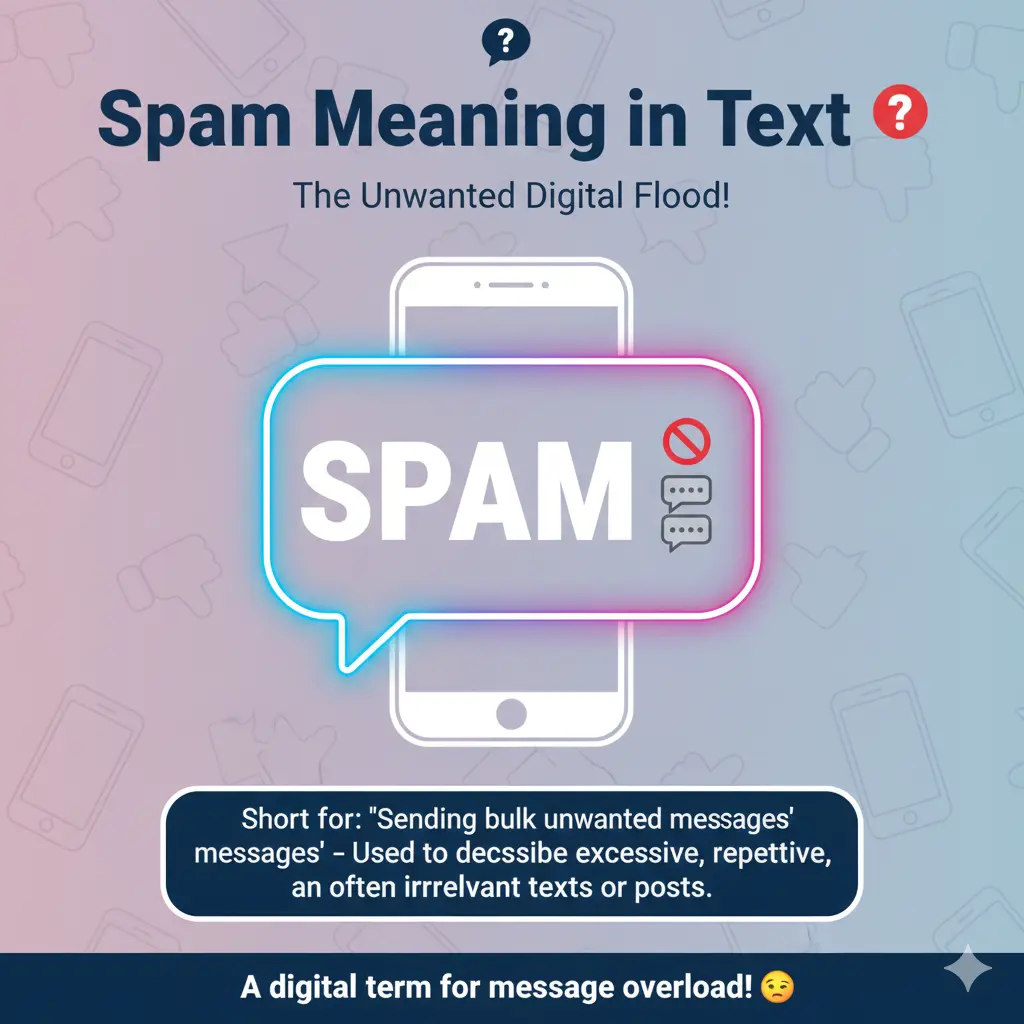
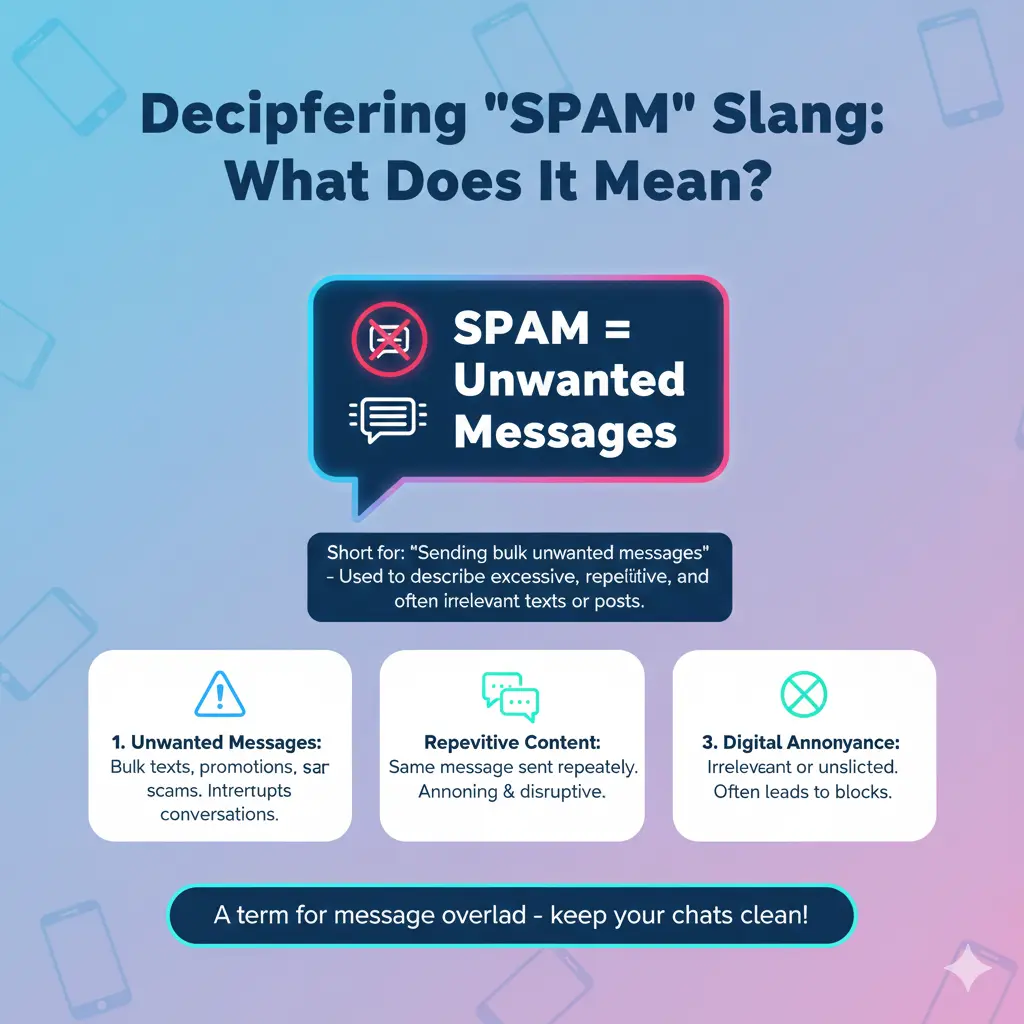
In texting and online conversations, “spam” means sending repetitive, unnecessary, or unwanted messages—usually in a short amount of time. Someone who “spams” is basically flooding the chat with too many messages, emojis, links, or comments.
The word originally came from junk email, but now it’s widely used to describe annoying, excessive, or meaningless messages.
Common meanings of “spam” in chat:
- Sending too many messages at once
- Repeatedly posting the same thing
- Sharing unwanted ads, links, or promotions
- Flooding a chat with emojis or reactions
It can be used jokingly among friends (“Stop spamming memes 😂”) or seriously (“Please don’t spam the group.”).
Sometimes people also use “spam” as a verb:
- “Don’t spam me.”
- “He keeps spamming the comments.”
- “Stop spamming the group chat.”
Where Is Spam Used?
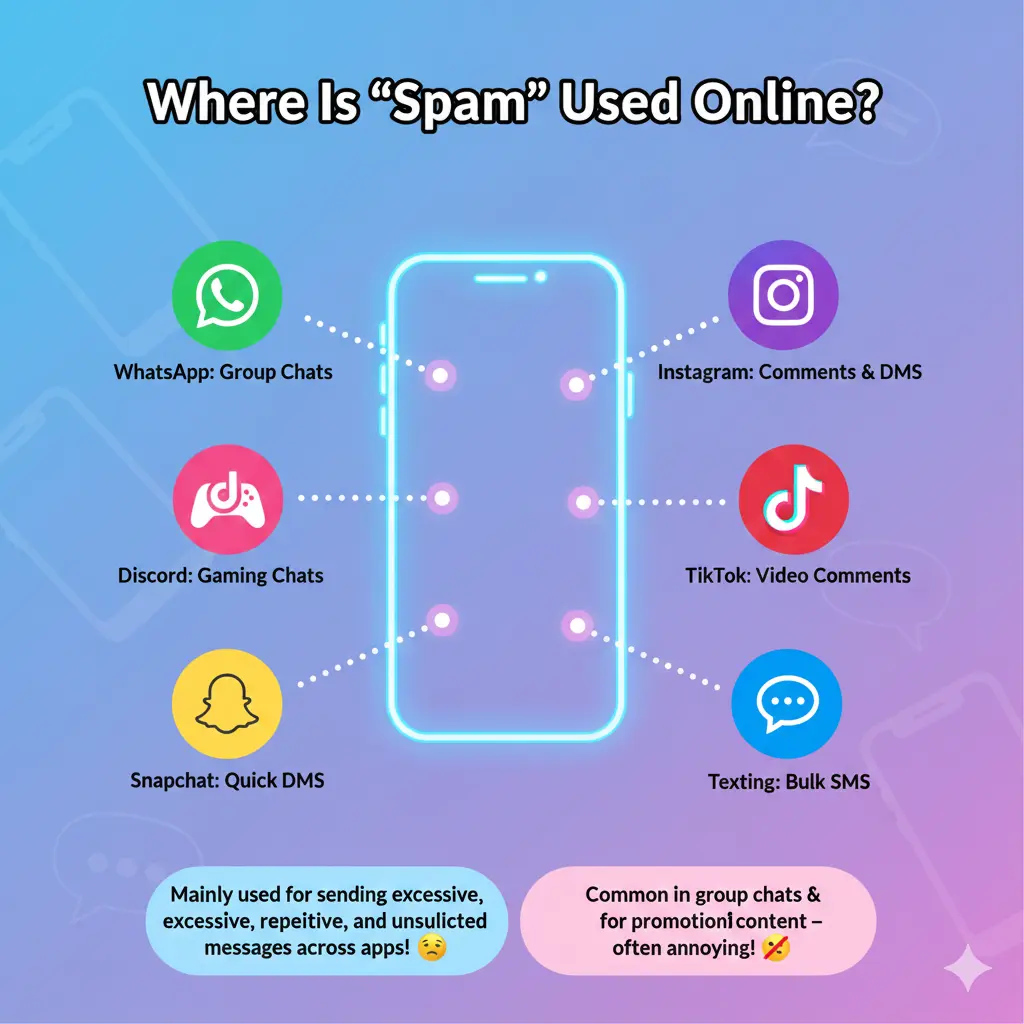
The term “spam” is common across almost every social and chat platform, but it’s especially popular in:
- WhatsApp & Messenger — group chats, school chats, friends’ conversations
- Instagram — comments, DMs, and story replies
- TikTok — people “spamming likes” or comments
- Snapchat — streak spamming, rapid snaps
- Discord — gamers calling out repetitive messages
- YouTube — comments urging “don’t spam links”
- Roblox, Fortnite, PUBG, and gaming chats — players calling “spam attacks” or “spam messages”
It’s frequently used by teens, gamers, content creators, and group chat users, but honestly, the word is so mainstream now that almost everyone understands it.
Examples of Spam in Conversation
Here are realistic chat-style examples showing how “spam” is used naturally:
- Friend Chat
A: Why did you send 20 messages??
B: Sorry 😭 I didn’t mean to spam you. - Group Chat
Admin: Guys, please don’t spam videos. It slows the chat down. - Flirty / Playful
A: Did you just spam-like all my photos?
B: Maybe I like you AND your pics 👀 - Gaming
Player 1: Stop spamming attacks!!
Player 2: Bro I’m trying to win 😂 - TikTok / Instagram
A: Thanks for the spam of likes!
B: Had to support you 😌 - Annoyed Tone
A: Why are you spamming the group??
B: Chill, my keyboard glitched. - Funny / Casual
A: Don’t spam emojis, bro.
B: 😭😭😭😭😭😭😭 (spams emojis anyway)

When to Use and When Not to Use Spam
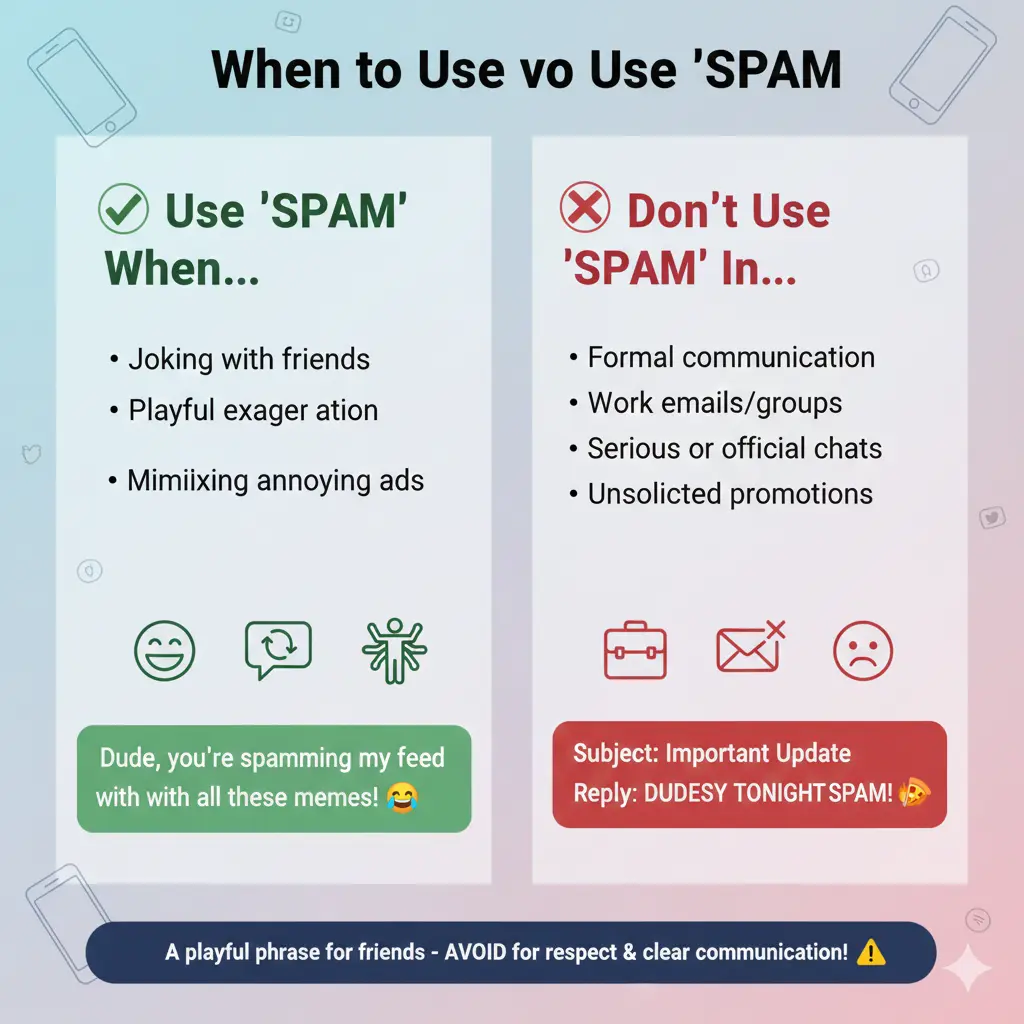
When You Can Use “Spam”
Use “spam” when:
- Someone is sending too many messages
- A chat is being flooded
- You want to playfully tease someone
- You’re talking about social media likes
- You’re giving friendly instructions (“Don’t spam comments.”)
It works perfectly in:
- Friend chats
- Gaming chats
- Instagram/TikTok captions
- Group chat rules
- Casual conversations
When You Should NOT Use “Spam”
Avoid using “spam” in:
- Professional chats
- Emails to teachers, bosses, or clients
- Formal settings
- Serious discussions
Why?
Because “spam” is casual internet slang, and using it in a formal context might sound unprofessional, immature, or unclear.
For example, instead of saying:
❌ “Don’t spam the workplace group.”
Say:
✔️ “Please avoid sending multiple unnecessary messages.”
Also avoid using “spam” if the other person may misunderstand it or think you’re being rude.
Similar Slang Words or Alternatives
Here are a few related slang terms you can use instead of “spam” depending on the situation:
1. Flooding
Sending too many messages at once, overwhelming the chat.
2. Blowing up my phone
When someone keeps calling or texting nonstop.
3. Mass texting
Sending the same message to lots of people.
4. Overposting
Sharing too many social media posts in a short time.
5. Spam-like / Spammy
Describes something that feels like spam, even if it’s not technically junk.
These help add variety to your conversations while keeping the meaning clear.
FAQs
What does “spam” mean from a girl?
If a girl says “stop spamming me,” she usually means you’re texting too fast, sending too many messages, or repeating the same thing. If she “spam-likes” your posts, it might be playful or even flirty.
Is “spam” rude?
It can be. Calling someone’s messages “spam” might sound rude if you use the wrong tone. In friendly chats, it’s usually harmless; in serious conversations, it can sound dismissive.
Can I use “spam” in professional chats?
Not recommended. Use more formal alternatives like “duplicate messages,” “unnecessary messages,” or “excessive posting.”
Does “spam” have any flirty meaning?
Yes! In a playful or flirty context, someone might “spam-like” your photos to show interest or support.
Is “spam” still popular in 2025?
Absolutely. With group chats, social media, and gaming communities growing every year, “spam” remains one of the most commonly used online slang terms.
Conclusion
“Spam” in text simply means sending too many or unwanted messages, comments, or likes in a short amount of time. It’s casual, common, and used across almost every social platform today. Whether someone is being annoying in a group chat or playfully supporting your posts, “spam” helps describe that overwhelming flood of messages we all experience online.
Now that you know exactly what “spam” means, how to use it, and when to avoid it, you can confidently navigate your chats without confusion. So the next time someone says “don’t spam,” you’ll know exactly what they mean—and how to respond.

Emma Collins is a digital content writer who specializes in internet slang, social media trends, and clear, user-focused explainers. She writes engaging, optimized content that helps readers understand modern online language with ease and confidence.