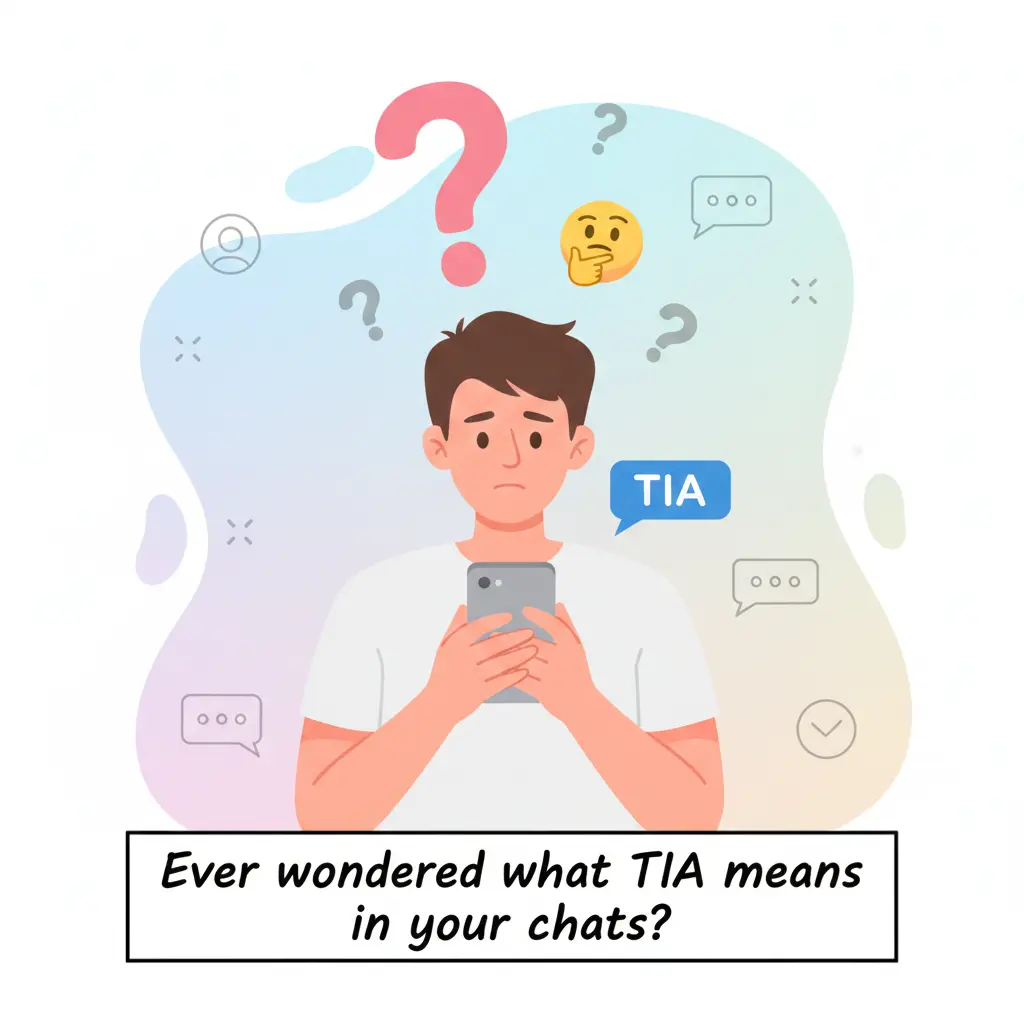
Have you ever been scrolling through your messages or a social media post and suddenly stumbled upon “TIA” and thought, “Wait… what does that mean?”
You’re not alone! Slang terms and abbreviations pop up everywhere online, and sometimes it feels like a secret language.
If it’s in a group chat, a TikTok comment, or a Snapchat story, seeing TIA can leave you puzzled. Luckily, we’re here to break it down in simple, easy-to-understand language so you’ll know exactly what it means and when to use it.
Quick Answer:
TIA = “Thanks In Advance.”
It’s commonly used at the end of a message to politely thank someone before they’ve done something you’re asking.
For example:
“Can you send me the report by 5 PM? TIA!”
It’s friendly, polite, and saves typing out a full “Thanks in advance.”
What Does TIA Mean in Text?
TIA is an acronym that stands for “Thanks In Advance.” It’s a polite, casual way to show appreciation before someone does something for you. Essentially, you’re saying, “I’m grateful for your help ahead of time,” without having to wait until the favor is completed.
Some people might also use TIA to mean “This Is Amazing”, though this is less common. Context is key! In most chats, emails, or posts, TIA almost always refers to “Thanks In Advance.”
Where Is TIA Used?
TIA is widely used across messaging platforms and social media. You’ll often see it in:
- Text messages and iMessage – when asking a friend for a small favor.
- WhatsApp or Telegram chats – especially in group messages where multiple people might help.
- Instagram or TikTok comments – when asking for recommendations or advice.
- Emails (informal) – sometimes used in casual work emails to teammates or colleagues.
It’s particularly common among teens, college students, and young professionals, but honestly, anyone who texts a lot could use it. Just remember: it’s a casual phrase, so it works best in informal contexts.
Examples of TIA in Conversation
Here are some realistic examples of TIA in messages:
- Friend-to-friend:
- “Hey, can you send me the notes from class? TIA!”
- Group chat:
- “If anyone knows a good pizza place in town, please share. TIA 🍕”
- Flirty/funny:
- “Send me your playlist, TIA 😉”
- Work (informal):
- “Can someone review my draft before the meeting? TIA!”
- Social media comment:
- “Any tips for improving my photography? TIA!”
- Sibling chat:
- “Can you grab some snacks on your way home? TIA 😄”
- Friend asking advice:
- “What’s the best show to binge this weekend? TIA!”
When to Use and When Not To Use TIA
When to use it:
- Casual conversations with friends or family.
- Informal group chats or social media requests.
- Friendly workplace messages where a relaxed tone is appropriate.
When NOT to use it:
- Formal emails or professional requests (e.g., bosses, clients).
- Situations where the favor is very serious or urgent—saying TIA might seem too casual.
- Messages to people who might not understand abbreviations, like older relatives or new acquaintances.
Think of TIA as friendly and polite—but always read the room before using it.
Similar Slang Words or Alternatives
Here are some related slang terms you might find useful:
- FYI (For Your Information) – Sharing info casually.
- BRB (Be Right Back) – Common in chat conversations.
- OMW (On My Way) – Letting someone know you’re coming.
- IDK (I Don’t Know) – Quick way to show uncertainty.
- TTYL (Talk To You Later) – Casual sign-off in messages.
These are all easy, informal ways to communicate quickly online—just like TIA.
FAQS:
Q: What does TIA mean from a girl?
A: It’s the same as usual—“Thanks In Advance”. The meaning doesn’t change based on gender.
Q: Is TIA slang rude?
A: Not at all! It’s polite and friendly, though casual.
Q: Can I use TIA in professional chats?
A: Only in informal work chats with colleagues you know well. Avoid it in formal emails.
Q: Does TIA have any flirty meaning?
A: Usually no. Context could make it playful, but it’s mostly just polite.
Q: Is TIA still popular in 2026?
A: Yes! It’s still widely used in text messages and online chats because it’s quick and polite.
Conclusion
So next time you see TIA in a chat or comment, you’ll know it’s just a polite “Thanks In Advance.” Use it when you’re asking for help or information in informal messages, and you’ll instantly sound courteous without typing a full sentence. A small tip: pair it with a smiley or emoji if you want your message to feel extra friendly and casual. Now go ahead—send your texts confidently, and let TIA do the talking!

Anderson is a skilled content writer focused on explaining modern text slang and digital communication trends. He creates clear, friendly content that helps readers understand online language quickly and confidently.