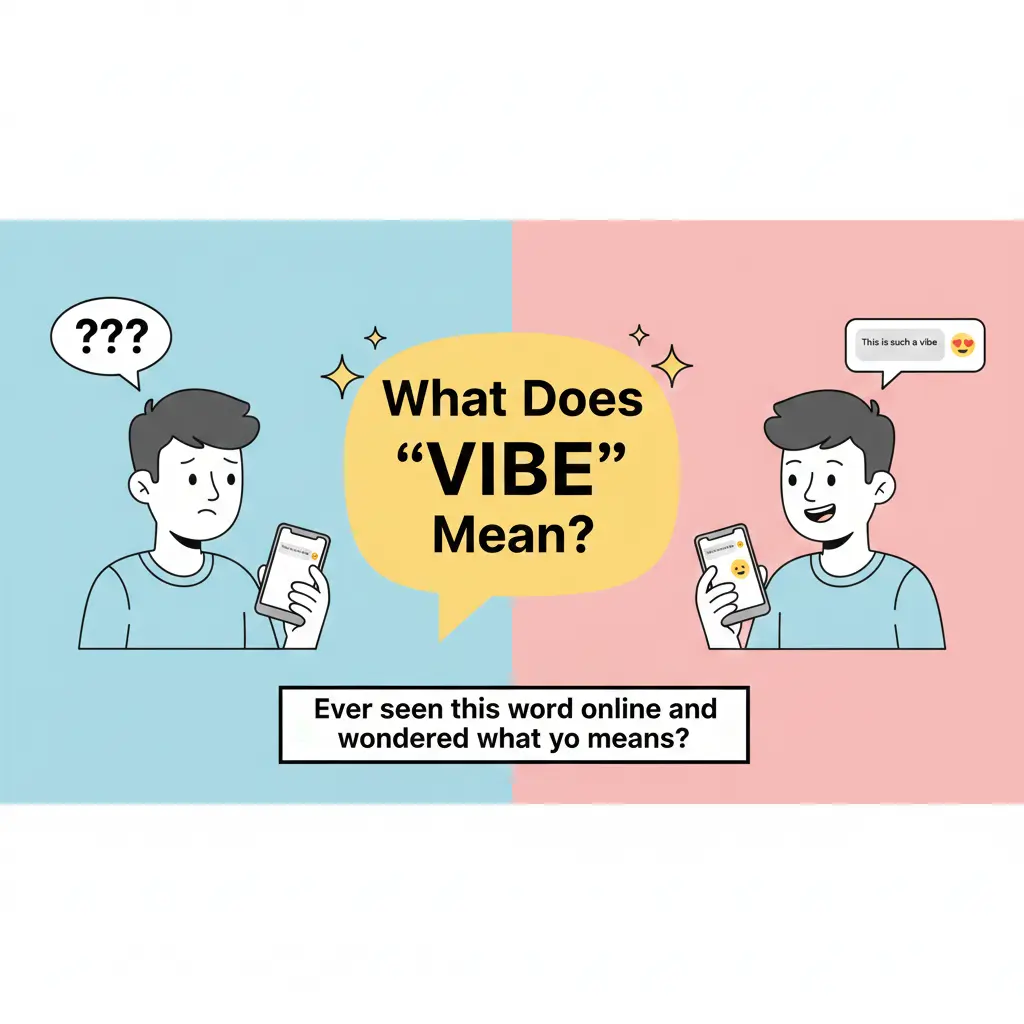
You’re scrolling through Instagram, and someone comments, “This pic is such a vibe.” Or a friend texts you, “I’m not feeling that vibe today.
You pause for a second and think… What exactly does “vibe” mean here? Is it a mood? A feeling? A compliment?
If you’ve ever seen the word vibe used in chats, captions, or TikTok comments and felt a little unsure about its exact meaning, you’re not alone.
Vibe” is one of those slang words that seems simple—but it actually carries a lot of emotion and context.
In this guide, we’ll break down the vibe meaning in slang, show how people really use it online, and help you use it confidently without sounding awkward or out of place.
Quick Answer:
In slang, “vibe” means the feeling, mood, or energy someone, something, or a situation gives off—good, bad, or neutral.
What Does Vibe Mean in Text?
In slang, vibe refers to a feeling, mood, atmosphere, or energy that a person, place, situation, or even a message gives off.
When someone says “that’s a vibe,” they usually mean:
- It feels good
- It matches their mood
- They like the energy of it
In texting and social media, vibe isn’t about logic—it’s about emotion. You don’t always explain why something is a vibe; you just feel it.
Common slang meanings of “vibe”:
- Positive feeling: “This song is a vibe.”
- Mood or energy: “I like your vibe.”
- Atmosphere: “The café has a chill vibe.”
- Connection: “We didn’t really vibe.”
Sometimes you’ll see variations like:
- Good vibes / bad vibes
- Vibing
- Vibe check
All of them revolve around the same core idea: emotional energy.
Where Is Vibe Used?
The slang word vibe is everywhere online, but it’s especially popular on casual, social platforms.
Most common places you’ll see “vibe”:
- Text messages & WhatsApp chats
- Instagram captions and comments
- TikTok videos and trends
- Snapchat stories
- Twitter/X posts
- YouTube comments
It’s widely used by Gen Z and Millennials, but honestly, it’s crossed into everyday language now. Teens, creators, musicians, and even brands use it to sound relatable and modern.
Because it’s informal, “vibe” works best in casual conversations, not formal emails or professional reports.
Examples of Vibe in Conversation
Here are some realistic, chat-style examples to show how “vibe” is used naturally:
- Friendly:
“Your playlist is a whole vibe.” - Flirty:
“I like your vibe, we should hang out sometime.” - Casual mood:
“I’m just vibing at home today.” - Disagreement:
“That place wasn’t really my vibe.” - Positive reaction:
“This outfit? Total vibe.” - Social check:
“I don’t know… I’m getting weird vibes from him.” - Chill response:
“No plans, just vibing 😌.”
As you can see, the meaning slightly changes based on context—but the emotional tone is always key.
When to Use and When Not To Use Vibe
✅ When to Use “Vibe”
Use vibe when:
- Chatting with friends
- Commenting on social media
- Flirting casually
- Talking about moods, music, fashion, or places
- Keeping the tone relaxed and friendly
It helps your message sound modern, expressive, and easygoing.
❌ When Not to Use “Vibe”
Avoid using vibe when:
- Writing professional emails
- Messaging teachers, bosses, or clients
- In formal presentations or academic writing
- Where clarity matters more than emotion
For example, saying “The meeting vibe was off” to a coworker might sound unprofessional unless you’re very close.
Similar Slang Words or Alternatives
If you like using “vibe,” here are some similar slang terms with related meanings:
- Mood – Something you strongly relate to
“That meme is such a mood.” - Energy – The feeling someone gives off
“Her energy is amazing.” - Aesthetic – Visual or stylistic vibe
“This room has a cozy aesthetic.” - Feels – Emotional reaction
“That song gave me feels.” - Chill – Relaxed and easygoing
“He’s super chill.”
These words often overlap with vibe and can sometimes be used interchangeably.
FAQS:
What does vibe mean from a girl?
When a girl says “I like your vibe,” it’s usually a positive compliment. It can mean she enjoys your personality, energy, or feels comfortable around you. Depending on context, it can be slightly flirty—but not always.
Is vibe slang rude?
No, vibe is not rude at all. It’s generally neutral or positive. However, saying “bad vibes” about someone can sound negative, so tone matters.
Can I use vibe in professional chats?
It’s best to avoid using vibe in professional or formal chats, unless you’re in a very casual workplace culture. Words like “atmosphere” or “tone” are safer alternatives.
Does vibe have any flirty meaning?
Yes, sometimes. Phrases like “I like your vibe” or “We vibe well together” can suggest attraction or interest—but it depends on how it’s said and the relationship between people.
Is vibe still popular in 2026?
Yes! Vibe is still widely used in 2026, especially on TikTok, Instagram, and everyday texting. It’s become a long-lasting slang term rather than a short trend.
Conclusion
So, what’s the vibe meaning in slang? At its core, vibe is all about feelings, energy, and mood. It’s an easy, flexible word people use to express how something—or someone—makes them feel without overexplaining.
Whether you’re complimenting a friend, reacting to music, flirting lightly, or just describing your mood, “vibe” helps you sound natural and in tune with modern online language. Just remember to keep it casual and context-appropriate, and you’ll be using it like a pro.

Anderson is a skilled content writer focused on explaining modern text slang and digital communication trends. He creates clear, friendly content that helps readers understand online language quickly and confidently.