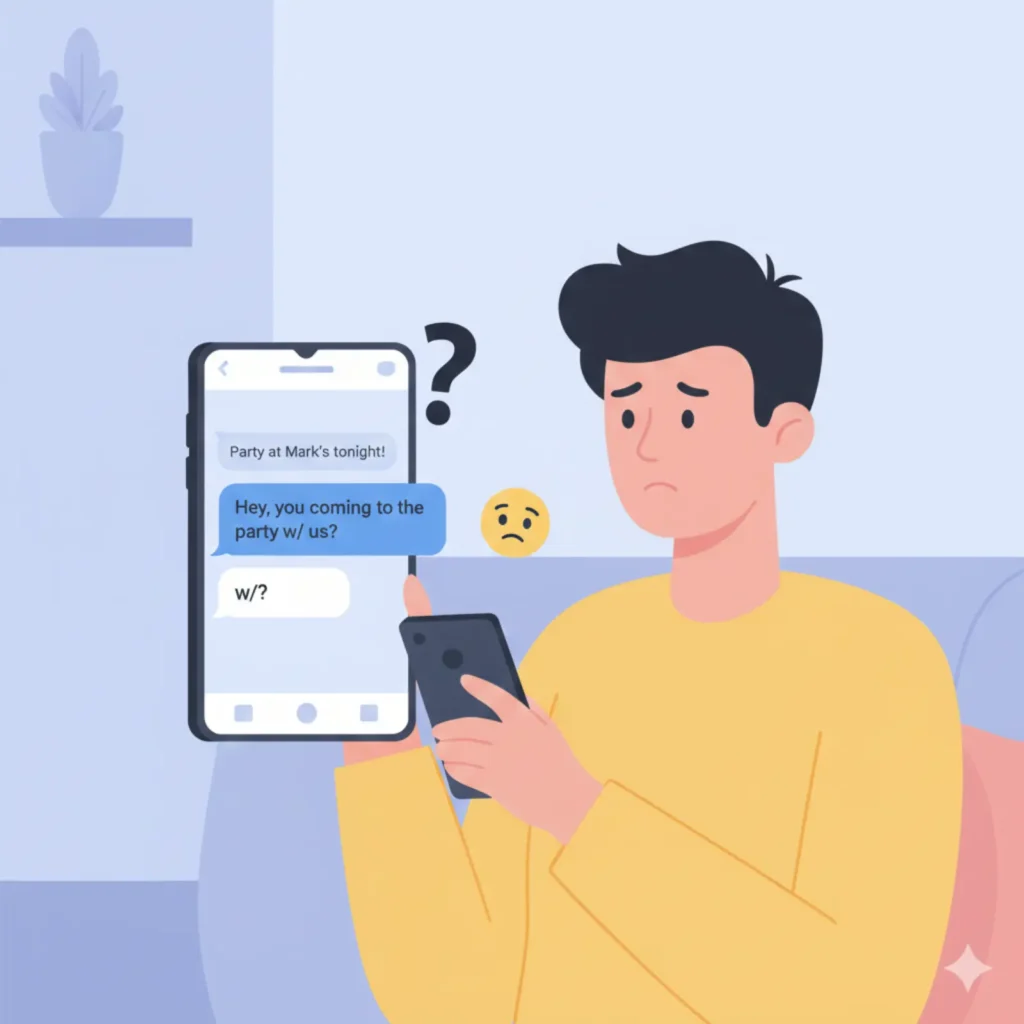
Have you ever been scrolling through your messages and suddenly seen something like, “I’m going w/ friends tonight”—and paused for a second? Maybe you understood it from context, but still wondered, “Is that slang? An abbreviation? Something new?”
You’re not alone. I remember the first time I saw “w/” in a fast-moving group chat. Everyone kept using it casually, and I didn’t want to be the one to ask and slow things down 😅. The good news? “w/” is actually super simple, very common, and easy to use once you know what it means. Let’s break it down clearly so you can read and use it with confidence.
What Does w/ Mean in Text?
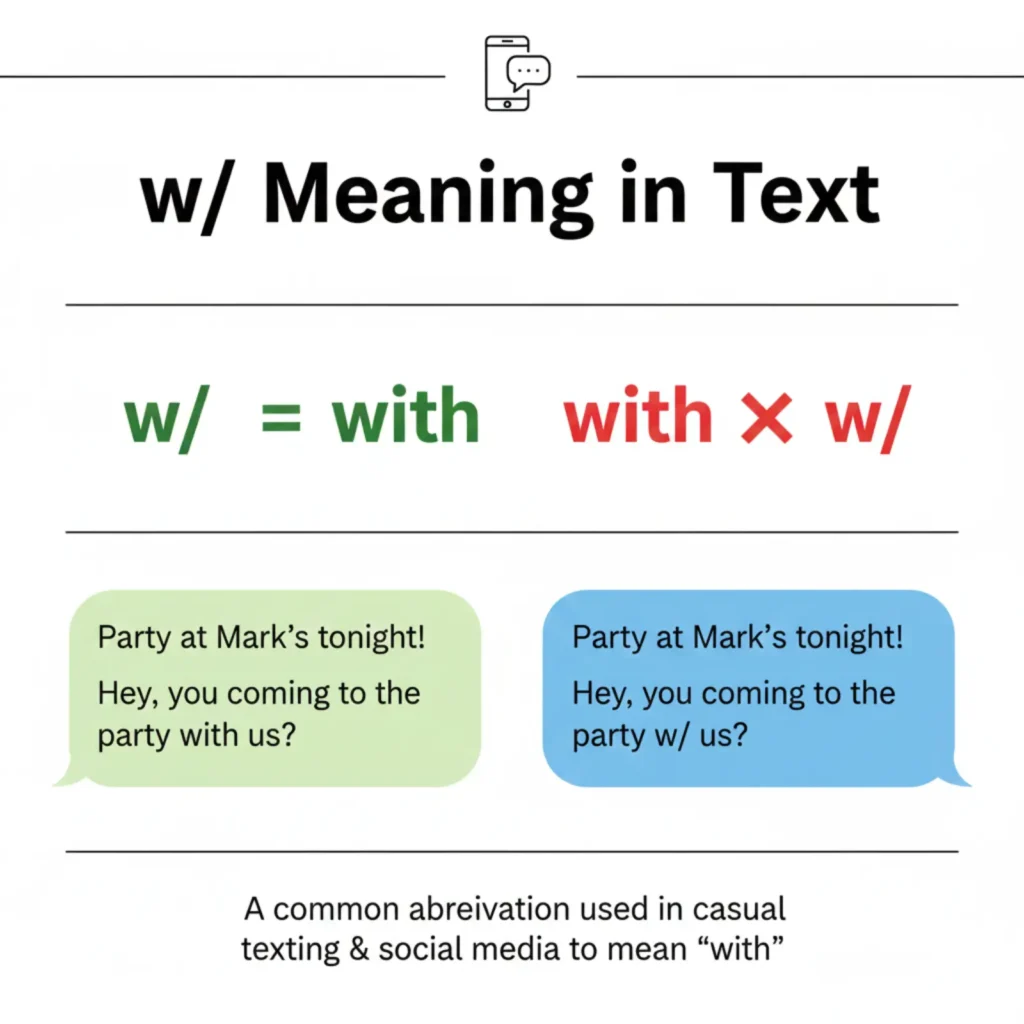
In text and online chats, “w/” simply means “with.”
That’s it—no hidden meaning, no secret slang. It’s a shortened written form of the word with, used mainly to save time and characters. Instead of typing the full word, people just use w/ followed by the object or person.
Basic meaning:
- w/ = with
Example:
- I’m going w/ my cousin.
- Coffee tastes better w/ milk.
There are no alternative meanings for w/ in texting. Unlike some slang that changes meaning based on tone or context, w/ stays consistent. It’s straightforward, practical, and widely understood.
Where Is w/ Used?
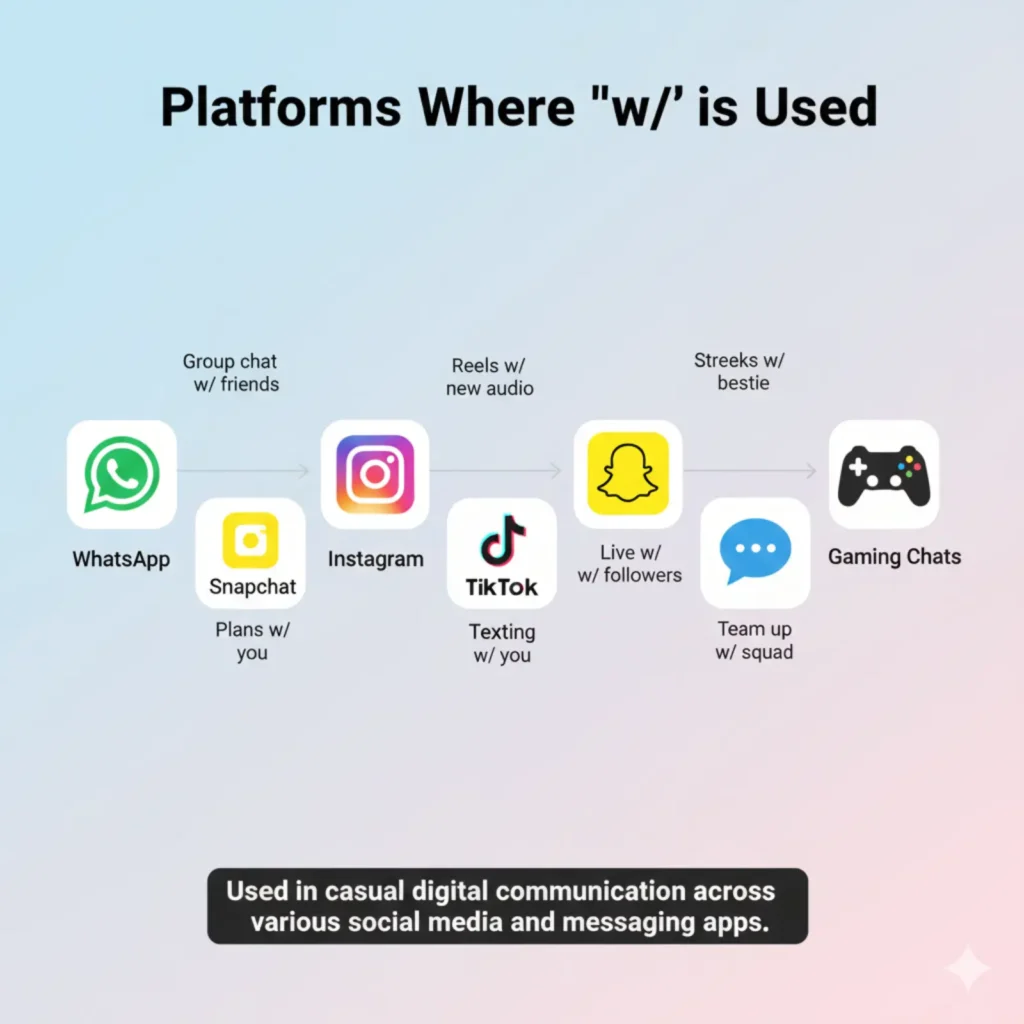
w/ shows up almost everywhere people type quickly or casually. It’s not tied to one platform—it’s more about writing style than social trends.
Common places you’ll see w/:
- Text messages 📱
- WhatsApp & Messenger chats
- Instagram captions and DMs
- Snapchat messages
- Twitter/X posts
- TikTok comments
- Gaming chats & Discord
It’s used by:
- Teens and students
- Office coworkers (informally)
- Gamers
- Content creators
- Everyday texters
Basically, anyone who wants to type faster or keep things casual might use w/.
Examples of w/ in Conversation
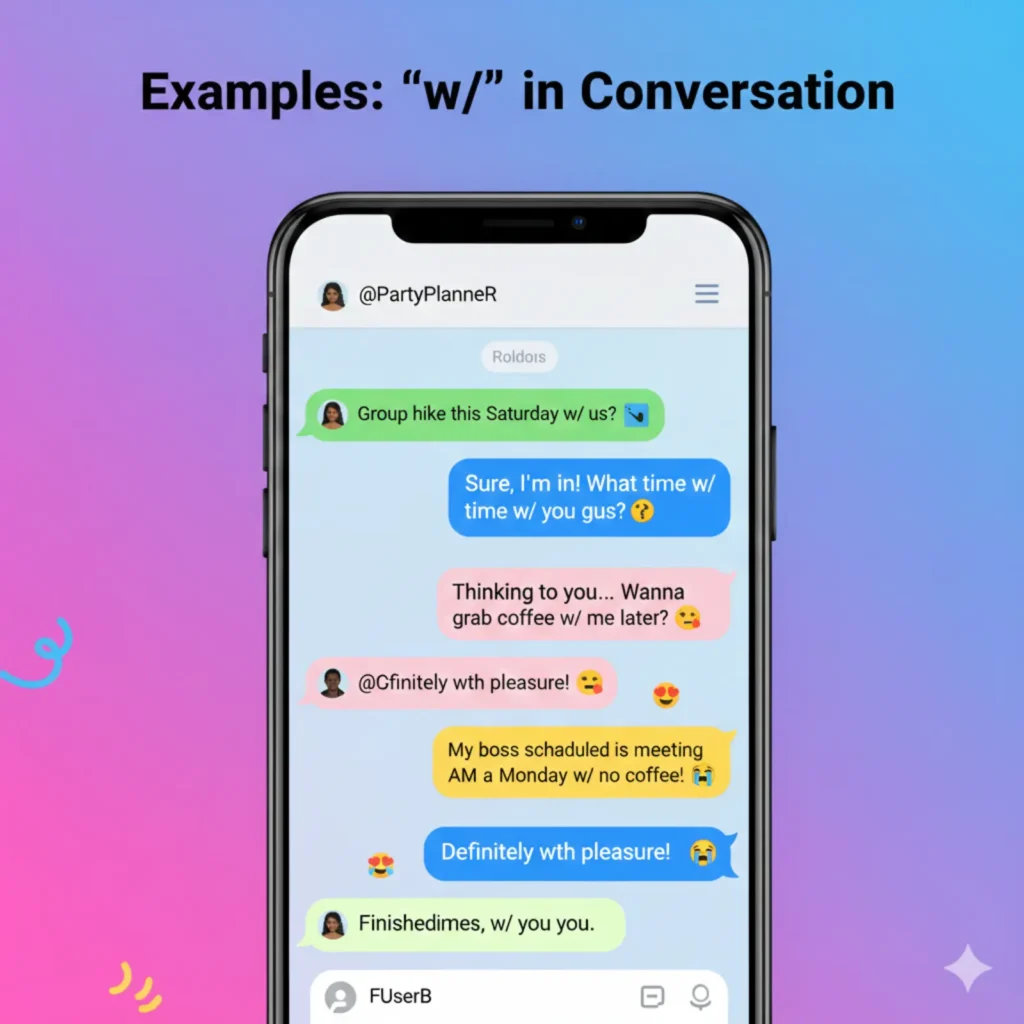
Here are some realistic, chat-style examples showing how w/ fits naturally into different situations:
- Friendly
- I’m hanging out w/ Ali later.
- Casual planning
- Movie night w/ family tonight 🍿
- Flirty
- Wish I was w/ you right now 👀
- Funny
- Trying to diet w/ pizza in front of me is impossible 😂
- Work (casual)
- Can you share the file w/ me?
- Social media caption
- Weekend vibes w/ good people ✨
- Gaming
- Queue up w/ me next match.
As you can see, w/ blends into sentences without changing the meaning—it just shortens them.
When to Use and When Not To Use w/
✅ When to use w/
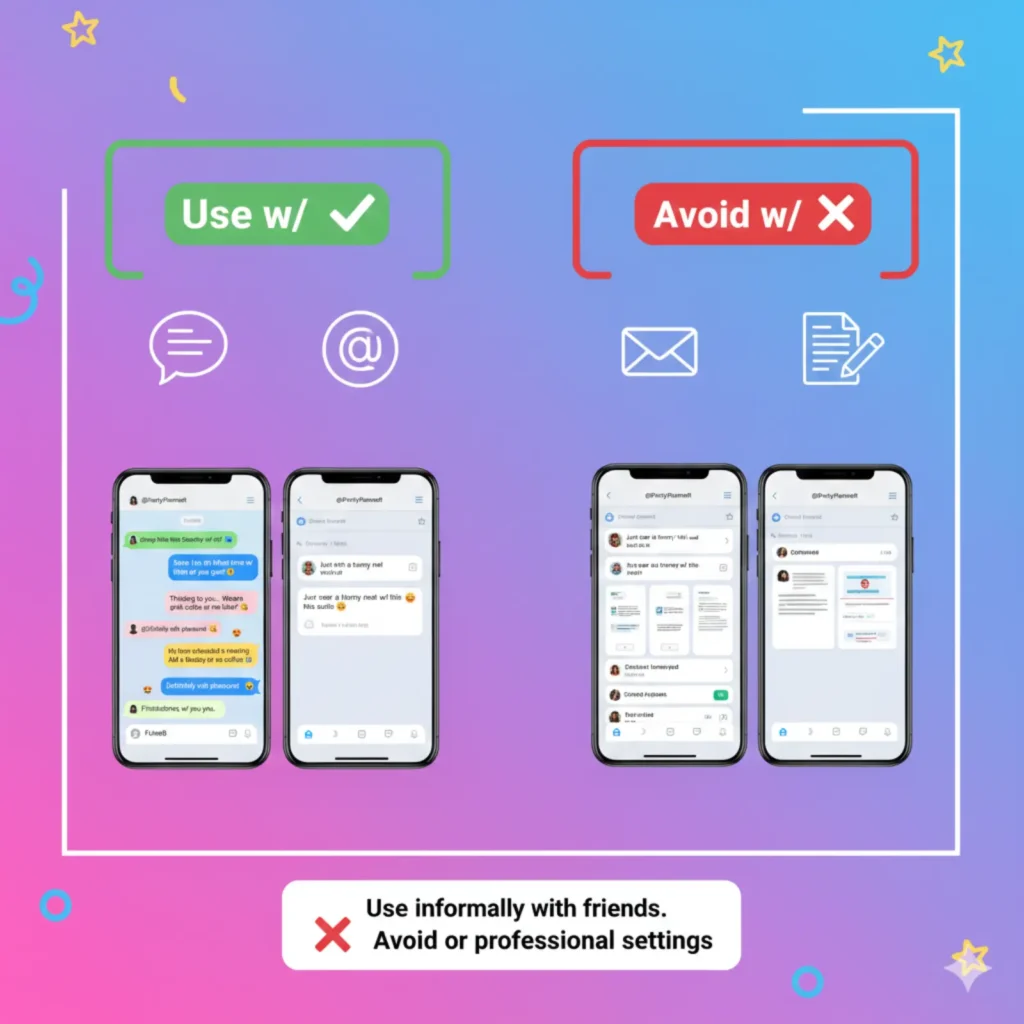
Use w/ when:
- You’re chatting casually
- You’re texting friends or family
- You’re posting on social media
- You want to save time
- The tone is relaxed and informal
It works best when the conversation is quick, friendly, or informal.
❌ When not to use w/
Avoid w/ when:
- Writing formal emails
- Submitting school assignments
- Writing professional reports
- Messaging clients or seniors
- Creating official documents
In professional or academic writing, always use the full word “with.” Using w/ there can look careless or unpolished.
💡 Rule of thumb:
If you’d wear casual clothes to the conversation → w/ is fine.
If you’d dress formally → write with.
Similar Slang Words or Alternatives
Here are some related abbreviations that serve a similar purpose (saving time while typing):
- & – And
Bread & butter - w/o – Without
Coffee w/o sugar - btw – By the way
btw, I’m late - idk – I don’t know
idk what to eat - imo – In my opinion
imo, this show is great
Like w/, these are casual shortcuts—not meant for formal writing.
FAQs About w/ Meaning in Text
What does w/ mean from a girl?
It usually just means “with.”
Example: I’m out w/ friends.
There’s no hidden or emotional meaning unless the sentence itself suggests it.
Is w/ slang rude?
No. w/ isn’t rude at all. It’s neutral and practical. However, using it in very formal settings can seem unprofessional.
Can I use w/ in professional chats?
Only in very casual internal chats where everyone already uses shorthand. For emails, reports, or client messages—stick to “with.”
Does w/ have any flirty meaning?
Not by itself. But in a flirty sentence, it can feel romantic:
- Wish I was w/ you tonight.
The flirtiness comes from the context, not the abbreviation.
Is w/ still popular in 2025?
Yes 👍
It’s been around for years and is still widely used because it’s simple, clear, and efficient.
Conclusion
So now you know—w/ in text simply means “with.” It’s a small shortcut that makes messages quicker and more casual without changing the meaning at all. You’ll see it everywhere, from friendly chats to social media captions and even informal work messages. Just remember the one golden rule: casual chats = w/, formal writing = with. Use it confidently, read it easily, and you’ll never pause mid-message again wondering what it means 😊

Anderson is a skilled content writer focused on explaining modern text slang and digital communication trends. He creates clear, friendly content that helps readers understand online language quickly and confidently.