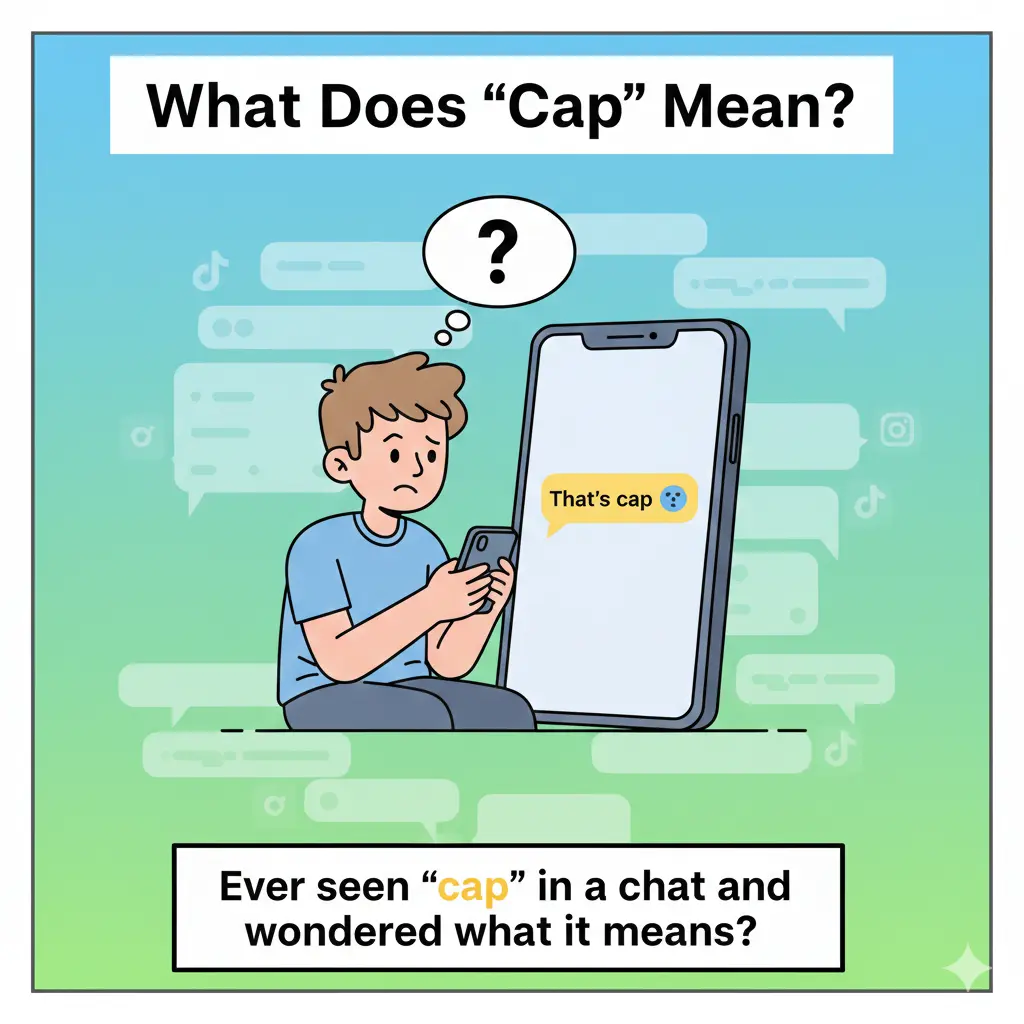
You’re scrolling through Instagram, half-asleep, when you see a comment that says, “Nah, that’s cap.” Or maybe a friend texts you, “No cap, I’m serious.” You pause. Cap? Like a hat? A bottle cap? Clearly not.
If you’ve ever seen “cap” in a text, TikTok caption, or group chat and felt slightly confused, you’re not alone.
This slang word blew up online and now pops up everywhere—from casual chats to viral memes.
In this guide, we’ll break down what does cap mean, how people actually use it, and whether it’s friendly, flirty, or totally casual.
Quick Answer:
In slang and texting, “cap” means a lie or something untrue.
When someone says “that’s cap,” they mean “that’s fake” or “you’re lying.”
“No cap” means no lie or I’m being honest.
The term is popular on social media, texting, and Gen Z slang.
What Does Cap Mean in Text?
In texting and online slang, “cap” means a lie or something that’s not true.
- Cap = lie / false / exaggeration
- No cap = no lie / for real / honestly
So when someone says, “That’s cap,” they’re calling something fake or untrue. When they say, “No cap,” they’re emphasizing honesty.
This slang comes from African American Vernacular English (AAVE) and gained massive popularity through hip-hop culture, Twitter, TikTok, and memes.
Simple breakdown:
- “You’re capping” → You’re lying
- “That’s cap” → That’s not true
- “No cap” → I’m being serious
It’s short, punchy, and perfect for fast-moving online conversations.
Where Is Cap Used?
Cap is mostly used in casual, online spaces, not formal ones. You’ll commonly see it on:
- Text messages & WhatsApp chats
- Instagram comments & DMs
- TikTok captions and replies
- Snapchat stories
- Twitter / X
- Gaming chats & Discord servers
It’s especially popular among Gen Z, teens, young adults, gamers, and social media creators. That said, plenty of older users now understand it too—thanks to how mainstream it’s become.
You probably won’t hear it much in professional emails or serious conversations, but online? It’s everywhere.
Examples of Cap in Conversation
Here are some realistic, chat-style examples to show how cap is used naturally:
- Friend: “I finished the whole project in one hour.”
You: “Cap 😭” - Text: “No cap, that movie was actually amazing.”
- Comment: “Bro says he woke up at 5am every day… that’s cap.”
- Flirty: “You’re telling me you don’t know how cute you are? Cap.”
- Funny: “He said he’s ‘on the way’ but hasn’t left yet. Cap.”
- Gaming chat: “You said you carried the team? Nah, cap.”
- Serious tone: “No cap, I really appreciate you.”
As you can see, the meaning stays the same—it’s all about truth vs. lies—but the tone can change from playful to serious.
When to Use and When Not To Use Cap
✅ When It’s Okay to Use “Cap”
Use cap when:
- Chatting with friends or classmates
- Commenting on social media posts
- Joking around or teasing lightly
- Emphasizing honesty (“no cap”)
- Casual flirting or playful banter
It’s friendly, informal, and fits perfectly in relaxed conversations.
❌ When Not to Use “Cap”
Avoid using cap when:
- Writing professional emails or work messages
- Talking to teachers, bosses, or clients
- In formal presentations or academic writing
- With people who may not understand slang
In professional settings, words like “false,” “incorrect,” or “honestly” are safer choices.
Similar Slang Words or Alternatives
If you like using cap, you might also see or use these related slang terms:
- No lie – Honestly, telling the truth
- Fake – Not real or genuine
- Lying – Straightforward version of “cap”
- FR (For Real) – Serious or genuine
- Sus – Sounds suspicious or untrue
Each of these works in similar casual contexts, but cap is often the most playful and modern-sounding.
FAQS:
What does cap mean from a girl?
When a girl says “cap”, it usually means she thinks something isn’t true—or she’s teasing you. It can be playful, joking, or even flirty depending on context.
Is cap slang rude?
Not usually. Cap isn’t considered rude or offensive. However, tone matters. Saying “that’s cap” jokingly is fine, but saying it aggressively could sound dismissive.
Can I use cap in professional chats?
No. Cap is too casual for professional or formal conversations. Stick to standard language at work or school.
Does cap have any flirty meaning?
Yes, sometimes. In flirty chats, cap can be playful teasing, like calling out fake modesty or exaggerated compliments.
Example: “You don’t know how attractive you are? Cap.”
Is cap still popular in 2026?
Yes! Cap and no cap are still widely used in 2026, especially on TikTok, Instagram, and texting. It’s now considered mainstream slang.
Conclusion
So, what does cap mean? In simple terms, cap means a lie, and no cap means the truth. It’s a casual, modern slang word used mostly online to call out exaggerations or emphasize honesty. You’ll see it everywhere—from memes and TikToks to everyday text messages.
The key tip? Use cap confidently with friends and online—but skip it in formal or professional settings. Once you get the hang of it, you’ll spot (and use) it naturally, no cap.

Emma Collins is a digital content writer who specializes in internet slang, social media trends, and clear, user-focused explainers. She writes engaging, optimized content that helps readers understand modern online language with ease and confidence.