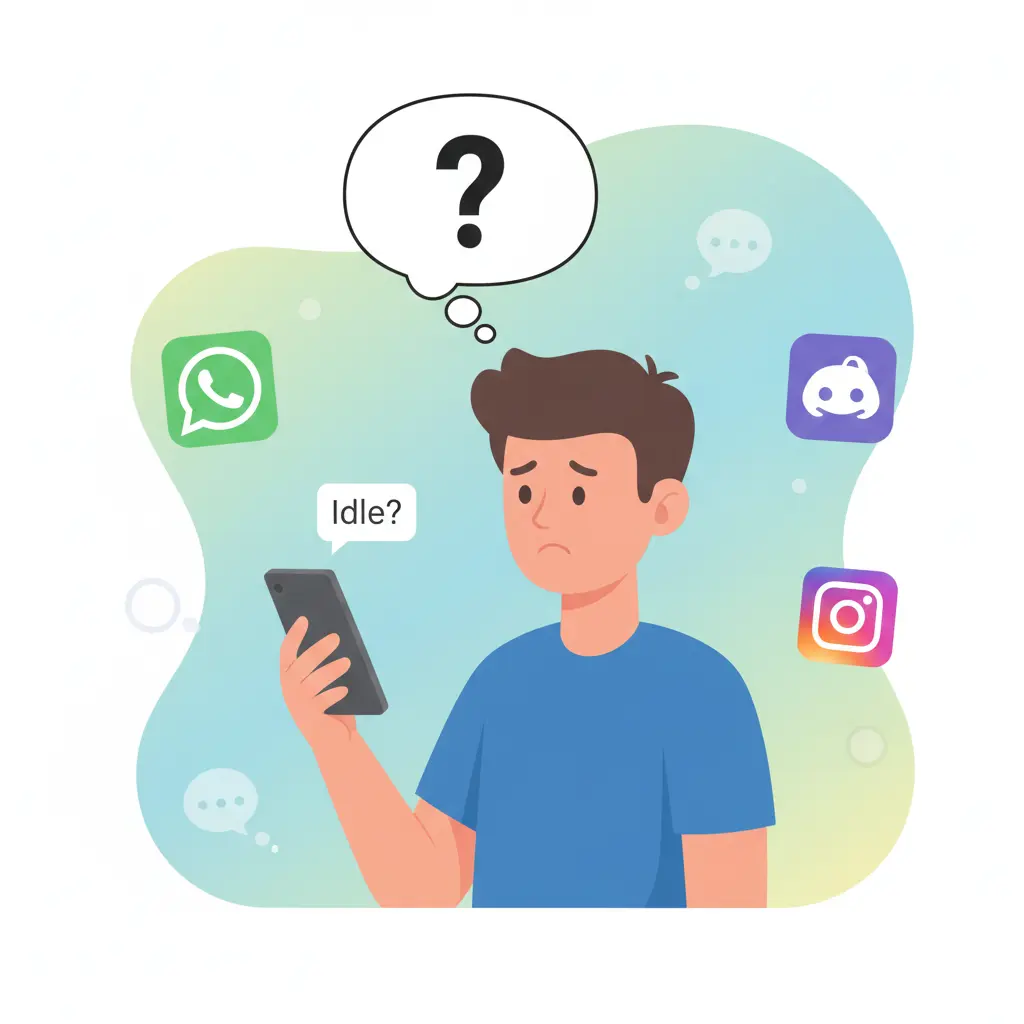
A few days ago, imagine this: you’re chatting with a friend online, you ask them something important, and their reply is, “Sorry, I was idle.”
You pause. Idle? Are they annoyed? Ignoring you? Or just… doing nothing?
You’re not alone. The word idle pops up a lot in texts, games, and online statuses, and it can feel confusing if you’re not sure what the sender really means. Sometimes it sounds casual, sometimes technical, and sometimes a little cold—depending on how it’s used.
So let’s break it down simply. In this guide, you’ll learn what does idle mean, how people actually use it in chats, where you’ll see it most, and when it’s okay (or awkward) to use.
Quick Answer:
Idle means inactive or temporarily away. In text or online chats, it’s used to say someone was online but not actively responding.
Example:
“Sorry for the late reply, I was idle.”
What Does Idle Mean in Text?
In texting and online conversations, idle means inactive, not doing anything, or temporarily away—but still logged in.
When someone says they’re idle, they usually mean:
- They’re online but not actively responding
- They stepped away from their phone, keyboard, or app
- They weren’t intentionally ignoring you
Simple meaning:
Idle = present but inactive
This word isn’t slang in the traditional sense—it’s a regular English word—but it’s used casually online, especially in gaming, chats, and work tools like Slack or Discord.
Does it have multiple meanings?
Yes. Outside texting, idle can also mean:
- A machine that’s running but not working
- Time that’s being wasted
But in text and social media, it almost always means temporarily inactive.
Where Is Used?
The word idle is commonly used in digital and online spaces rather than everyday texting like “lol” or “brb.”
You’ll often see it on:
💬 Chat & Messaging Apps
- Discord
- Slack
- Microsoft Teams
- WhatsApp (less common, but still used)
🎮 Gaming Platforms
- Online multiplayer games
- Steam
- Twitch chats
Gamers use idle a lot to explain why they weren’t moving or responding.
📱 Social Media & Statuses
- Instagram bios or replies
- TikTok comments
- “Idle for a bit” status updates
👥 Who uses it most?
- Gamers
- Remote workers
- Tech-savvy users
- Teens and young adults (especially online)
It’s less common in very casual SMS chats, but very normal in online communities.
Examples of Idle in Conversation
Here are some realistic, chat-style examples to show how idle is used naturally:
- Friend: “Why didn’t you reply earlier?”
You: “My bad, I was idle for a bit.” - Gamer: “You stopped moving mid-game.”
Player: “Yeah, went idle—doorbell rang.” - Coworker: “You still there?”
You: “Yes! Was idle, grabbing coffee.” - Flirty:
“I thought you disappeared 👀”
“Haha no, just idle… missed you though.” - Funny:
“I wasn’t ignoring you, I went full idle mode 😴” - Status Message:
idle for 10 mins, back soon.” - Casual Apology:
Sorry for the late reply, phone was idle.
As you can see, idle often softens the situation and reassures the other person.
When to Use and When Not To Use
✅ When It’s Perfect to Use
- You want to explain a delayed reply
- You were online but temporarily away
- You’re in a gaming or work-related chat
- You want to sound neutral and calm
It’s especially helpful when you want to say:
“I wasn’t ignoring you—just inactive.”
🚫 When to Avoid It
- Messaging someone who isn’t tech-savvy
- Talking to elders who may not know the term
- Writing formal emails or school assignments
- The context is emotional or serious
In very personal conversations, idle can sound a bit cold. Saying “Sorry, I was busy” might feel warmer.
Is it professional?
- ✅ Acceptable in work chats
- ❌ Not ideal in formal emails
Similar Slang Words or Alternatives
Here are some common alternatives to idle, depending on tone and situation:
- AFK – Away From Keyboard (very common in gaming)
- BRB – Be Right Back
- Offline – Not connected at all
- Busy – Actively occupied
- Inactive – More formal version of idle
Each word fits slightly different moods, but idle sits right in the middle—neutral and informative.
FAQS:
What does idle mean from a girl?
When a girl says she was idle, it usually means she was:
- Busy
- Away from her phone
- Not actively chatting
It’s neutral and usually not rude. Context matters more than the word itself.
Is idle slang rude?
No. Idle is not rude at all.
It’s a polite, neutral way to explain inactivity. However, repeated use without explanation might feel dismissive.
Can I use idle in professional chats?
Yes, you can use idle in:
- Slack
- Teams
- Work group chats
But avoid it in formal emails. Instead, say:
“Apologies for the delay.”
Does idle have a flirty meaning?
Not directly. But tone can make it flirty, for example:
“Was idle… waiting for you to text 😉”
The word itself isn’t flirty—how you use it matters.
Is idle still popular in 2026?
Yes. Especially in:
- Gaming communities
- Remote work culture
- Online chats and status messages
It may not trend like slang acronyms, but it’s widely understood and still relevant.
Conclusion
In simple terms, it means being inactive or temporarily away, especially while still online. It’s a calm, neutral way to explain delayed replies and is widely used in gaming, work chats, and online conversations.

Emma Collins is a digital content writer who specializes in internet slang, social media trends, and clear, user-focused explainers. She writes engaging, optimized content that helps readers understand modern online language with ease and confidence.