So imagine this: you’re scrolling through Snapchat, checking stories, and suddenly you see someone post “NFS” under a snap.
Or maybe a friend replies to your message with just three letters: NFS. You pause. Is it a typo? A new trend? Something serious?
If you’ve ever felt confused seeing NFS on Snapchat, you’re definitely not alone. Slang moves fast on social media, and Snapchat has its own language that changes all the time.
In this guide, we’ll break down what does NFS mean on Snapchat, how people use it, and when you should (or shouldn’t) use it yourself.
What Does NFS Mean in Text?
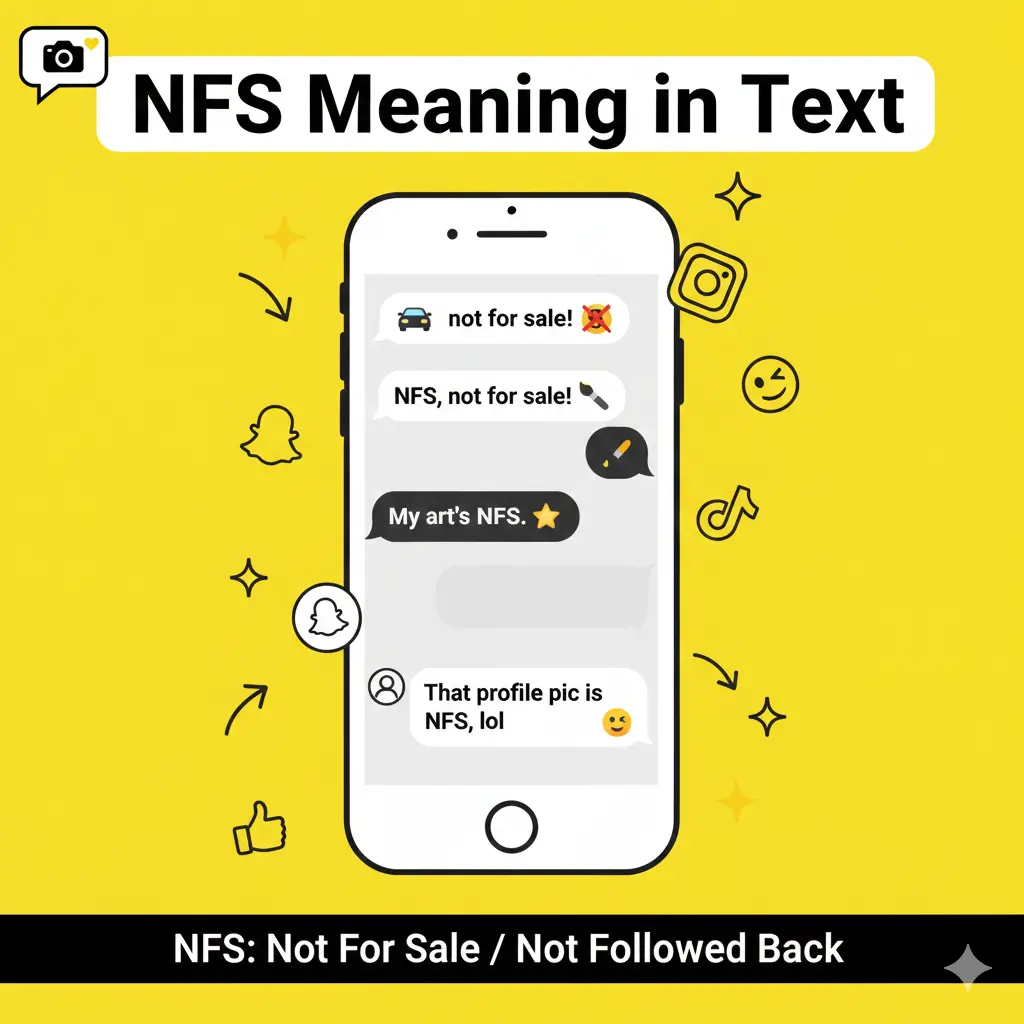
On Snapchat, NFS usually means “Not For Sale.”
It’s commonly used when someone posts a picture of something they own—like shoes, clothes, a car, artwork, or even their looks—and wants to make it clear they are not selling it.
For example:
- Someone posts sneakers with the caption “NFS 🔥”
- A car snap with “Dream build, NFS”
Does NFS Have Other Meanings?
Yes, depending on context, NFS can also mean:
- No Funny Stuff – used to set boundaries
- Not Feeling Social – rarely used, but possible
- Need For Speed – mostly gaming-related
👉 On Snapchat, though, “Not For Sale” is by far the most common and expected meaning.
Where Is NFS Used?
NFS is most commonly used on:
- 📸 Snapchat (stories, captions, chat replies)
- 📷 Instagram (especially in stories)
- 🎮 Gaming chats
- 💬 Casual texting
Who Uses It Most?
- Teens and young adults
- Sneakerheads and fashion lovers
- Car enthusiasts
- People showing off personal items or glow-ups
On Snapchat, it’s often paired with:
- Outfit pics
- Shoe collections
- Cars or bikes
- Aesthetic selfies
Basically, if someone thinks others might ask “how much?” — they’ll add NFS to stop those questions early.
Examples of NFS in Conversation
Here are some realistic Snapchat-style examples so you can see how it’s actually used 👇
- Story Caption:
“Fresh kicks 😮🔥 NFS” - Friend: “Yo, can I buy that jacket?”
You: “Nah bro, NFS 😅” - Story:
Car photo
“My baby ❤️ NFS” - Friend: “How much for that painting?”
Reply: “Sorry, NFS.” - Flirty context:
Selfie
“Taken 😉 NFS” - Funny:
Food pic
“Best biryani ever, NFS 😂” - Sneaker snap:
“Been hunting these for years… NFS.”
As you can see, NFS is short, clear, and very casual.
When to Use and When Not To Use NFS
✅ When It’s Okay to Use NFS
- Casual chats with friends
- Snapchat or Instagram stories
- Showing personal items you don’t want to sell
- Joking or playful captions
- Flirty posts (“This heart? NFS 😌”)
❌ When Not to Use NFS
- Professional messages or emails
- School assignments
- Talking to someone unfamiliar with slang
- Formal business conversations
In professional or serious settings, “Not for sale” is always better than NFS.
Similar Slang Words or Alternatives
If you understand NFS, these slang terms are also useful 👇
- NSFW – Not Safe For Work
- FBO – For Bidding Only
- DM for Price – Ask privately about cost
- BRB – Be Right Back
- AFK – Away From Keyboard
These often appear in similar casual or online contexts.
FAQS:
What does NFS mean on Snapchat from a girl?
Usually, it means “Not For Sale.” Sometimes, in selfies or flirty posts, it can jokingly mean “I’m taken.”
Is NFS slang rude?
No. NFS is not rude at all. It’s neutral and often polite—just setting a boundary.
Can I use NFS in professional chats?
Not recommended. Use “Not for sale” instead in professional or formal situations.
Does NFS have a flirty meaning?
Yes, sometimes. For example:
“This smile 😏 NFS”
It’s playful and lighthearted.
Is NFS still popular in 2025?
Yes 👍
NFS is still widely used in 2025, especially on Snapchat and Instagram.
Conclusion
So now you know the answer to what does NFS mean on Snapchat. Most of the time, it simply means “Not For Sale.” People use it to show off things they own—or even themselves—without inviting offers or questions. It’s casual, friendly, and super common in stories and chats.
Once you understand it, you’ll spot NFS everywhere—and actually know what it means 😄

Emma Collins is a digital content writer who specializes in internet slang, social media trends, and clear, user-focused explainers. She writes engaging, optimized content that helps readers understand modern online language with ease and confidence.