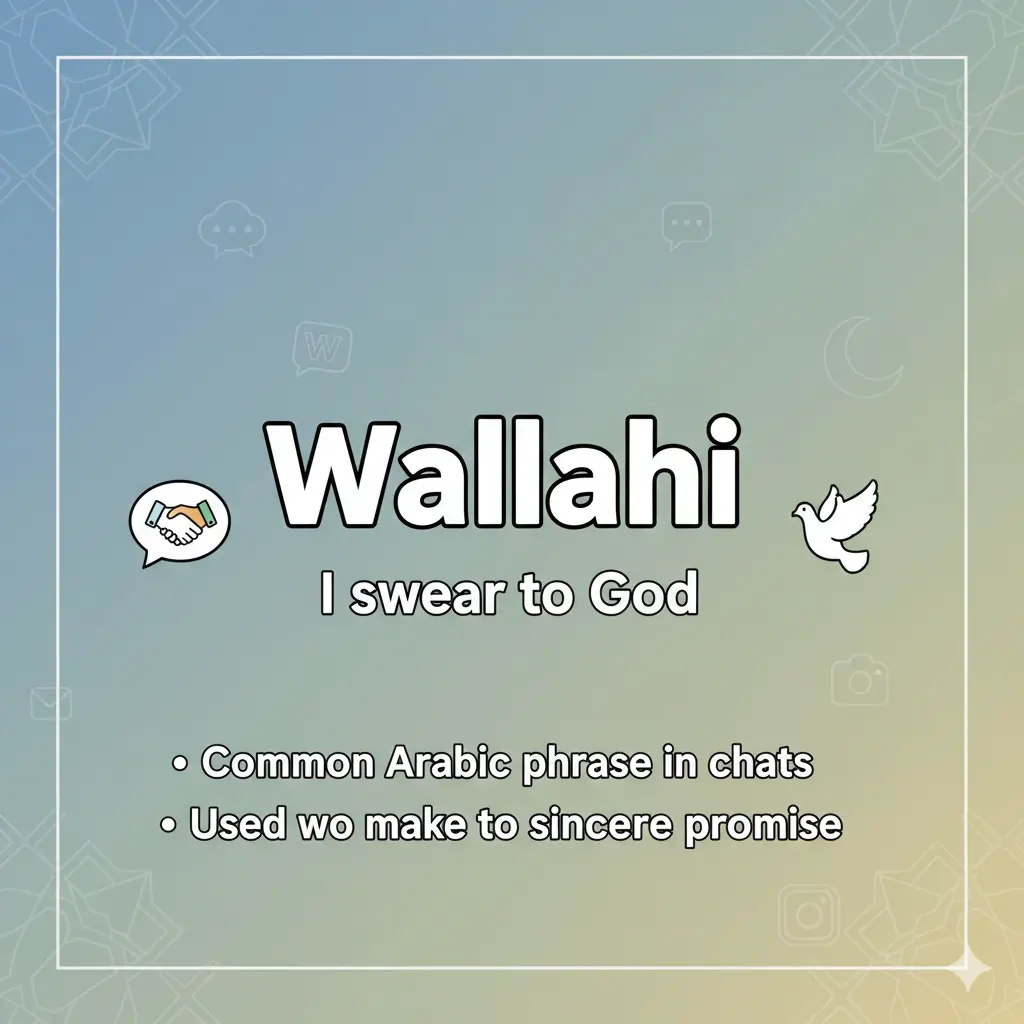
You’re scrolling through TikTok or reading a WhatsApp chat when someone drops “wallahi” into the conversation. Maybe it’s like: “Wallahi, I’m telling the truth!” And you pause.
Is it slang? A joke? A serious thing? A few years ago, many people had the same reaction—seeing wallahi pop up everywhere online without fully knowing what it meant.
Today, it’s one of those words that crosses cultures, languages, and timelines. In this guide, we’ll break down what does wallahi mean, where it comes from, how people use it in text and social media, and when you should (or shouldn’t) use it yourself.
Quick Answer:
Wallahi means “I swear to God.” In texting and social media, it’s used to strongly show honesty, truth, or emotion—similar to saying “I swear,” “for real,” or “no lie.”
What Does Wallahi Mean in Text?
Wallahi (pronounced wah-LAH-hee) comes from Arabic and literally means “By God” or “I swear to God.”
It’s used to strongly emphasize honesty, sincerity, or seriousness.
In texting and online slang, wallahi usually means:
- I’m telling the absolute truth
- I swear this is real
- Believe me
People use it to add weight to what they’re saying—kind of like saying “I swear,” “for real,” or “no cap.”
Important nuance:
Traditionally, wallahi has a religious meaning, especially in Muslim cultures, where it’s considered a serious oath. Online, however, many people use it more casually, almost like everyday slang—sometimes without religious intent.
Where Is Wallahi Used?
You’ll most commonly see wallahi used in:
- Text messages (WhatsApp, iMessage)
- Instagram captions and comments
- TikTok videos and comments
- Snapchat chats
- Twitter/X replies
- Gaming chats and Discord servers
Who uses it most?
- Teens and young adults
- People from Middle Eastern, South Asian, African, or Muslim backgrounds
- Multicultural online communities
- Friends joking or emphasizing a point
Thanks to social media and viral content, wallahi is now used globally—even by people who don’t speak Arabic at all.
Examples of Wallahi in Conversation
Here are some realistic, chat-style examples showing how wallahi appears naturally:
- Friendly
- “Wallahi, that movie was actually amazing.”
- Funny
- “Wallahi I was going to the gym… then I saw my bed.”
- Serious
- “Wallahi, I didn’t touch your phone.”
- Flirty
- “Wallahi, you looked so good today.”
- Emotional
- “Wallahi, I really miss you.”
- Casual slang
- “Wallahi this food is next level.”
- Defensive
- “Wallahi I’m not lying, ask anyone.”
In all these cases, wallahi adds intensity and emphasis.
When to Use and When Not To Use Wallahi
✅ When It’s Okay to Use
- With friends or family
- In casual chats
- On social media
- When you want to emphasize truth or emotion
- In humorous or expressive messages (if your audience is comfortable with it)
❌ When You Should Avoid It
- Professional emails or work chats
- School assignments
- Formal conversations
- With people who may take religious phrases very seriously
- If you’re unsure about cultural sensitivity
Because wallahi has religious roots, some people feel it shouldn’t be used jokingly. So context and audience matter a lot.
Similar Slang Words or Alternatives
If you like the meaning of wallahi but want alternatives, here are some common options:
- I swear – Direct English equivalent
- No cap – Means “no lie” or “for real”
- For real (FR) – Casual emphasis
- Dead serious – Strong honesty signal
- On God – Modern slang with similar meaning
Each option carries a slightly different tone, so choose based on the vibe of the conversation.
FAQS:
What does wallahi mean from a girl?
It usually means she’s being very honest or emotionally sincere. Depending on context, it can sound caring, serious, or even flirty.
Is wallahi slang rude?
No, wallahi is not rude. However, using it jokingly can feel disrespectful to some people because of its religious meaning.
Can I use wallahi in professional chats?
It’s best not to. Wallahi is very casual and informal, and it doesn’t fit professional or academic settings.
Does wallahi have a flirty meaning?
Not by itself—but when paired with compliments or emotional statements, it can sound romantic or heartfelt.
Is wallahi still popular in 2026?
Yes! Wallahi remains popular in 2026, especially on TikTok, Instagram, and in everyday texting among young users.
Conclusion
So, what does wallahi mean? In simple terms, it means “I swear” or “I’m telling the truth,” with roots in Arabic and strong emotional weight. While it started as a serious oath, social media has turned it into a widely used slang term across cultures. The key is knowing your audience—use it casually with friends, but avoid it in formal or professional spaces. When used correctly, wallahi adds authenticity, emotion, and emphasis to your online conversations.

Emma Collins is a digital content writer who specializes in internet slang, social media trends, and clear, user-focused explainers. She writes engaging, optimized content that helps readers understand modern online language with ease and confidence.