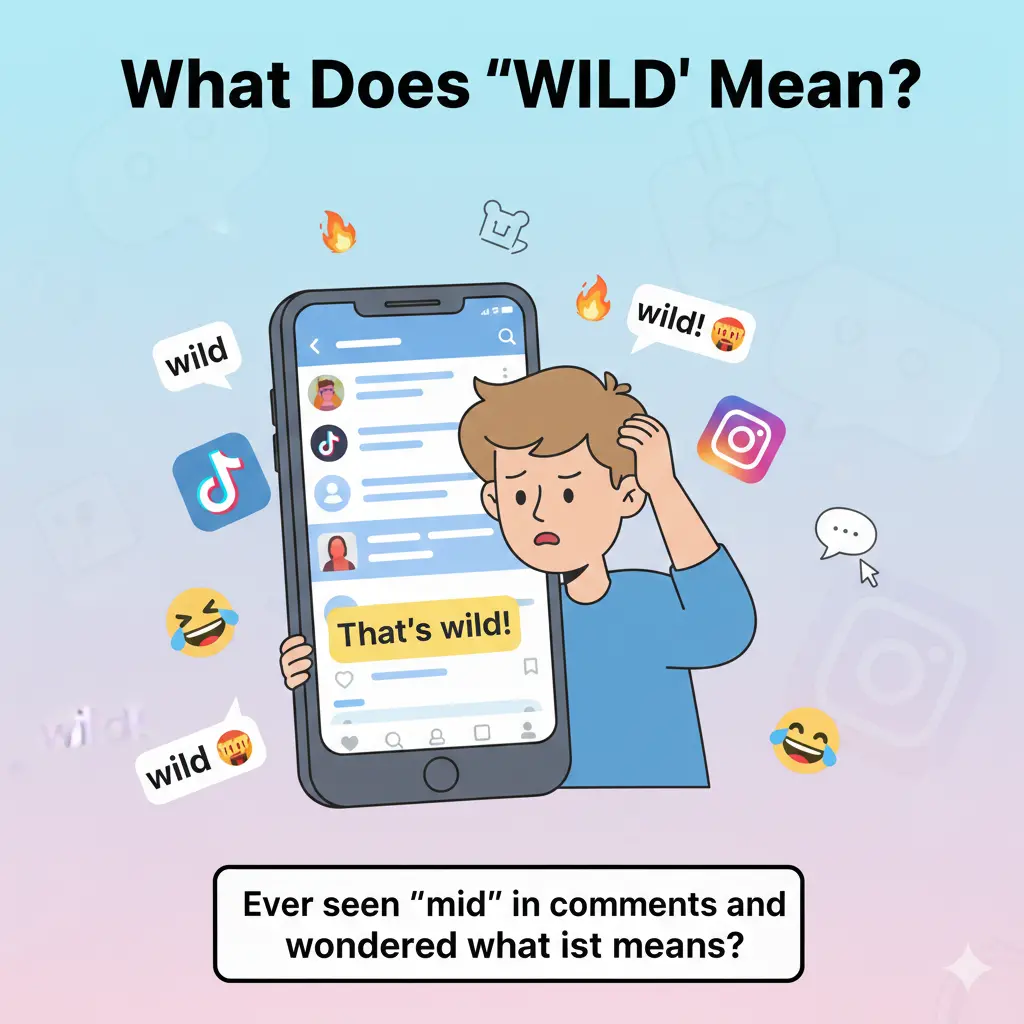
You’re scrolling through Instagram or TikTok, and suddenly you see a comment like, “That’s wild!” or someone texts you, “This party was wild 😱.
You pause for a second, thinking, “Wait… what does wild actually mean here?” Don’t worry—you’re not alone. Slang evolves fast, and words like wild can mean way more than the dictionary definition suggests.
If you’re texting friends, posting a story, or just trying to keep up with online trends, understanding wild will make your conversations smoother and a lot more fun.
Quick Answer:
In slang, “wild” means something crazy, extreme, exciting, or out of the ordinary. It can describe a person, situation, or action that is unexpected or over-the-top.
Full Meaning:
People use wild in texting, social media, and casual speech to react to surprising, outrageous, or impressive things. For example: “That party was wild!” or “He’s acting so wild today!” It’s informal and often shows excitement or shock.
What Does Wild Mean in Text?
In slang, wild usually means something surprising, extreme, intense, or outrageous. It’s often used to describe events, experiences, or even people who act in an unexpected or energetic way.
For example:
- “That concert was wild!” → It was intense and exciting.
- “He’s so wild in class.” → He acts crazy or unpredictable.
The word can have slight variations depending on context:
- Exciting or crazy – used for thrilling experiences.
- Unbelievable or shocking – when something is surprising.
- Extreme or out of control – can describe behavior or situations.
Basically, it’s a flexible word that fits almost any “wow, that’s intense” moment in everyday life.
Where Is Wild Used?
Wild pops up in many online and offline spaces:
- Texting – among friends sharing stories or reactions.
- Social media – Instagram comments, TikTok captions, or Twitter threads.
- Gaming chats – when describing insane gameplay or moments.
- Snapchat or Stories – reacting to events or viral clips.
It’s especially popular among teens and young adults, but anyone who’s active online might use it. Unlike some slang, wild is fairly universal and can cross age groups, making it a safe choice for casual conversations.
Examples of Wild in Conversation
Here are some realistic examples of how wild appears naturally in chats:
- Friendly:
- Friend 1: “Just saw the new Marvel trailer 😱”
- Friend 2: “Omg, that’s wild!”
- Funny:
- “My dog just tried to eat my homework… so wild 🐶😂”
- Flirty:
- “You’re wild for doing that in front of everyone 😏”
- Shocked/Unbelievable:
- “Did you see her TikTok? That move was wild!”
- Excited:
- “The party last night was wild!! Best night ever 🎉”
- Gaming context:
- “That final boss fight was wild! We barely survived.”
- Unexpected situation:
- “It’s snowing in April… wild weather this year ❄️”
These examples show that wild is versatile. It can express excitement, surprise, humor, or even admiration, depending on the context.
When to Use and When Not to Use Wild
When to use it:
- With friends, family, or peers in casual chats.
- On social media comments, captions, or posts.
- When describing something intense, funny, or surprising.
Not to use it:
- Professional emails or workplace chats (too casual).
- Academic writing or formal reports.
- Situations where clarity is more important than slang.
The key is to match the tone: wild works in friendly, relaxed, and casual environments but can seem out of place in formal communication.
Similar Slang Words or Alternatives
If you like using wild, you might also like these related slang terms:
- Lit – exciting or fun.
- Crazy – intense, surprising, or extreme.
- Insane – unbelievable or shocking.
- Epic – impressive or extraordinary.
- Extra – over-the-top, dramatic behavior.
Using these alternatives can keep your slang fresh and prevent repetition in chats.
FAQS:
Q1: What does wild mean from a girl?
A: Just like anyone else, a girl using wild usually means something is exciting, shocking, or crazy. Context matters—check the tone of the message.
Q2: Is wild slang rude?
A: Not at all. Wild is generally friendly and casual, though it can describe behavior that’s “out of control” in a teasing way.
Q3: Can I use wild in professional chats?
A: It’s better to avoid wild in professional or formal communication. Stick to neutral words like “unexpected” or “amazing.”
Q4: Does wild have any flirty meaning?
A: Sometimes, yes. It can hint at admiration for daring or playful behavior, depending on the tone and context.
Q5: Is wild still popular in 2026?
A: Absolutely! Wild is timeless slang that adapts well across social media platforms and casual chats.
Conclusion
In short, wild is your go-to word for expressing excitement, shock, or intensity. Whether it’s a crazy party, a shocking story, or an impressive move, saying something is wild instantly shows you’re reacting with enthusiasm. Just remember: it’s casual slang, so stick to friendly chats, social media, or playful messages, and you’ll nail it every time. Next time someone texts “That’s wild 😲,” you’ll know exactly what they mean—and maybe even reply with “I know, right?!”

Anderson is a skilled content writer focused on explaining modern text slang and digital communication trends. He creates clear, friendly content that helps readers understand online language quickly and confidently.